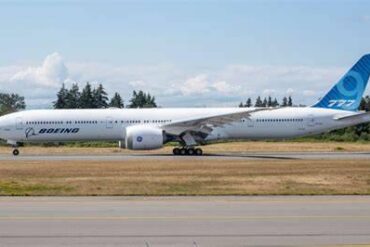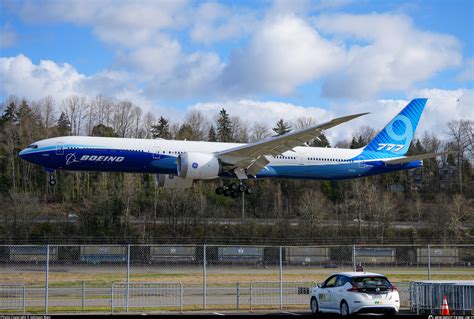
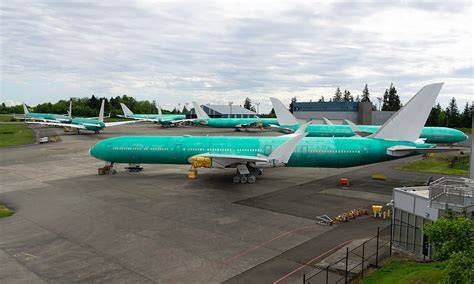
The Boeing 777-9 has reached an unusual stage in its long and troubled journey to commercial service. Boeing has built more than 30 aircraft that are complete, or substantially complete, yet many remain parked in Washington State rather than flying passengers for the airlines that ordered them. From the outside, the situation looks extraordinary: enormous widebody jets sit on the ground while airlines around the world continue waiting for their new flagship aircraft.
The explanation, however, is more complicated than the idea that airlines simply do not want the 777-9. The aircraft themselves are not necessarily unwanted. Instead, many of the earliest production examples were completed before Boeing had finalized the configuration that would ultimately emerge from certification. The result is a fleet of expensive aircraft that are physically real but may require significant modernization before airlines consider them equivalent to later production examples.
That distinction is becoming increasingly important as the 777X certification program moves toward its next major milestone. Boeing is still targeting first deliveries in 2027, while the 777-9 test fleet has accumulated more than 4,800 flight hours across roughly 1,700 flights. Most of the major Type Inspection Authorizations have reportedly been granted, and the remaining work is increasingly focused on completing regulatory requirements and demonstrations rather than proving that the basic aircraft design works.
Why More Than 30 Boeing 777-9s Are Parked in Washington
The parked aircraft are essentially a consequence of the 777X program’s unusually long development and certification timeline. Boeing began producing aircraft for customers while certification testing and the final production definition were still progressing. Under normal circumstances, the gap between early production and final certification configuration might be manageable. With the 777X, years of delays made that gap much more significant.
A completed aircraft can look remarkably close to a delivery-ready jet without actually being ready for an airline’s normal commercial operation. Certification requirements, production changes, software updates, structural modifications and other engineering revisions can all affect the final configuration. Therefore, an early-built 777-9 may need substantial work before Boeing can deliver it as a fully compliant production aircraft.
This is why describing the aircraft as “finished” requires some qualification. They have been physically assembled, but that does not necessarily mean they are finished in the commercial sense. An airline taking delivery expects the airplane to represent the certified production standard, not simply a nearly complete version that requires additional modernization after arrival.
For Boeing, the situation creates an uncomfortable inventory problem. Parking a 777-9 preserves the aircraft while engineers and regulators complete the program, but keeping a fleet of large widebodies on the ground is expensive. Storage, inspections, preservation work, maintenance and eventual modification all consume resources. Yet delivering them prematurely could transfer those complications to customers and potentially damage confidence in the program.
Boeing 777X Certification Is Finally Moving Forward
The most encouraging part of the story is that the parked aircraft should not be interpreted as evidence that the Boeing 777-9 has failed its certification campaign. Boeing’s latest progress indicates that the aircraft is considerably further along than its delivery date might suggest.
The 777-9 test fleet has accumulated more than 4,800 hours and approximately 1,700 flights. Boeing has described the certification effort as reaching the stage where the focus is increasingly on completing individual regulatory requirements. That is an important distinction. Certification is not simply a matter of accumulating enough flight hours and receiving a stamp of approval. Thousands of compliance items must be demonstrated, documented and accepted.
The 777-9 therefore has to satisfy a broad range of requirements covering performance, systems, structures, handling, reliability and operations. Some tests are straightforward. Others require aircraft to encounter carefully selected environmental conditions that cannot easily be reproduced outside actual flight.
One recent example was natural icing testing. Boeing flew the 777-9 through clouds containing supercooled water, allowing ice to accumulate on important aerodynamic surfaces. The aircraft spent approximately 8.5 hours in the relevant testing environment while engineers and meteorologists monitored the conditions and onboard instrumentation recorded the airplane’s response.
The objective was to evaluate how ice accumulation affected the wings, horizontal stabilizers, vertical stabilizer and other critical surfaces. Boeing targeted substantial ice accumulation during portions of the campaign. Such testing illustrates why certification can take so long. Even when an aircraft has already completed thousands of hours, regulators still need evidence that it behaves safely across a wide range of demanding conditions.
The reported outcome was positive. Test pilots found that the 777-9 maintained its expected handling characteristics in icing conditions, with the effects reportedly subtle enough that they would have been difficult to identify without the specialized flight-test instrumentation.
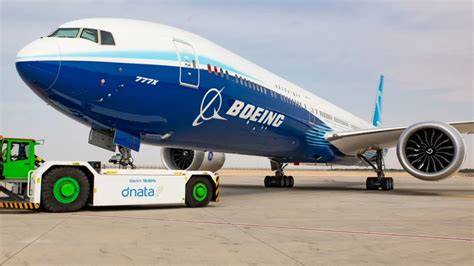
The Real Problem Is the Early Production 777-9 Fleet
The icing results are encouraging for Boeing, but they do not solve the problem facing the earliest production aircraft. Those airplanes were built during a period when Boeing was still developing the final production and certification standard.
That timing matters enormously to airlines.
An airline does not simply buy an aircraft based on its exterior appearance. A new widebody is an integrated system involving structures, avionics, software, engines, cabin equipment, maintenance procedures, documentation and regulatory approvals. If the configuration changes during a prolonged development program, an aircraft built several years earlier may require modifications before it reaches the same standard as an aircraft coming directly from a mature production line.
For the airlines, the concern is therefore not necessarily that an early 777-9 is unsafe or fundamentally defective. The concern is cost and operational disruption.
Taking an early aircraft could mean additional engineering work, modification downtime, maintenance planning and uncertainty. A carrier receiving a later-built 777-9 may be able to introduce it into the fleet with considerably less disruption because it already incorporates lessons and changes accumulated during the certification process.
This explains why some airlines appear reluctant to accept the first examples while remaining strongly committed to the aircraft itself.
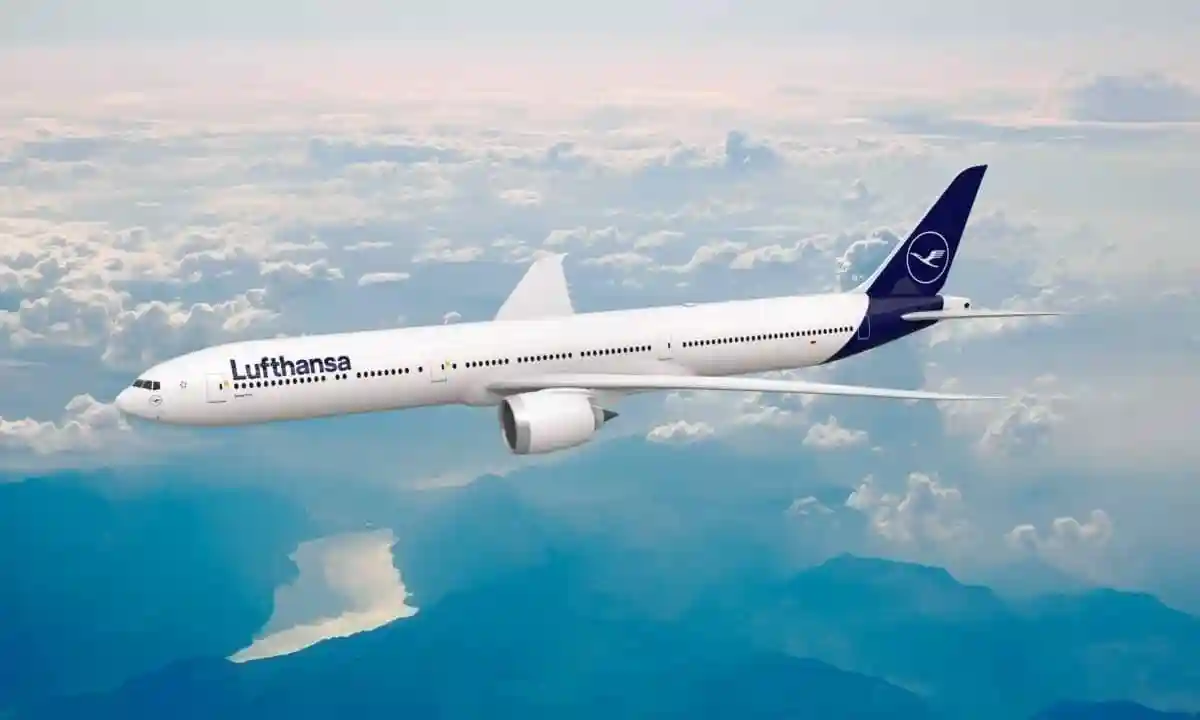
The distinction is particularly important in the case of Lufthansa, the 777-9’s launch customer. The German carrier still has 20 aircraft on order. Its position is not that the 777-9 should be abandoned. Instead, Lufthansa has been discussing with Boeing which early-built aircraft it will accept and what compensation would be necessary if those airplanes require modernization.
That is a very different situation from rejecting the aircraft outright.
Lufthansa Wants Boeing to Pay for the Modifications
Lufthansa Chief Executive Officer Carsten Spohr has made clear that the airline does not want to absorb the financial consequences of Boeing’s production timing. If Lufthansa receives early-built aircraft that require additional work to reach the final standard, the carrier expects Boeing to participate in the cost.
From an airline’s perspective, that position is understandable. Lufthansa ordered a new-generation flagship aircraft expecting Boeing to deliver an airplane suitable for commercial operation. If the manufacturer built those aircraft before the final production standard was established, the customer can reasonably argue that the resulting modernization expense should not become its responsibility.
There is also a less obvious cost: time.
An aircraft undergoing modification cannot generate passenger revenue in the same way as an aircraft operating scheduled flights. Even if Boeing pays the direct engineering and modification bill, an airline can still face operational complications involving fleet planning, crew training, maintenance capacity and aircraft availability.
For a major network carrier, those factors matter enormously. A widebody is not simply a piece of equipment parked in a hangar. It is part of a carefully balanced international schedule.
That is why compensation discussions could ultimately determine what happens to at least some of the Washington-based aircraft. Boeing may be better off funding extensive modifications and transferring the aircraft to customers rather than allowing dozens of valuable airframes to remain in storage.
Emirates Has Also Questioned the Earliest 777-9 Aircraft
Lufthansa is not alone in expressing reservations. Emirates, by far one of the largest 777X customers, has also taken a hard line regarding the earliest examples.
The Dubai-based airline has an enormous commitment to the program, with orders for 235 Boeing 777-9s and 35 Boeing 777-8s, for a total of 270 aircraft. That order demonstrates how strongly Emirates believes in the underlying aircraft concept. It also makes the airline’s concerns about early production examples particularly significant.
Emirates does not appear to be questioning whether the 777-9 belongs in its future fleet. Rather, the airline has concerns about accepting aircraft that require extensive modernization before they match the final production configuration.
This creates an interesting contradiction at the heart of the 777X story. Airlines can simultaneously be among the aircraft’s strongest supporters and among the least enthusiastic customers for the earliest airframes.
That may sound strange, but it is perfectly logical from an airline’s perspective. The later production aircraft benefit from the accumulated engineering experience of the program. An airline naturally wants the mature version of a new aircraft rather than becoming the operator responsible for discovering and managing the consequences of an immature production configuration.
The 777-9’s Long Delay Created a Unique Industrial Problem
The root of the issue is the extraordinary delay surrounding the Boeing 777X. The program was originally expected to enter service years earlier. Instead, certification difficulties, development changes and other delays pushed the expected first delivery to 2027.
During that period, Boeing continued building aircraft.
That created a production paradox. Boeing needed to prepare for eventual customer deliveries and maintain its manufacturing program, but the final certified configuration was still evolving. The longer certification took, the greater the possibility that early-built customer aircraft would diverge from the final production standard.
In effect, Boeing built aircraft into a moving target.
The company now has to bridge the gap between those early airframes and the mature 777-9 that airlines expect to receive. That process can involve inspections, component changes, software revisions, structural modifications and other work depending on the individual aircraft and the final configuration.
The Washington storage sites therefore represent the physical evidence of the 777X’s development history. Each aircraft embodies an earlier point in the program’s evolution.
For Boeing, the challenge is to turn that history into usable inventory.
Why Boeing Cannot Simply Deliver the Parked Jets
It might seem obvious that Boeing should simply deliver the aircraft and allow airlines to upgrade them later. In reality, that approach could create more problems than it solves.
First, certification and production configuration are closely connected. Boeing cannot treat a major commercial aircraft like a consumer product that can be shipped first and updated afterward. The delivered aircraft must meet applicable regulatory requirements and the customer’s contractual specifications.
Second, airlines have their own operational standards. A carrier introducing a new fleet type must integrate it into maintenance systems, crew procedures, spare-parts inventories, training programs and scheduling systems. A configuration that differs significantly from later aircraft can complicate those processes.
Third, modifications require downtime.
If an early 777-9 needs extensive work after delivery, the airline may effectively receive a brand-new aircraft that cannot immediately perform the role it was purchased to fulfill. That is particularly inconvenient when the aircraft is supposed to replace older widebodies or support new long-haul routes.
Consequently, keeping the aircraft in Washington until the appropriate work can be completed may be less disruptive than delivering them prematurely.
Airlines Still Want the Boeing 777-9
Despite the headlines surrounding the parked aircraft, the wider order book tells a much more positive story.
The 777X family has attracted more than 650 orders across the 777-8, 777-9 and 777-8 Freighter variants, demonstrating that airlines continue to see strategic value in the aircraft. Emirates leads the program with its massive commitment, while Qatar Airways, Cathay Pacific, British Airways and Lufthansa are also important 777-9 customers.
The attraction is easy to understand. The 777-9 sits at the upper end of the twin-engine widebody market, offering airlines a combination of passenger capacity, long-haul range and improved efficiency compared with older generations of large aircraft.
It is particularly relevant as airlines continue replacing aging four-engine aircraft and earlier 777 variants. The industry has increasingly moved toward efficient twin-engine widebodies, and Boeing designed the 777X to occupy one of the largest and most capable positions within that trend.
The aircraft’s folding wingtips also allow Boeing to offer a very large wingspan in flight while maintaining compatibility with airport gate and taxiway constraints. Combined with the newer-generation GE9X engines and extensive aerodynamic refinements, the aircraft is intended to deliver improved economics without abandoning the capacity that made the original 777 family so successful.
The problem, therefore, is not a lack of demand for the 777-9.
It is the awkward transition from development aircraft to mature production aircraft.
What Happens to the 30 Parked Boeing 777-9s?
The most likely outcome is not that these aircraft remain abandoned indefinitely. They represent too much value for Boeing and its customers.
Instead, the early production 777-9s are likely to become part of the eventual delivery stream after the necessary modernization work has been completed. The exact process will depend on each aircraft’s build standard and the agreements Boeing reaches with individual customers.
Some airlines may accept aircraft earlier than others. Some may demand compensation. Others may prefer later-built examples and allow Boeing to determine how the earliest airframes are allocated.
The financial negotiations could therefore be almost as important as the engineering work.
For Boeing, every aircraft successfully converted into a customer-accepted production jet represents an asset recovered from a difficult period in the program. For airlines, accepting those aircraft can provide earlier access to a highly desirable widebody while avoiding the full financial burden associated with bringing an early production example up to the latest standard.
That is why the parked 777-9s should not be viewed simply as 30 unwanted aircraft.
They are better understood as a backlog of early-production assets waiting for the certification process, engineering configuration and commercial agreements to converge.
The 777X’s Next Test Is Getting From Certification to Delivery
Boeing’s biggest challenge now is changing the narrative around the 777X. Years of delays have created understandable skepticism, and the parked aircraft provide a highly visible reminder of how long the program has taken.
Yet the certification data show genuine progress.
The test fleet has accumulated thousands of flight hours. The aircraft is undergoing increasingly specialized regulatory testing. Boeing continues to target 2027 for first deliveries, while launch customer Lufthansa is preparing for both the possibility of receiving its aircraft and the possibility that additional delays could force it to keep older aircraft operating longer.
That second scenario illustrates how airlines manage uncertainty. Lufthansa has considered maintaining or potentially reactivating older Airbus A340-300 aircraft as part of its contingency planning. The fact that an airline could contemplate keeping four-engine aircraft available while waiting for a new-generation twin-engine flagship says plenty about the importance of delivery timing.
The 777-9 does not need to prove that airlines want it. The order book already does that.
What Boeing must prove now is that it can finish certification, stabilize production, modernize the earliest aircraft economically and deliver a mature product that airlines can confidently place into daily service.
The more than 30 Boeing 777-9s parked in Washington are therefore neither abandoned prototypes nor evidence that airlines have lost interest in the aircraft. They are the physical legacy of a program that began building airplanes before its final production standard was fully settled.
Once certification is complete and Boeing’s production system reaches maturity, those dormant aircraft could finally begin moving toward their intended purpose: carrying passengers across the world’s longest routes.
The irony is that the airplanes waiting on the ground may ultimately become some of the clearest evidence that the 777X has survived its extraordinarily long development journey. They are not waiting because the industry has no use for them. They are waiting because Boeing has to make sure the aircraft it built years ago are truly the aircraft airlines are prepared to fly for decades.