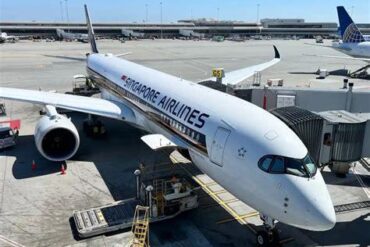
Long-haul aviation is often portrayed as a triumph of modern engineering: ultra-efficient twinjets gliding across oceans, stitching continents together in a single bound. Yet beneath that narrative lies a fascinating contradiction. Some of the most heavily traveled intercontinental routes involving the United States still lack regular nonstop service, despite carrying hundreds of thousands of passengers annually.
These are not obscure city pairs with thin demand. They are high-volume markets with deep cultural, economic, and diaspora ties. In 2025 alone, multiple long-haul routes touching the US recorded well over 100,000 round-trip passengers without a single year-round nonstop flight. The reasons are not simple. They involve aircraft performance limits, fare economics, geopolitical airspace constraints, and the elusive ingredient airlines crave: sustained premium demand.
Understanding these gaps reveals how aviation is governed not only by technology, but by margins, physics, and strategic patience.
The Scale of Untapped Demand
Globally, many long-haul routes surpass the 100,000 annual passenger threshold without nonstop flights. The United States dominates the upper end of that list. At the very top sits Los Angeles–Ho Chi Minh City, with approximately 336,000 round-trip passengers in 2025. Close behind is Los Angeles–Bangkok, carrying 183,000.
These are not theoretical flows. Travelers are flying—just not directly. United Airlines serves both Vietnam and Thailand via Hong Kong, re-entering these markets in 2025 through one-stop operations. The traffic exists. The aircraft, at least in theory, exist. So why no nonstop service?
Distance is the first obstacle. West Coast–Southeast Asia routes push the operational envelope, especially westbound against prevailing winds. Aircraft such as the Airbus A350-900 can technically fly these distances, but the return leg often forces weight restrictions. A plane may be able to take off full from Asia to California, yet struggle to depart Los Angeles back to Asia with a full payload of passengers and cargo.
Low fares compound the challenge. Long distances dilute yield per nautical mile. Airlines must fill premium cabins consistently to offset fuel burn and crew costs. Without that steady stream of high-paying travelers, nonstop flights become high-risk ventures.
Los Angeles to Ho Chi Minh City: A Market Too Far
The Vietnam–US corridor is enormous, supported by a vast diaspora community in California. Vietnam Airlines already operates nonstop between Ho Chi Minh City and San Francisco. On paper, extending that service to Los Angeles seems obvious. The passenger base is larger. Southern California hosts one of the world’s largest Vietnamese communities.
The obstacle is performance.
The Airbus A350-900, Vietnam Airlines’ flagship long-haul aircraft, faces payload limitations on ultra-long westbound sectors. Operating from Los Angeles would worsen these constraints compared to San Francisco. When aircraft cannot depart at near-full payload, profitability erodes quickly. Empty cargo holds and blocked seats are not minor inconveniences; they are margin killers.
Airlines do not merely ask, “Can we fly it?” They ask, “Can we fly it profitably in February, on a windy day, with weak cargo demand?” Often, the answer is no.
Bangkok’s Lost Nonstop Era
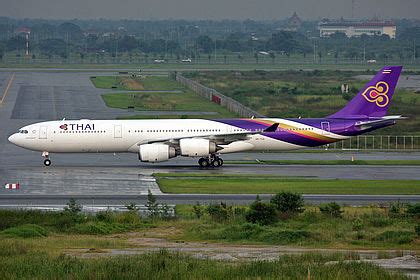
Bangkok once enjoyed nonstop service to both Los Angeles and New York JFK, operated by Thai Airways using the Airbus A340-500. That aircraft was designed for ultra-long-haul missions. Singapore Airlines deployed it on marathon flights to Los Angeles and Newark.
But design capability does not guarantee economic viability.
When fuel prices spiked dramatically in the mid-2000s, particularly following Hurricane Katrina, the economics of four-engine ultra-long-haul aircraft deteriorated rapidly. Thai Airways’ US routes became unsustainable. The A340-500 fleet was eventually retired.
Fare data illustrates the structural weakness. In 2025, the average fare per nautical mile on Los Angeles–Bangkok was roughly $0.14. By contrast, Los Angeles–Singapore generated approximately $0.23 per nautical mile—64% higher despite only a 6% longer distance. Singapore’s strong corporate demand and premium travel base create resilience. Bangkok’s leisure-heavy profile does not.
United’s strategy reflects this reality. Rather than assume nonstop risk, it extended Hong Kong services onward to Bangkok, preserving connectivity without committing a high-cost aircraft to a fragile standalone route.
India’s Tech Corridors Without Direct Links
If Southeast Asia is constrained by yields and aircraft performance, India presents a different paradox. The United States and India share one of the world’s fastest-growing long-haul travel markets. Yet several high-demand routes remain without nonstop service.
In 2025, San Francisco–Bengaluru and San Francisco–Mumbai each carried around 179,000 and 174,000 passengers respectively. Air India previously operated nonstop services but suspended them amid geopolitical complications, including restricted Russian airspace overflights that lengthened routes and raised operating costs.
Nonstop ultra-long-haul routes between North America and India depend heavily on optimal great-circle routing. When airspace access changes, flight times and fuel burn increase significantly. Margins shrink.
The situation becomes even more intriguing with Hyderabad.
Hyderabad: A Million Passengers, Zero Nonstops
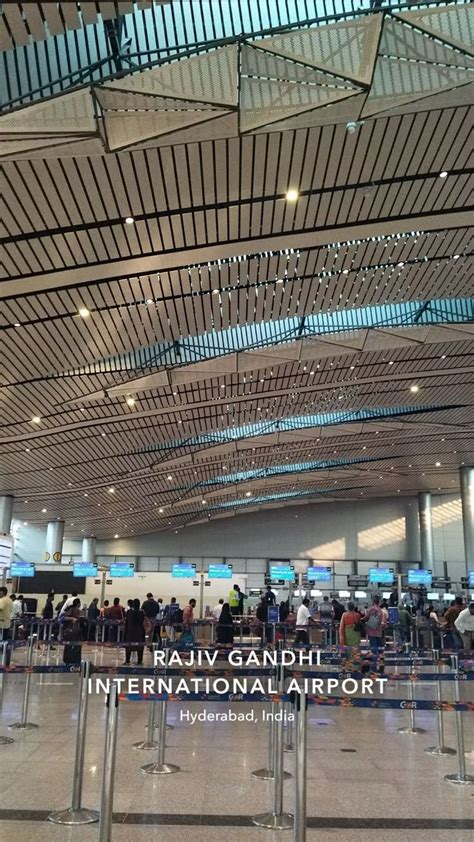
Hyderabad generated approximately 1.1 million round-trip passengers between the US and the city in 2025. That is not a niche market. It is a powerhouse fueled by technology outsourcing, pharmaceuticals, and a substantial diaspora.
Three city pairs—New York–Hyderabad (168,000), Dallas–Hyderabad (167,000), and San Francisco–Hyderabad (149,000)—rank among the busiest long-haul US routes without nonstop flights.
Yet nonstop service remains unlikely.
The fundamental barrier is aircraft capability. No active commercial aircraft can operate Hyderabad–United States nonstop with a full payload under current operational constraints. Even if range were marginally feasible, the absence of a dominant Indian carrier hub in Hyderabad weakens feed traffic potential. US carriers, lacking a local partner hub, would face significant commercial risk.
As a result, Gulf carriers dominate the market. Emirates, Qatar Airways, and Etihad funnel Hyderabad traffic efficiently through Dubai, Doha, and Abu Dhabi. British Airways and Air India add European and domestic Indian connections. The hub-and-spoke model thrives precisely where nonstop physics falter.
Orlando–Tokyo: A Special Case
At first glance, Orlando–Tokyo appears as a surprising inclusion, with approximately 154,000 round-trip passengers. The demand is real, supported by tourism flows and Japanese interest in Florida’s theme parks.
In early 2026, ZIPAIR launched a short-term operation tied to Disney Destinations International. Yet the service was explicitly time-limited. Sustained, year-round operations remain improbable.
The reason is structural. Orlando lacks the corporate demand base of New York, Los Angeles, or Chicago. Ultra-long-haul routes thrive when business travel stabilizes revenue through premium cabins. Leisure demand, while substantial, is seasonal and price-sensitive. Airlines require consistency, not just peaks.
The Physics and Economics of Distance
At the heart of these gaps lies a fundamental truth: range charts do not guarantee profitability.
Ultra-long-haul flying magnifies every variable. Headwinds add fuel burn. Small payload penalties erode margins. Premium demand gaps widen financial exposure. Aircraft acquisition costs must be amortized across consistent yields.
Modern twinjets like the Airbus A350 and Boeing 787 have revolutionized long-haul travel. They enable routes once deemed impossible. But even these engineering marvels bow to economics.
Airlines operate within a narrow band of acceptable risk. A route carrying 150,000 passengers annually might seem ripe for nonstop service. Yet if average fares are low and business-class demand weak, that route becomes a high-stakes gamble.
The Future of America’s Long-Haul Gaps
Technological evolution may eventually close some of these gaps. Future variants of ultra-efficient aircraft, optimized for payload-range performance, could tip the equation. Geopolitical airspace access may normalize, restoring efficient routing between North America and South Asia. Growing diaspora wealth could shift yield dynamics.
But the lesson remains clear. Passenger volume alone does not guarantee nonstop service. Aircraft physics, fuel prices, geopolitical access, and premium demand form an intricate equation.
The map of global aviation is not drawn solely by distance. It is drawn by profitability. And for now, these ten high-demand US long-haul routes remain compelling reminders that even in an age of 19-hour flights, some journeys still depend on a carefully chosen connection.