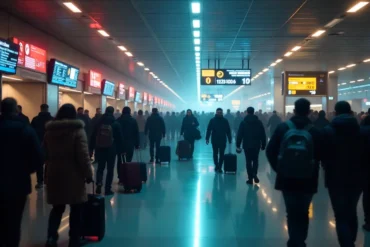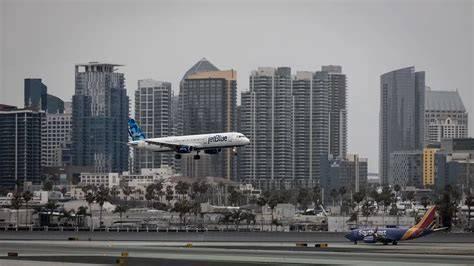
Travelers at San Diego International Airport faced hours of disruption on Friday, September 4, after a drone and a stratospheric balloon were spotted near the airport’s airspace, triggering a ground stop and widespread delays. The incident began at about 2:00 PM and created an unusual aviation problem: two very different airborne objects became serious enough concerns for authorities to restrict flight operations.
The disruption affected arriving and departing flights, with ground delays continuing for several hours. Operations resumed around 4:30 PM, but roughly 400 flights were delayed, leaving passengers facing missed connections and cascading schedule changes.
The balloon was not a conventional weather balloon. It was SceyeCELL, a large stratospheric communications platform being tested by US aerospace and materials science company Sceye. The balloon was returning toward New Mexico after a journey that included Japan.
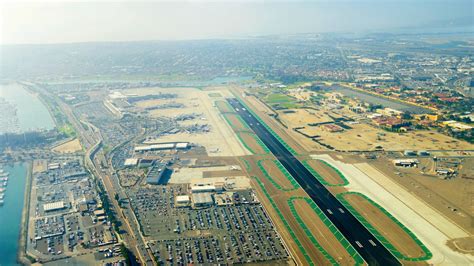
San Diego Airport Ground Stop Follows Drone and Balloon Sightings
San Diego International Airport confirmed that the drone and balloon were responsible for Friday’s flight disruptions. The objects raised safety concerns because SAN operates in a constrained urban environment, only about three miles from downtown San Diego. Unexpected objects in nearby airspace can quickly disrupt operations.
Reports indicated that the initial ground stop was expected to remain in place until midnight because of security and safety concerns. Instead, flight activity resumed at approximately 4:30 PM. However, a resumption of departures did not mean normal service had returned. By 8:00 PM, hundreds of flights were still experiencing delays as airlines worked through the accumulated backlog.
One social-media report claimed operators had been warned to “fly at their own risk” after restrictions were eased. That wording should be treated cautiously because it does not appear to represent a formal airport statement.
What Is SceyeCELL and Why Was It Near San Diego?
SceyeCELL is designed as a cell tower in the stratosphere, using high-altitude technology to deliver mobile broadband coverage across large geographic areas. Its developers say the platform could provide coverage comparable to what would otherwise require more than 500 conventional cell towers.
Its presence near an active commercial airport demonstrates a challenge facing emerging high-altitude technologies. A legitimate platform can still create complications when its flight path intersects heavily used aviation corridors, especially alongside a separate drone sighting.
The drone became the subject of an investigation. Initial reports suggested police were unable to locate its operator, while the Transportation Security Administration was reported to be investigating the activity. Unauthorized drone operations near airports are dangerous and can be illegal, particularly when they interfere with aircraft operations or enter protected airspace.
Why Drones Near Airports Create Serious Aviation Risks
The concern is not simply that a drone might be visible from an aircraft cockpit. A collision can cause significant structural damage, while ingestion into an aircraft engine could create an especially serious emergency. Aircraft are most vulnerable during takeoff and landing, when pilots have less time and altitude to respond to an unexpected obstacle.
Even without a collision, authorities may restrict movements until an object’s location is understood. A ground stop can disrupt aircraft rotations, crews, connections and gate availability, producing delays long after the original threat disappears.
San Diego’s Single-Runway Constraints Magnify Disruptions
SAN is particularly sensitive to interruptions because it is the busiest single-runway airport in the United States. The airport sits about 17 feet above sea level and has operated since 1928. Its location close to downtown makes it convenient, but leaves limited room for flexibility.
Southwest Airlines is the airport’s largest carrier, with about 34% of the market, while Alaska Airlines accounts for roughly 20% of flights. Major domestic destinations include San Francisco, Denver and Phoenix, while important international links include London Heathrow, San José del Cabo and Munich.
Flights Resume, But Friday’s Disruption Lingers
By Friday evening, the immediate airspace restriction had been lifted, but the airport was still absorbing the consequences during a busy Friday travel period. The delay pattern showed how quickly a short operational shutdown can spread across hundreds of flights. Passengers who were not directly affected by the original ground stop could still encounter delays because their aircraft or crews had been caught elsewhere in the network.
Saturday operations were expected to remain unaffected, suggesting the disruption was largely contained to Friday. Even so, the incident offered a vivid reminder that modern airports must manage not only aircraft and weather, but also drones and emerging high-altitude technologies sharing increasingly complex airspace.