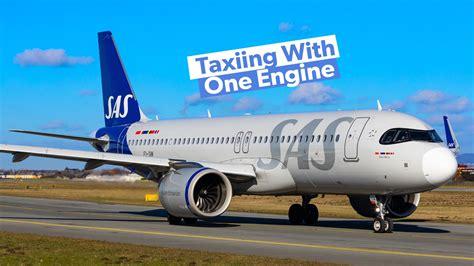
When passengers notice that one engine on an Airbus A320 has gone completely silent while the aircraft slowly moves toward the gate, it can look unusual or even concerning. A modern twin-engine jet appears designed to operate with both engines running, so seeing one fan blade remain motionless while the other engine continues producing power naturally raises questions.
However, this is not a sign of a problem. In fact, the deliberate shutdown of one engine during taxiing is a carefully planned operational technique used by many airlines around the world. Known as single-engine taxiing, the procedure combines engineering knowledge, fuel-saving strategies, and strict cockpit decision-making to make airport operations more efficient.
The practice reflects a broader change in aviation. Airlines are constantly searching for ways to reduce fuel consumption, lower emissions, and improve operating efficiency. While saving fuel during cruise flight receives most public attention, significant savings can also come from small adjustments made during the many minutes an aircraft spends moving on the ground.

Why Airbus A320 Pilots Use Single-Engine Taxi Procedures
For decades, airline operating procedures assumed that both engines would remain running from pushback until the aircraft reached its parking stand. This approach was simple and required little additional planning. However, as airlines became more focused on reducing costs and environmental impact, ground operations received closer attention.
The Airbus A320 family became one of the ideal aircraft for this procedure because of its powerful and reliable engines. After landing, pilots can shut down one engine while allowing the remaining engine to provide enough thrust for normal taxi operations.
The decision is usually made during taxi-in after landing. Once the aircraft has safely cleared the runway, the pilots evaluate conditions such as taxiway congestion, weather, aircraft weight, and the distance remaining to the gate. If conditions are suitable, one engine can be turned off after the required safety checks and cooling period have been completed.
Airbus eventually recognized that this was no longer just an optional fuel-saving technique. The manufacturer moved the procedure into more prominent operational guidance, reflecting how widely airlines had adopted the method.
For flight crews, this changed the traditional arrival routine. Instead of automatically keeping both engines operating until parking, pilots now consider whether a single-engine taxi provides operational benefits without reducing safety.
The Real Reason Airlines Want To Shut Down An Engine
The main motivation behind single-engine taxiing is fuel efficiency. Jet engines are designed to operate most efficiently during flight, especially at high altitude and high thrust settings. Ground taxiing represents one of the least efficient phases of an aircraft’s operation.
When an A320 moves around an airport with both engines running at idle thrust, it continues burning fuel even though the aircraft only needs a small amount of power to roll forward. During long taxi periods at busy airports, this fuel consumption can become significant.
By shutting down one engine, airlines can reduce ground fuel burn substantially. An A320 can save several pounds of fuel for every minute it operates with one engine instead of two. Across thousands of daily flights worldwide, these small savings accumulate into major reductions in fuel expenses and carbon emissions.
The environmental benefit is also important. Airports are concentrated areas where aircraft emissions affect local air quality. Reducing unnecessary engine operation lowers exhaust emissions around terminals, taxiways, and airport communities.
For large airline fleets, efficiency improvements measured in minutes can translate into millions of dollars in annual savings. This explains why a simple procedure like turning off one engine has become an important part of modern airline cost management.
Why A Single Engine Has Enough Power To Move An Airbus A320
A common question among passengers is whether one engine can really move a fully loaded passenger aircraft safely. The answer is yes because commercial jet engines produce enormous amounts of thrust compared with what is actually required for taxiing.
The Airbus A320 family uses powerful turbofan engines such as the CFM56-5B and newer-generation engines on A320neo aircraft. These engines are capable of producing tens of thousands of pounds of thrust during flight operations.
Taxiing requires only a fraction of that power. Once the aircraft begins moving, maintaining a normal taxi speed usually requires very little thrust. In many cases, pilots must even apply brakes periodically because the remaining engine can continue accelerating the aircraft on level ground.
This is one reason why the A320 is well suited for single-engine taxi procedures. The aircraft has enough performance margin to move safely without requiring excessive throttle application.
Smaller aircraft with less powerful engines may not receive the same benefits. Some aircraft require additional thrust to overcome initial resistance when starting movement, which can reduce the fuel savings and create stronger jet blast around airport ramps.
The Hidden Challenge: Keeping Aircraft Systems Running
Turning off an engine sounds simple, but an aircraft is a highly interconnected machine. The engines provide much more than forward thrust. They also support electrical generation, hydraulic power, and other systems needed for normal operation.
When one A320 engine is shut down, aircraft systems must automatically redistribute available power. Modern aircraft are designed with backup systems that allow continued operation even when one main engine is not running.
However, one major challenge involves pneumatic systems. Aircraft use compressed air from engines for functions such as air conditioning and cabin pressurization support. Traditionally, shutting down one engine often required the Auxiliary Power Unit (APU) to remain operating.
The APU is a small turbine engine located in the aircraft’s tail section. Although much smaller than the main engines, it still consumes fuel. If the APU runs continuously during taxi, some of the fuel savings from shutting down a main engine can be reduced.
Newer upgrades have improved this situation. Technologies such as Single Engine Taxi Without APU (SETWA) allow aircraft to perform single-engine taxi operations while keeping the APU switched off under approved conditions.
These improvements increase the environmental benefits of the procedure by allowing airlines to reduce fuel consumption from both main engines and auxiliary systems.
Why Pilots Do Not Shut Down The Engine Immediately After Landing
One of the most misunderstood parts of single-engine taxiing is the timing of the shutdown. Pilots cannot simply turn off an engine the moment the aircraft leaves the runway.
During landing, engines operate at high temperatures. The turbine components inside the engine experience extreme thermal stress after several hours of flight. If an engine is shut down too quickly, uneven cooling can create mechanical problems.
One important concern is called rotor bow. This occurs when internal engine components cool unevenly, causing the rotor shaft to temporarily bend. If the engine is restarted before it has stabilized, rotating parts may contact surrounding components, potentially causing serious damage.
To prevent this, pilots allow the engine to operate at idle for a required stabilization period before shutting it down. This gives temperatures time to equalize and reduces stress on internal components.
The procedure demonstrates that aviation efficiency is never separated from engineering discipline. Every fuel-saving action must consider aircraft reliability and long-term maintenance requirements.
When Pilots Decide Not To Use Single-Engine Taxiing
Although the procedure is widely accepted, pilots do not use it in every situation. The captain always has final authority to decide whether conditions are suitable.
Safety considerations can override fuel-saving goals. For example, pilots may keep both engines running when taxiways are wet, icy, crowded, or difficult to navigate. Certain airports may require additional thrust because of steep gradients or complicated taxi routes.
Heavy aircraft may also require more careful evaluation. A fully loaded A320 carrying passengers, baggage, and fuel behaves differently from a lightly loaded aircraft on a short taxi route.
Operational timing also matters. If an aircraft expects a short taxi directly to the gate, shutting down one engine may provide little benefit. The procedure is most valuable when taxi times are long enough for meaningful fuel savings.
This flexibility highlights an important principle in aviation: efficiency improvements are only used when they maintain a strong safety margin.
What Passengers Notice When An A320 Shuts Down One Engine
Most passengers never realize when single-engine taxiing occurs. The change is subtle, but some travelers may notice a reduction in engine noise or a brief adjustment in cabin airflow.
After one engine shuts down, electrical and environmental systems may adjust as aircraft power is redistributed. The cabin may become slightly quieter, and some passengers near the wing may notice that one engine fan is no longer spinning.
For aviation enthusiasts sitting near the window, the difference is easier to identify. One engine continues operating while the opposite engine remains completely still during taxi.
What appears to be an unusual situation is actually a carefully controlled process performed thousands of times every day around the world.
The Future Of Aircraft Ground Operations
Single-engine taxiing represents one stage in the aviation industry’s ongoing effort to improve efficiency. However, future aircraft may eventually use completely different methods for ground movement.
Engineers have explored electric taxi systems that use motors installed in aircraft landing gear. These systems could allow aircraft to move between gates and runways without using their main engines.
Electric taxi technology could reduce fuel consumption even further and decrease airport noise. However, widespread adoption remains challenging because of added weight, complexity, and infrastructure requirements.
Until those technologies become common, single-engine taxiing remains one of the most practical solutions available. It requires no major airport changes, uses existing aircraft systems, and provides measurable fuel savings.
The next time an Airbus A320 arrives at the gate with one engine silent, there is no need for concern. That quiet engine represents something very deliberate: a combination of pilot judgment, aircraft engineering, and the aviation industry’s constant search for smarter and more efficient operations.