Australia’s largest airline group, Qantas, has announced a significant restructuring of its regional subsidiary, QantasLink, which will see the closure of three staff bases in Canberra, Hobart, and Mildura. The decision, scheduled to take effect in 2026, comes after an extensive review of operational efficiency and crew logistics.
The closures are part of a broader strategy to consolidate crew operations at major hubs in Sydney, Brisbane, and Melbourne, reducing disruptions, streamlining schedules, and aligning with the airline’s modernization plan. According to Qantas, these adjustments will not impact the availability of flights at the affected airports, as services will continue to operate without a reduction in capacity.
Why QantasLink Is Consolidating Staff Bases
Qantas stated that the restructuring follows an in-depth analysis of its QantasLink operations, aimed at addressing inefficiencies and improving reliability. By shifting crews to its largest bases, the airline expects to reduce logistical challenges associated with smaller, decentralized operations.
Currently, QantasLink maintains staff bases in Adelaide, Brisbane, Cairns, Canberra, Darwin, Hobart, Melbourne, Mildura, Perth, and Sydney. However, with the upcoming changes, only Canberra, Hobart, and Mildura will lose their local crew stations. This is expected to impact approximately 70 pilots and cabin crew members, though Qantas insists the move will not result in job losses.
Instead, the affected employees will be offered support packages designed to make commuting or relocation feasible. These include:
- Confirmed flights to major operating bases.
- Rostering support to align with commuting schedules.
- Accommodation arrangements when required.
- Relocation assistance for those preferring to move closer to their new base.
A Qantas spokesperson emphasized that staff would have options tailored to their personal circumstances, stating that those unwilling to commute could opt for relocation support instead.
Community and Staff Concerns
Despite Qantas’ assurances, the Transport Workers Union (TWU) has criticized the decision, describing it as damaging to staff morale and disruptive to regional communities. The union released survey findings showing that two-thirds of affected workers may reconsider their future with Qantas if forced to choose between long commutes and family commitments.
For many employees, being based in regional cities like Hobart or Mildura has allowed them to maintain community ties while pursuing aviation careers. The closures, critics argue, threaten this balance and risk alienating skilled staff.
Local politicians have also weighed in. Tasmanian MP Andrew Wilkie condemned the decision, accusing Qantas of neglecting smaller state capitals and prioritizing operational efficiency over community presence. Similar concerns have been echoed in Canberra and Mildura, where aviation jobs play an important role in supporting local economies.
Fleet Renewal and Modernization
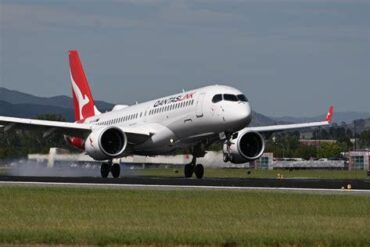
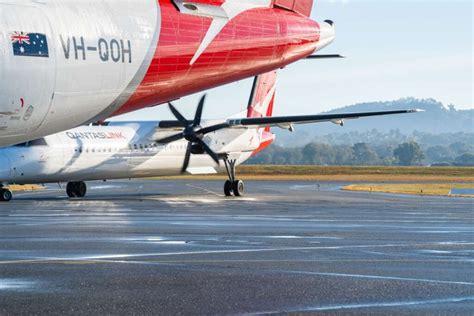
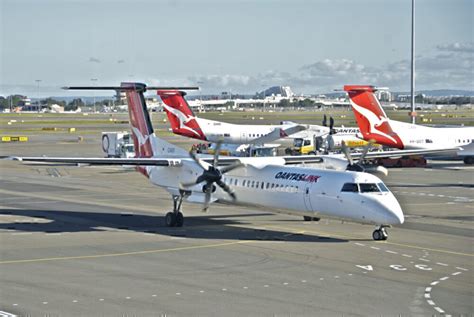
The staff base closures coincide with a major fleet renewal program within QantasLink. The regional subsidiary is currently phasing out its aging Fokker 100 and Dash 8-Q300 aircraft, replacing them with modern, fuel-efficient models designed to strengthen the network.
Key additions to the QantasLink fleet include:
- 22 Airbus A220-300 aircraft (7 already in service).
- 3 Airbus A320-200 (with 16 already active).
- 7 De Havilland Canada Dash 8-400 aircraft (adding to an existing fleet of 38).
These fleet upgrades are expected to enhance passenger comfort, improve reliability, and enable the airline to explore new routes, including short-haul international services such as Brisbane–Wellington.
The Airbus A220s, operated by National Jet Systems, will play a central role in this transition, providing greater fuel efficiency and longer range capabilities compared to the older regional aircraft. The addition of aircraft from Jetstar and WestJet has also bolstered capacity, ensuring that QantasLink can meet growing regional demand while retiring its oldest planes.

Impact on Canberra, Hobart, and Mildura
Although Qantas has confirmed that flight schedules and frequencies to Canberra, Hobart, and Mildura will remain unchanged, the closure of crew bases introduces new dynamics for airline staff. Pilots and cabin crew will now need to operate under fly-in-fly-out (FIFO) arrangements, traveling from major hubs before commencing their shifts.
While such arrangements are common in the aviation industry, particularly for regional operations, they introduce work-life balance challenges for staff living outside metropolitan areas. For example, a Hobart-based crew member commuting to Sydney for work would face longer duty days and extended time away from home, even if supported with confirmed flights and accommodation.
The concern extends beyond staff to the wider community. Local businesses, from hospitality providers to airport contractors, often benefit from the presence of Qantas crew bases. Their removal could have a subtle but noticeable economic impact over time, especially in smaller markets like Mildura.
Union and Political Reactions Intensify
The TWU’s opposition has been sharp, framing the move as another example of Qantas prioritizing profit over people. According to the union, the airline is asking staff to choose between “family and the airline,” undermining loyalty and pushing some toward alternative employers.
This sentiment resonates strongly after years of turbulence at Qantas, where issues ranging from COVID-era layoffs to executive pay controversies have drawn public scrutiny. The base closures risk amplifying existing tensions between management and frontline staff, particularly at a time when the airline is under pressure to restore public trust.
Politicians have seized on the issue as well. In Tasmania, Andrew Wilkie described the move as “short-sighted” and damaging to regional connectivity. In Canberra, critics argue that reducing local aviation presence is inconsistent with the city’s role as a national hub of government and business.
Broader Strategy Behind the Restructure
Beyond cost savings and logistical improvements, QantasLink’s base consolidation reflects a broader industry trend toward centralization. Airlines worldwide are increasingly focusing on hub-and-spoke models, where regional services are anchored to large metropolitan airports.
By consolidating bases, Qantas can:
- Optimize aircraft utilization by aligning crew and aircraft at larger hubs.
- Reduce cancellations and delays linked to staffing shortages at smaller bases.
- Support its fleet modernization program by concentrating resources where new aircraft are being deployed.
- Lower operating costs by reducing overhead tied to regional crew bases.
This strategy, however, comes with reputational risks. Qantas has historically positioned itself as Australia’s national carrier, with a responsibility to serve not only major cities but also regional communities. Decisions that appear to weaken this commitment may challenge that image, particularly if regional staff feel neglected.
Future Outlook for QantasLink
As QantasLink prepares for its new fleet and operational model, the airline insists that no routes will be lost, and that services to Canberra, Hobart, and Mildura will remain stable. The company’s growth strategy, fueled by the Airbus A220 introduction, suggests that regional passengers may even see improved service quality in the long term.
Still, the transition period leading up to 2026 is likely to be turbulent for affected staff and communities. The success of the restructuring will hinge on Qantas’ ability to balance efficiency with employee satisfaction while maintaining the trust of regional travelers.
If executed smoothly, the move could enhance QantasLink’s competitiveness and strengthen its ability to serve regional Australia for decades to come. But if mismanaged, it risks fueling labor unrest and damaging the airline’s already fragile reputation in the eyes of workers and passengers alike.
Conclusion
The planned closure of QantasLink’s staff bases in Canberra, Hobart, and Mildura marks a pivotal moment in the airline’s ongoing transformation. Driven by efficiency goals, fleet renewal, and hub consolidation, the strategy aims to create a more reliable and cost-effective regional network.
However, the move has sparked strong opposition from unions and local leaders, who argue that the closures will disrupt lives and weaken ties with regional communities. The outcome will depend on how effectively Qantas can deliver on its promises of job security, commuting support, and sustained regional services.
With new aircraft arriving and an evolving network strategy, QantasLink stands at a crossroads between modernization and tradition. How the airline navigates this path will determine not only its operational strength but also its relationship with the communities that form the backbone of Australia’s regional aviation sector.