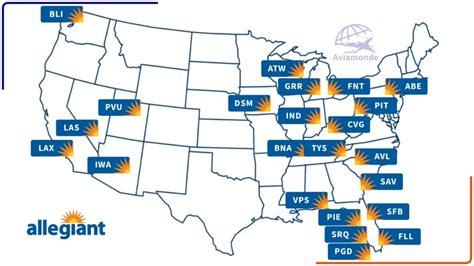
The decision by Allegiant Air to close its crew bases at Bellingham International Airport and Savannah Hilton Head International Airport marks a decisive shift in how the ultra-low-cost carrier is reshaping its operational footprint. Scheduled for late 2026, with Savannah’s base confirmed to cease operations in November, the move reflects a calculated effort to streamline costs while maintaining route flexibility in a volatile travel environment.
This is not a retreat—it is a recalibration. Allegiant has built its reputation on connecting underserved cities to high-demand leisure destinations, but the economics of maintaining smaller crew bases have become increasingly difficult to justify. Rising operational costs, fluctuating demand patterns, and staffing complexities have forced the airline to rethink where and how it deploys its workforce.
Why Allegiant Is Closing Smaller Crew Bases
At the heart of this decision lies a simple reality: efficiency drives profitability in the ultra-low-cost model. Crew bases are not just administrative hubs—they are critical nodes that influence aircraft scheduling, crew duty limits, and overall operational reliability.
For Allegiant, maintaining bases in Bellingham and Savannah no longer aligns with its evolving cost structure. Both locations, while strategically valuable in the past, operate at a scale significantly smaller than major hubs like Las Vegas or Orlando. Smaller bases often lead to underutilized crews, increased standby requirements, and higher per-flight costs.
The airline’s leadership is prioritizing higher utilization rates, ensuring that pilots and flight attendants are deployed where demand is strongest and most consistent. By consolidating operations into larger bases, Allegiant can reduce idle time and improve scheduling efficiency across its network.
Operational Impact on Crews and Airport Activity
The closures will directly affect pilots, cabin crew, and support staff currently stationed at both airports. Employees are expected to face three primary options: relocation to another base, commuting to assigned flights, or exiting the company altogether.
While Allegiant has indicated that flights from both Bellingham and Savannah will continue, the absence of locally based crews introduces new logistical complexities. Aircraft may need to be repositioned more frequently, and crew scheduling could become more intricate, potentially increasing reliance on overnight stays and multi-leg duty cycles.
For local airports, the impact is more nuanced. In Bellingham, the airline has long benefited from cross-border traffic, attracting Canadian travelers seeking lower fares than those available at Vancouver-area airports. The removal of a crew base may slightly reduce operational fluidity, but it does not necessarily signal a decline in passenger demand.
Savannah presents a different dynamic. The airport has experienced steady growth fueled by tourism and regional population increases. However, growth alone does not guarantee efficiency. If flight volumes fluctuate seasonally—as is typical in leisure-heavy markets—the cost of maintaining a permanent crew base can outweigh its benefits.
A Strategic Shift Toward Network Optimization
Allegiant’s broader strategy revolves around flexibility and rapid market adaptation. Unlike traditional carriers that rely heavily on business travel, Allegiant focuses on leisure routes that are often seasonal and demand-sensitive. This requires a network that can expand and contract quickly without being anchored by fixed operational costs.
Closing smaller crew bases is a logical extension of this philosophy. By relying on larger hubs, the airline gains the ability to redeploy aircraft and crews to more profitable routes with minimal friction. This is particularly important as travel demand continues to evolve in the post-pandemic landscape, where predictability remains elusive.
The airline has already been trimming underperforming routes, redirecting capacity toward markets with stronger yield potential. Passengers may notice adjustments in flight frequency rather than outright cancellations—a subtle but telling sign of how Allegiant manages its network.
Fleet Evolution and Cost Efficiency
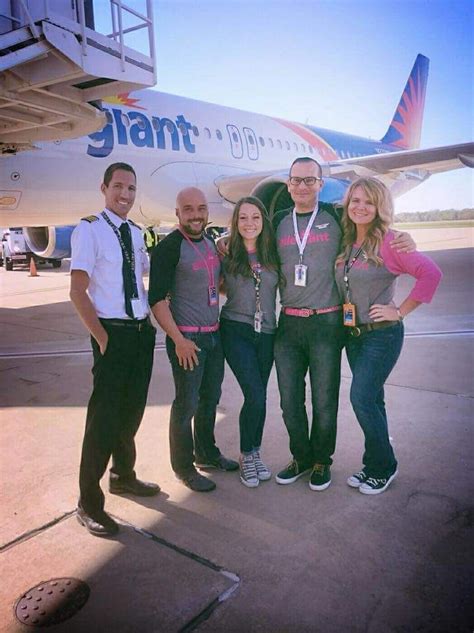
Another key factor underpinning this decision is Allegiant’s ongoing fleet modernization. The airline operates primarily Airbus A319 and A320 aircraft, while gradually incorporating Boeing 737 variants into its lineup. The retirement of older, less efficient aircraft has significantly reduced maintenance costs and improved fuel efficiency.
A more standardized fleet simplifies training, maintenance, and scheduling—benefits that are amplified when operations are concentrated in fewer, larger bases. This synergy between fleet strategy and network restructuring is central to Allegiant’s long-term cost discipline.
Additionally, the airline continues to expand ancillary revenue streams, including bundled vacation packages and hotel partnerships. These initiatives rely on maintaining low base fares, which in turn depend on keeping operational costs tightly controlled.
What This Means for Passengers
For travelers, the immediate impact is likely to be minimal but noticeable. Flights from both Bellingham and Savannah are expected to continue, but schedules may become less frequent or more variable. The absence of a local crew base could also introduce occasional disruptions, particularly during irregular operations.
However, Allegiant’s core value proposition—affordable, direct flights to leisure destinations—remains unchanged. The airline’s ability to adapt quickly to demand shifts ensures that routes with strong performance will continue to receive capacity.
Passengers in Bellingham, especially those crossing the border from Canada, will still find competitive pricing, while Savannah travelers can expect continued access to popular vacation routes, particularly to Florida and other warm-weather destinations.
A Glimpse Into Allegiant’s Future Strategy
The closure of these crew bases is not an isolated event—it is part of a broader trend within the airline industry. Carriers worldwide are reassessing their networks, seeking to balance cost efficiency with operational resilience.
For Allegiant, the path forward is clear: leaner operations, smarter deployment, and relentless focus on profitability. The airline’s willingness to enter and exit markets based on performance has long been a defining characteristic, and this latest move reinforces that approach.
As new aircraft deliveries influence capacity planning, further adjustments to the network—and potentially additional base closures—remain a possibility. This level of adaptability is not just a competitive advantage; it is a necessity in an industry where margins are thin and conditions can change rapidly.
In the end, the closures at Bellingham and Savannah represent a strategic pivot rather than a retreat. By concentrating resources where they generate the greatest return, Allegiant is positioning itself to navigate uncertainty while preserving its low-cost DNA—a balancing act that will define its success in the years ahead.