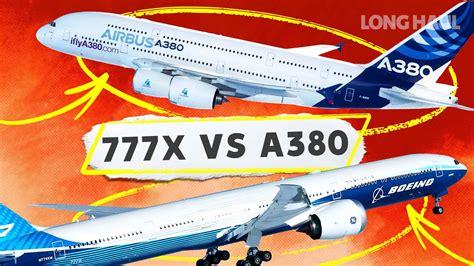
The aerospace world has been buzzing with claims that the Boeing 777X delivers 20% lower operating costs compared to the Airbus A380, a statement that has fueled intense debate among carriers and aviation analysts. This figure, often cited in marketing materials, requires careful scrutiny. While it sounds like a game-changing advantage, the reality is more nuanced and depends on a complex interplay of engine technology, aircraft design, and operational deployment. Understanding whether this claim holds up in practical terms requires dissecting both aircraft’s design philosophies, cost structures, and real-world operational dynamics.
The Airbus A380 was conceived as a solution to airport congestion, carrying over 500 passengers on long-haul flights, effectively consolidating capacity and reducing slot pressure at major hubs. Boeing, conversely, designed the 777X to combine high capacity with two-engine efficiency, effectively challenging the viability of four-engine giants in modern airline networks. The 777X relies on the GE9X engines, composite wings, and an optimized airframe to deliver significant fuel savings, yet the 20% figure is primarily a marketing benchmark against the older Boeing 777-300ER, not the A380 directly. When evaluated on a per-seat cost basis, the real-world advantage over the A380 hovers closer to 13%, influenced heavily by passenger load and route dynamics.
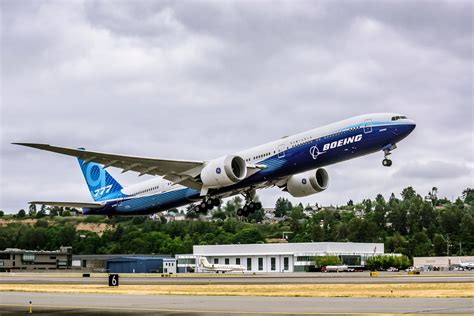
Marketing statistics, while technically correct within a specific context, often mislead non-specialist audiences. The 20% reduction highlights the generational leap achieved with the 777X’s twin-engine design, showcasing advancements in thrust, fuel efficiency, and emissions. The GE9X engines generate approximately 110,000 lbs of thrust each, replacing the four-engine architecture of the A380, significantly reducing engine-related maintenance, spare parts inventory, and labor. A twin-engine configuration inherently offers a lower baseline operating cost, especially under partial load scenarios, making the 777X profitable across a broader spectrum of airline operations. However, the A380’s efficiency plummets if the aircraft is not near full capacity, as the fixed costs of four engines remain constant regardless of passenger count.
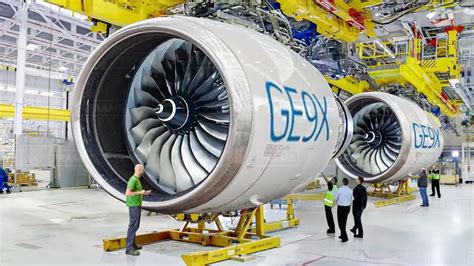
The GE9X represents a quantum leap in propulsion technology, featuring a 134-inch fan and a bypass ratio of 10:1, producing a remarkable 5% reduction in specific fuel consumption relative to its peers. The engine’s scale and efficiency translate into both economic and environmental benefits. Its high overall pressure ratio of 60:1 ensures that energy extraction from fuel is maximized, allowing the 777X to comply with noise regulations while maintaining lower carbon emissions. For airlines, this translates to tangible savings across large fleets, potentially amounting to tens of millions of dollars annually if the promised fuel economy holds under operational conditions. Yet, these advantages remain partly theoretical until the aircraft completes extensive commercial service cycles.
Despite the promise, early adopters face uncertainties. Airlines such as Emirates, with massive 777X orders, emphasize rigorous testing and operational validation, reflecting cautious optimism. Delays in production and certification have extended the delivery timeline to 2027, forcing carriers to continue operating older 777-300ERs or A340s, incurring maintenance and operational costs while awaiting the efficiency benefits of the new fleet. Boeing has absorbed billions in program adjustments, but the airlines bear the operational impact directly, highlighting the difference between engineered potential and realized cost savings.
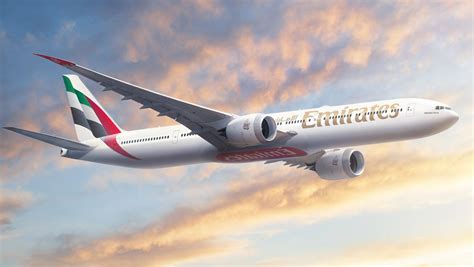
A deeper comparison reveals that the Airbus A350-1000 may serve as a more balanced benchmark than the A380. Unlike the now-out-of-production A380, the A350-1000 features extensive composite construction—over 70% of the airframe—resulting in a significantly lighter aircraft with lower trip costs. The 777X remains primarily metallic with 30% composites in the wings, contributing to a heavier empty weight of around 400,000 lbs compared to 284,000 lbs for the A350-1000. While the 777X excels in per-seat efficiency when fully loaded, the A350-1000 demonstrates superior trip cost efficiency, particularly on thinner routes where full capacity cannot be achieved. This material and design philosophy underlines why airlines may opt for the A350-1000 over the 777X for specific operational contexts.
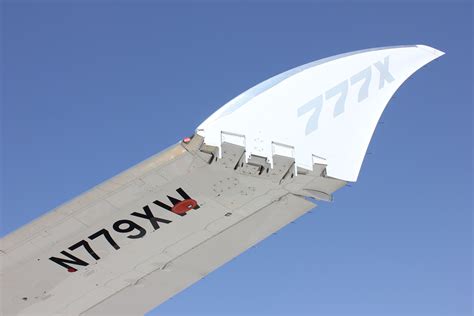
The 777X introduces folding wingtips, a feature designed to enable Code E gate compatibility without terminal modifications—a key cost and logistical advantage over the A380. However, this innovation adds mechanical complexity, with multi-layered locking systems that require careful maintenance. Early operational cycles could see higher maintenance costs due to this complexity, potentially offsetting fuel savings if mechanical reliability issues arise. Additionally, the GE9X engine, operating at unprecedented thermal and pressure extremes, introduces a steep learning curve for maintenance crews, with durability and reliability factors still under observation before large-scale deployment.
Operational data from prior engine programs such as the GE90 and Trent XWB suggest that initial durability issues are common, yet the GE9X’s extreme specifications amplify potential risks. Airlines must consider these technical variables when modeling operating costs, as frequent engine overhauls or mechanical interventions could erode the projected 20% savings. Until the 777X completes real-world cycles in challenging climates and high-utilization conditions, cost assessments remain partially speculative, highlighting the tension between marketing figures and operational reality.
The economics of the 777X versus the A380 also intersect with airport infrastructure considerations. The A380 required significant terminal and gate modifications due to its size, adding hidden costs beyond fuel and maintenance. The 777X, with its slightly smaller footprint and folding wingtips, integrates more seamlessly into existing airport infrastructure, reducing indirect costs and increasing operational flexibility. Airlines operating in congested hubs gain additional revenue opportunities from higher departure frequency and reduced gate turnaround times, further reinforcing the 777X’s cost-efficiency narrative.
In summary, while Boeing’s marketing emphasizes a 20% reduction in operating costs, the comparison to the Airbus A380 yields a more nuanced story. The true per-seat cost reduction approximates 13%, a figure still significant enough to influence fleet replacement decisions, particularly for carriers emphasizing route flexibility and twin-engine economics. The 777X’s technological innovations—including the GE9X engine, composite wings, and folding wingtips—represent a leap forward in design efficiency and operational economics, but the ultimate validation of cost claims depends on consistent performance under the varied and often harsh conditions of global airline operations.
Ultimately, the Boeing 777X is positioned as a bridge between high-capacity air travel and sustainable operational efficiency. It captures the market niche once dominated by four-engine behemoths while mitigating their most significant financial drawbacks. Airlines evaluating fleet strategy must weigh per-seat efficiency, maintenance complexity, infrastructure compatibility, and operational flexibility. The A380 remains an iconic symbol of engineering prowess and passenger experience, yet the 777X embodies the future of practical aviation economics, where smarter design trumps sheer size. In the global airline market of the next two decades, the 777X’s efficiency, if realized, will define a new standard in long-haul profitability, proving that innovation and financial prudence can coexist at cruising altitude.
The conversation surrounding the 777X is more than a comparison of two aircraft—it is a reflection of the evolving economic and operational imperatives of modern aviation. From engine efficiency to airframe design, the 777X embodies a philosophy that prioritizes adaptability, cost-efficiency, and environmental responsibility. While the A380 will always be celebrated for its grandeur, the 777X represents the pragmatic evolution, designed to deliver high capacity without the prohibitive costs of its four-engine predecessor. The next decade will provide definitive answers as operational data accumulate, but early indicators suggest that Boeing’s investment in twin-engine innovation has positioned the 777X as a potent contender in the high-capacity, long-haul market, challenging legacy giants and redefining what it means to fly efficiently.