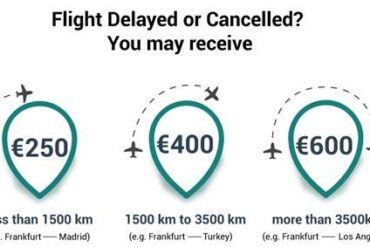
Air travel disruptions are an unavoidable part of modern aviation. Even the most efficient airlines occasionally face delays, cancellations, and overbooked flights that leave passengers stranded at airports across the world. Under European Regulation EC 261/2004, passengers may be entitled to compensation ranging from €250 to €600 depending on flight distance and delay duration. However, navigating the process of claiming compensation directly from airlines can be complex, time-consuming, and frustrating.
Because of this complexity, many travelers choose to work with flight compensation claim companies that handle the process on their behalf. These specialized services manage documentation, negotiate with airlines, and even initiate legal proceedings if necessary. Yet with multiple providers in the market, choosing the right company becomes a crucial decision that can significantly affect how much compensation you ultimately receive.
The ClaimFlights Test provides an objective comparison of five major flight compensation firms. The evaluation examined factors such as claim submission processes, fees, estimated payouts, and customer satisfaction ratings. Conducted between April and June 2025, the research offers valuable insights for travelers seeking reliable assistance with delayed or cancelled flight claims.
In this comprehensive guide, we explore the Top 5 Flight Compensation Claim Companies, examining how each operates, how much they charge, and what passengers should consider before selecting a service provider.
Understanding EU 261 Flight Compensation Rights
Before exploring the companies themselves, it is essential to understand the regulation that makes flight compensation possible. EU Regulation EC 261/2004 protects passengers traveling to, from, or within the European Union when flights experience significant disruption.
This legislation ensures that travelers receive compensation if their flight:
- Is delayed by more than three hours
- Is cancelled without sufficient notice
- Is overbooked, resulting in denied boarding
The compensation amount depends primarily on flight distance:
- Up to 1,500 km: €250
- 1,500 km – 3,500 km: €400
- Over 3,500 km: €600
Although these rights exist to protect passengers, enforcing them can be difficult. Airlines sometimes dispute claims or require extensive documentation. For many travelers, particularly those unfamiliar with aviation regulations or legal processes, pursuing compensation independently can become overwhelming.
This challenge explains the growing popularity of flight compensation claim services, which simplify the process by managing the claim from start to finish.
Why Passengers Use Flight Compensation Claim Companies
Flight compensation companies operate on a “no win, no fee” model in most cases. This means passengers pay nothing upfront. Instead, the company collects a percentage of the compensation only after the claim succeeds.
The appeal of these services lies in several advantages:
- Expert knowledge of EU aviation law
- Direct communication with airlines
- Handling of legal proceedings if required
- Simplified online claim submission
For travelers who lack the time or patience to dispute a claim themselves, these companies offer a convenient solution. However, their service fees can vary widely, which is why comparing providers carefully is important.
The ClaimFlights Test evaluates five widely known companies that specialize in assisting passengers with compensation claims.
The Five Flight Compensation Companies Evaluated
The following companies were included in the independent comparison conducted by ClaimFlights. They were selected based on their presence in the European market and availability of online claim services.
- Flightright
- AirHelp
- ClaimFlights
- AirAdvisor
- Skycop
Each of these providers offers assistance with claims related to flight delays, cancellations, and denied boarding. While their core services are similar, differences emerge in areas such as fees, claim submission steps, company structure, and customer satisfaction.
Public data from Northdata and the EUIPO trademark registry shows that these companies were established between 2010 and 2020, reflecting the growing demand for passenger rights services following the introduction of EU 261 regulations.
Flightright, founded in Berlin in 2010, is one of the earliest entrants in the sector. AirHelp followed in 2015, establishing its headquarters in Gdańsk, Poland and expanding globally with a complex corporate structure. ClaimFlights also launched in 2015, operating from Konstanz, Germany. Newer competitors include AirAdvisor, registered in 2017 in Kraków, and Skycop, operating under the name UAB Skycop Team.
Understanding each company’s background provides helpful context, but operational differences become more evident when examining how claims are processed.
Claim Submission and Handling Process
One of the most important factors when choosing a compensation company is the simplicity of the claim process. Travelers often prefer platforms that allow quick submission with minimal documentation.
The ClaimFlights Test evaluated the number of steps required to submit a claim, the documents requested, and the method used to authorize representation.
The findings revealed significant differences between providers.
ClaimFlights demonstrated the most streamlined process, requiring approximately 8 to 10 steps. Passengers typically upload their booking confirmation and e-ticket, then provide a digital signature authorizing the company to pursue the claim.
Skycop ranked second in terms of simplicity, with approximately 10 to 12 steps. The platform requests additional documentation such as passport or ID verification, which may extend the submission process slightly.
AirAdvisor requires roughly 12 to 15 steps, including documentation like boarding passes and identification.
More complex processes were observed with AirHelp and Flightright, which required between 13 and 20 steps depending on the case. Although these platforms remain user-friendly, the higher number of steps can create a longer claim submission experience for passengers.
The complexity of the process does not necessarily affect success rates, but it can influence user experience and convenience, especially for travelers seeking a quick and straightforward claim submission.
How Much Flight Compensation Companies Charge
Fees represent the most critical factor affecting how much money passengers ultimately receive. Most companies charge a service commission, and some add additional court fees if legal action becomes necessary.
Understanding these charges helps travelers evaluate the true cost of using a compensation service.
ClaimFlights Fee Structure
ClaimFlights applies a 25% commission on the total EU compensation amount. This fee includes all services, including legal representation if court proceedings become necessary.
For example:
- €250 compensation → passenger receives €187.50
- €400 compensation → passenger receives €300
- €600 compensation → passenger receives €450
This transparent pricing structure ensures travelers know the exact deduction before submitting their claim.
Flightright Fee Structure
Flightright applies a service fee ranging from 20% to 30%, plus 19% VAT. If legal proceedings occur, an additional 14% court fee may be charged.
In scenarios where the highest fee range applies, total deductions may reach approximately 49.7% of the compensation amount.
For passengers, this means a €600 compensation claim could result in roughly €301.80 after deductions.
AirHelp Fee Structure
AirHelp charges a 35% service fee, including VAT. If a case proceeds to court, an additional 15% legal action fee applies.
In these situations, total deductions can reach 50% of the compensation amount, leaving passengers with half of the payout.
AirAdvisor Fee Structure
AirAdvisor’s pricing structure includes a 30% service fee, increasing to 50% total commission if court proceedings are required.
This means passengers could receive only half of their compensation in cases requiring legal intervention.
Skycop Fee Structure
Skycop charges a 44% service fee, including VAT. If court proceedings are necessary, the total deduction may increase to 50% of the compensation amount.
Although the service includes legal representation, the final payout for travelers may be significantly reduced compared with companies charging lower commissions.
Estimated Final Payout After All Fees
Because travelers cannot predict whether their claim will require court action, the ClaimFlights Test calculated payouts using maximum potential fee scenarios.
Under these assumptions, the estimated payouts appear as follows:
- ClaimFlights – Passengers receive 75% of compensation
- Flightright – Passengers receive approximately 50.3%
- AirHelp – Passengers receive 50%
- Skycop – Passengers receive 50%
- AirAdvisor – Passengers receive 50%
While court involvement is not required in many cases, this comparison highlights the maximum possible deductions, giving passengers a clearer understanding of potential outcomes.
The results show that fee structures can significantly affect how much compensation passengers ultimately keep.
Customer Ratings and Support Availability
Beyond pricing, customer satisfaction and support availability play an important role in determining the reliability of a compensation service.
The ClaimFlights Test reviewed Google ratings and support channels offered by each provider.
ClaimFlights achieved the highest rating, with 4.8 stars, offering support through phone and email during weekday business hours.
Flightright followed with 4.3 stars, providing phone, email, and automated 24/7 chat assistance.
Skycop received 2.6 stars, indicating more mixed customer feedback.
AirHelp recorded a 2.3-star rating, despite offering email support and continuous live chat functionality.
Finally, AirAdvisor received the lowest rating, 1.0 star, although it still provides support through phone and email during weekday hours.

These ratings suggest that service quality and communication efficiency can vary considerably between providers, emphasizing the importance of researching customer feedback before selecting a company.
Key Factors to Consider When Choosing a Flight Compensation Provider
Selecting the right claim company requires careful evaluation of several factors beyond simple pricing comparisons.
Reputation and Customer Feedback
Passenger reviews often reveal valuable insights into how companies handle claims, communicate with customers, and resolve disputes with airlines.
Fee Transparency
Understanding the complete fee structure, including potential court costs, prevents unpleasant surprises when compensation is paid.
Industry Experience
Companies with years of experience handling airline disputes generally possess deeper knowledge of aviation regulations and legal processes.
Accreditation and Legal Standing
Reliable providers typically maintain registered trademarks, verified business registrations, and legal accreditation that demonstrate legitimacy.
Customer Support
A responsive support team can make a major difference when claims require additional documentation or legal clarification.
Evaluating these factors helps travelers identify a company that aligns with their expectations for transparency, reliability, and payout value.
Final Ranking from the ClaimFlights Test
Based on the criteria examined in the independent evaluation—claim process complexity, fees, support availability, and customer reviews—the companies ranked as follows:
- ClaimFlights
- Flightright
- Skycop
- AirAdvisor
- AirHelp
This ranking reflects the specific parameters used during the evaluation period and is intended to provide an informational comparison rather than a definitive recommendation. Individual experiences may vary depending on claim complexity, airline response, and documentation requirements.
Conclusion: Making an Informed Choice for Flight Compensation Claims
Flight disruptions can transform a routine journey into a stressful travel experience. Fortunately, EU Regulation EC 261/2004 provides passengers with strong legal protections, ensuring compensation when airlines fail to meet operational obligations.
However, navigating the claims process independently often requires persistence and familiarity with airline regulations. Flight compensation companies simplify this process by handling negotiations, documentation, and legal action on behalf of travelers.
The ClaimFlights Test comparison highlights the key differences between major providers in terms of fees, claim processes, customer satisfaction, and final payouts. While each service offers similar core functionality, variations in commission rates and user experience can significantly influence the outcome for passengers.
By carefully evaluating pricing transparency, company reputation, and support services, travelers can select a compensation partner that maximizes their chances of a successful claim while preserving as much of their entitled compensation as possible.
Understanding these differences empowers passengers to assert their rights confidently and recover the compensation they deserve after a delayed or cancelled flight.
Frequently Asked Questions
What flights qualify for EU 261 compensation?
Flights qualify if they depart from an EU airport or arrive in the EU on an EU-based airline, and experience delays of three hours or more, cancellations, or denied boarding due to overbooking.
Do I need a compensation company to file a claim?
Passengers can file claims directly with airlines, but many travelers prefer compensation companies because they manage the process, negotiate with airlines, and handle legal proceedings if necessary.
How long does a flight compensation claim take?
Simple cases may be resolved within a few weeks, while claims involving airline disputes or court proceedings can take several months or longer depending on legal requirements.