Imagine soaring miles above the Earth, traversing continents and oceans, all while scrolling through Instagram, replying to work emails, or streaming your favorite shows. In an era when constant connectivity is more expectation than luxury, in-flight Wi-Fi has transformed modern aviation. Yet behind this airborne internet access lies an intricate web of high-tech infrastructure, sophisticated engineering, and global networks that span the Earth and beyond.
The High-Flying Demand for Seamless Connectivity
Air travelers now expect Wi-Fi access as part of their onboard experience, not unlike seat belts and tray tables. Airlines recognize this trend and are heavily investing in better systems to meet rising passenger expectations. From business travelers needing VPN access mid-flight to teenagers uploading TikToks from their tray tables, the demand is relentless and only growing.
Still, not all in-flight Wi-Fi is created equal. You may recall sluggish load times or disconnections during a flight. That’s largely due to the underlying connection technology used—either air-to-ground (ATG) systems or satellite-based networks. Each comes with its own performance metrics, strengths, and limitations.

Air-to-Ground (ATG): Cellular Internet from the Skies
Air-to-ground Wi-Fi systems function similarly to terrestrial cellular networks. Onboard antennas located on the underside of the aircraft connect to a series of ground-based cell towers. As the plane cruises through the sky, these towers beam internet signals upward, allowing the aircraft to hop between signals in real time. The signal is captured by the aircraft’s antenna, passed through an onboard server, and then dispersed across the cabin via traditional Wi-Fi routers.
These systems offer some compelling benefits:
- Lower installation and operational costs
- Minimal aircraft downtime for retrofitting
- Sufficient for basic online activity like emailing and messaging
However, the limitations are just as stark. Since ATG relies on physical infrastructure on the ground, coverage is limited to areas within range of those towers. Flying over oceans, remote mountain regions, or deserts typically results in a loss of connection. Maximum download speeds generally peak around 3 to 5 Mbps, which quickly becomes insufficient when shared among dozens—or hundreds—of passengers.
Satellite-Based Wi-Fi: Broadband from Orbit
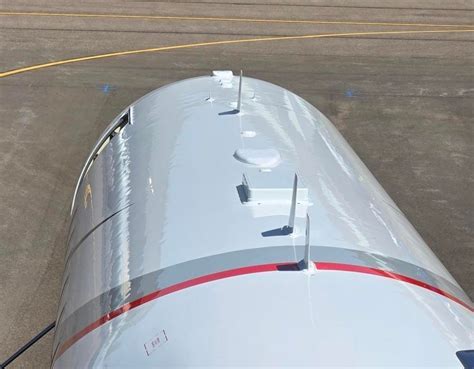
To solve the coverage conundrum and provide faster, more reliable service, many airlines are upgrading to satellite-based in-flight Wi-Fi. Unlike ATG systems, satellite-enabled aircraft use antennas mounted on the top of the fuselage to connect with orbiting satellites.
These satellites, positioned either in geostationary orbit (GEO) or low-Earth orbit (LEO), act as relays between the plane and ground-based internet infrastructure. Data is beamed from the aircraft to the satellite, then down to a ground station, which connects to terrestrial networks and relays data back. It’s a two-way loop that brings the cloud into the clouds.
Ku-band vs. Ka-band: The Frequency Divide
Modern satellite systems use either Ku-band or Ka-band radio frequencies:
- Ku-band (12–18 GHz): Speeds typically range from 25 to 50 Mbps, offering decent performance for casual browsing and limited streaming.
- Ka-band (26.5–40 GHz): These higher-frequency systems offer up to 70 Mbps, capable of supporting HD video streaming, real-time video calls, and high-demand applications.
As Ka-band systems become more widespread, the in-flight experience increasingly mirrors the high-speed internet many enjoy on the ground.

Behind the Scenes: How the System Flows
The process of delivering in-flight Wi-Fi via satellite can be broken down into several key stages:
- Satellite acquisition: Aircraft aligns its top-mounted antenna with a satellite based on flight location and trajectory.
- Data relay: The satellite beams the signal down to a ground station linked to an internet backbone.
- Return uplink: Data from the internet (like the webpage you’re loading) is transmitted back up to the satellite.
- Cabin distribution: The signal is then routed onboard through a local network for passenger access.
Each element must remain synchronized even as the aircraft moves at 500+ mph through varying geographies and atmospheric conditions. Satellite tracking systems use gyro-stabilization, GPS, and inertial navigation to maintain precise alignment with orbital assets.
Challenges of the Shared Connection
While satellite connectivity vastly expands coverage, the shared nature of the onboard network presents unique challenges. A single satellite beam may cover multiple aircraft, and each aircraft serves hundreds of connected devices. The network dynamically allocates bandwidth, often resulting in slower speeds during peak usage.
Moreover, real-time streaming and cloud applications consume considerable bandwidth. To maintain balance, some airlines throttle specific content types or require tiered payment plans, reserving premium bandwidth for higher-paying customers.
Major Players Powering the Skies
Several companies dominate the in-flight connectivity space, offering different technologies and levels of service:
- Gogo: Specializes in ATG systems and now offers satellite-based 2Ku service
- Viasat: Uses high-capacity Ka-band satellites with global coverage
- Inmarsat: Provides GX Aviation service with both GEO and emerging LEO support
- Intelsat (formerly Panasonic Avionics): Offers Ku-band services on long-haul flights
These providers often form exclusive partnerships with airlines, tailoring solutions based on route networks, fleet composition, and passenger demographics.
The Future: Free Wi-Fi, LEO Satellites, and 5G at Altitude
As demand escalates, airlines are not only investing in faster technologies, but also experimenting with free Wi-Fi models to attract customers. American Airlines, JetBlue, and Delta have all begun rolling out free connectivity on select aircraft.
Simultaneously, the arrival of low-Earth orbit satellite constellations like SpaceX’s Starlink and OneWeb promises a paradigm shift. Unlike GEO satellites, which orbit at 22,000 miles, LEO satellites hover between 300 to 1,200 miles above Earth. This proximity reduces latency and increases throughput, providing a more ground-like internet experience midair.
Additionally, the future of in-flight connectivity includes:
- 5G integration, especially in hybrid ATG-satellite systems
- Edge computing onboard to reduce dependency on cloud
- AI-driven traffic management to optimize bandwidth in real time
Passenger Tips: Getting the Most from In-Flight Wi-Fi
Even the best technology has limitations. For optimal in-flight connectivity:
- Choose airlines with Ka-band or Viasat-powered fleets for long-haul travel
- Avoid peak usage periods (usually early flight hours)
- Opt for premium plans when speed and reliability are mission-critical
- Download essential content before takeoff as a backup
Conclusion: Connectivity Without Boundaries
From the cabin ceiling to the stars above, modern in-flight Wi-Fi reflects decades of technological evolution, transforming once-unthinkable ideas into everyday conveniences. What was once a luxury is fast becoming a standard, with innovation pushing boundaries to deliver seamless internet even as aircraft cross the most remote stretches of our planet.
As satellites grow more powerful, networks more intelligent, and travelers more connected, in-flight Wi-Fi will no longer feel like a marvel—it will simply be another essential service of air travel in the 21st century.