Southwest Airlines, the fourth-largest carrier in the United States, is operating at an extraordinary scale, recording 4,194 daily movements—a combined figure of takeoffs and landings—for the month of June. In a striking show of operational concentration, 94% of those movements come from just 10 core airports, which play a defining role in the airline’s domestic strategy and connectivity matrix. With Denver International Airport claiming the top spot, the numbers reflect a deep-rooted reliance on select strategic hubs to support both point-to-point traffic and connecting flows vital to Southwest’s low-cost business model.
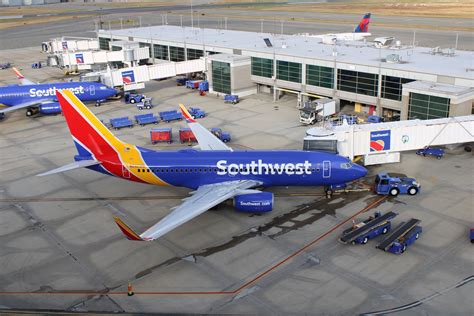
Denver: Southwest’s Operational Powerhouse
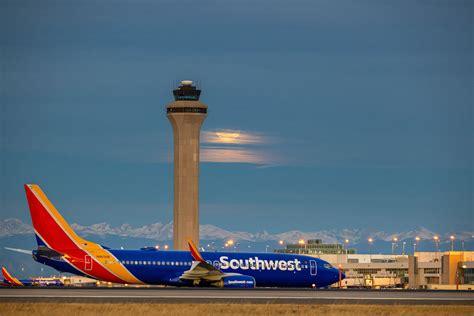
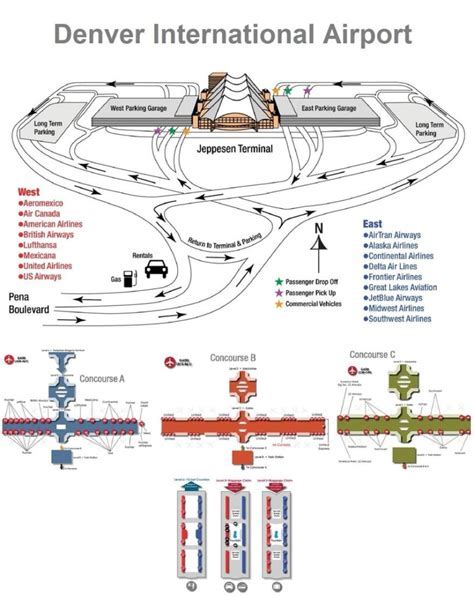
Southwest’s relationship with Denver International Airport (DEN) has evolved rapidly since its entry into the market in 2006. From just 40 daily movements and a modest seven-route portfolio at launch, the airline has expanded to 565 daily movements across 91 routes in June—making Denver its most active airport. Representing 28% of the airport’s total operations, this dominance is particularly remarkable given the competitive landscape, with United Airlines and Frontier also maintaining substantial presences.
Yet Southwest’s strength in Denver is not purely based on volume. The carrier has intricately woven domestic connectivity through the airport, with 556 out of 565 movements being within the United States. Despite not being formally designated as a hub, over 53% of Southwest passengers at Denver are connecting to other flights, effectively transforming it into a de facto hub. The route from Dallas Love Field to San Francisco via Denver stands out as a prime example of how the carrier engineers high-volume transit flows through its busiest airport.
The route-dependent variability in local versus connecting traffic further illustrates the airport’s complex role. On high-volume point-to-point routes like San Antonio-Denver, only 27% of passengers connect. In contrast, nearly all traffic from Colorado Springs (a short hop away) connects onward, with 99.4% of passengers transferring to other flights. This strategic mixing of local and connecting demand boosts route sustainability and fills aircraft that might otherwise fly with low load factors.
Las Vegas and Midway: Anchors of the West and Midwest
Las Vegas Harry Reid International Airport ranks second, handling 490 daily movements and capturing 43% of total airport operations for June. Its strategic western location, proximity to leisure markets, and an efficient network of 70 routes make it a prime candidate for short-haul, high-turnover operations. Las Vegas offers favorable weather and airport infrastructure that allow for a dense flight schedule, supporting the airline’s model of high-frequency, quick-turn services.
Chicago Midway comes next with 452 movements, accounting for a dominant 91% share of that airport’s operations. As a long-time Southwest stronghold, Midway’s extensive 77-route network reaches deep into both coasts and across the Midwest. Its near-total operational control allows Southwest to schedule at optimal times, minimize delays, and streamline gate usage—a critical edge in high-density environments.

Baltimore, Dallas Love Field, and Phoenix: High Frequency Meets Connectivity
Southwest’s Baltimore/Washington International Thurgood Marshall Airport (BWI) maintains 445 daily movements, with an overwhelming 73% of total operations. With 77 routes, it is not only a key East Coast connector but also a launching pad for international service, especially into the Caribbean.
At Dallas Love Field, the airline is almost synonymous with the airport itself. With 97% of all airport operations—an astounding figure—Southwest moves 402 flights daily across 73 routes. The Wright Amendment’s full repeal in 2014 allowed the airline to expand beyond Texas without restriction, and the result has been a highly efficient network node with significant local loyalty.
Phoenix Sky Harbor rounds out the group of top performers with 379 daily movements, comprising 33% of the airport’s total. While Phoenix’s share is lower than in other airports due to the presence of American Airlines, it remains a critical spoke in the western network, connecting to 57 cities and handling immense intra-regional traffic.
Houston Hobby: Southwest’s Gateway to Latin America
With 327 daily movements, Houston Hobby (HOU) commands 95% of the airport’s traffic, making it another near-monopoly market for the carrier. What makes Hobby stand out is its unique international role within the Southwest portfolio. Although only 23 of its daily flights (7%) are international, Hobby remains the largest gateway for Southwest’s flights to Mexico and Central America, serving destinations like Cancun, Punta Cana, Montego Bay, and Belize City.
This niche international focus is bolstered by the airport’s geography, acting as a bridge between U.S. interior cities and Latin leisure destinations. Hobby’s role in the network thus supports both point-to-point leisure and multi-leg itineraries that originate deeper within the country.
The Remaining Top Hubs: Nashville, Orlando, and St. Louis
Nashville International Airport (BNA) sees 336 daily movements, giving Southwest a 56% share of operations. Its 75-route network emphasizes connectivity across the Eastern and Central U.S., effectively tapping into a growing metro population and high travel demand. While Nashville is not a coastal hub, it plays an important role in linking major population centers with medium-sized destinations.
Orlando International Airport (MCO) handles 287 Southwest movements daily, making up 27% of the airport’s operations. As a major leisure travel hub, Orlando’s draw is primarily point-to-point in nature, yet the 58 destinations served also support a secondary layer of domestic connectivity.
St. Louis Lambert International Airport (STL) brings up the top 10 with 250 movements, 57% of total airport traffic, and a route map extending to 60 destinations. Though smaller than the others, its central location and moderate volume allow Southwest to maintain a competitive edge in markets with limited low-cost competition.
A Network Anchored by Ten Pillars
These 10 airports collectively support 3,933 of Southwest’s 4,194 daily movements, representing an operational concentration rate of 94%. This highly focused strategy offers several benefits:
- Greater dominance allows for improved gate allocation, scheduling flexibility, and customer loyalty.
- High-frequency service enables better aircraft utilization and competitive advantage in business-heavy markets.
- Optimized connectivity, especially at airports like Denver and Baltimore, enhances route sustainability.
Southwest’s approach, though simple in concept—high frequency, strong presence, low cost—is executed with precision across a complex network. The emphasis on operational strongholds rather than traditional hub-and-spoke dynamics gives the airline more flexibility in deploying aircraft and adjusting schedules rapidly based on market conditions.

Conclusion: Strategic Density for Competitive Edge
Southwest Airlines’ dominance across its 10 busiest airports is not just a statistical quirk—it’s the foundation of its business model. By anchoring nearly all of its daily operations to a handful of strategically located, high-frequency airports, the airline ensures reliable connectivity, market control, and schedule resilience.
With airports like Denver and Dallas Love Field functioning as de facto hubs, and others like Houston Hobby supporting international operations, Southwest achieves remarkable efficiency in a network that supports both leisure and business traffic. The concentration of 3,933 daily movements across 10 airports demonstrates how deeply embedded these locations are in the airline’s operational and financial health. As domestic air travel demand continues to grow, these strategic nodes will likely become even more vital to maintaining Southwest’s low-cost, high-access promise to its customer base.