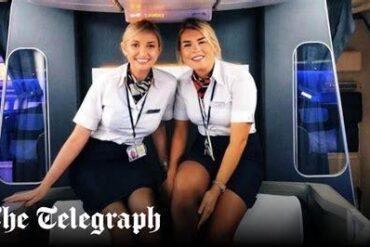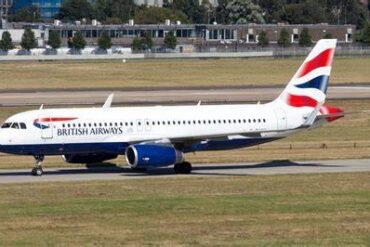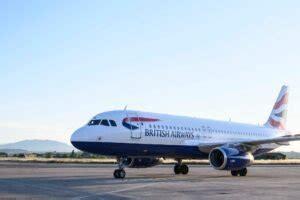
British Airways has formally tightened its onboard conduct policy by banning passengers from photographing, filming, or livestreaming cabin crew and other airline staff without clear consent. The move places the issue directly inside the carrier’s General Conditions of Carriage, turning what was once a courtesy expectation into an enforceable passenger rule.
The policy signals how airlines are responding to a modern cabin challenge: nearly every traveler now carries a smartphone capable of instant video capture, while wearable devices and inflight internet make real-time broadcasting easier than ever. For crew members working in a confined environment, that shift has raised growing concerns around privacy, harassment, and clips shared online without context.
British Airways has made clear that unauthorized recording of employees can now be treated as unacceptable behavior. Passengers who ignore the rule could face intervention during the flight, removal after landing, cancellation of onward travel segments, or referral to airport authorities depending on the seriousness of the incident.
The decision reflects a wider trend across global aviation, where airlines are increasingly balancing passenger freedom with workplace safety and operational control.
Why British Airways Introduced the New Filming Ban
Although British Airways has not linked the policy to one single public incident, the pattern behind the decision is easy to identify. Cabin crew across the industry have increasingly reported being secretly filmed during routine service, customer disputes, delays, or safety announcements. In many cases, short clips are later uploaded to social media where viewers see only a few seconds of a much larger interaction.
That can create reputational damage for staff who have little ability to defend themselves publicly. It can also encourage confrontational behavior from passengers hoping to create viral moments.
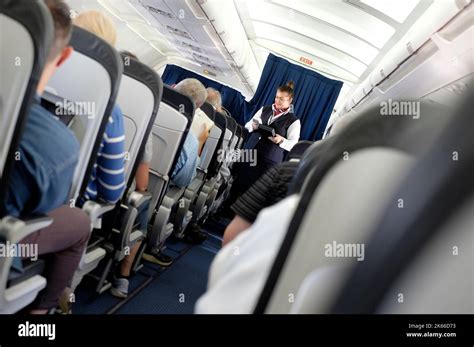
The timing is also notable because faster inflight connectivity is expanding across the sector. British Airways is among airlines improving onboard Wi-Fi, making livestreaming disputes or confrontations more realistic than in previous years. A tense conversation once limited to a few nearby rows can now be transmitted instantly to a global audience.
For airlines, that creates operational risk. Crew members must manage safety, service, and security—not perform under the pressure of unsolicited cameras.
What Passengers Can Still Photograph Onboard
The updated policy does not mean all inflight photography is banned. Travelers can still capture many ordinary moments associated with air travel, including:
- Their seat or cabin features
- Meals and beverages
- Views from the window
- Personal travel selfies
- Interior design details where no one is targeted
The key issue is consent and intent. Recording a tray table lunch is very different from zooming in on a crew member during service or filming a disagreement in the aisle.
If a passenger wants a crew member included in a photo or video, asking permission first is the safest and most respectful route. A crew member may agree, especially during calm moments, but they are equally entitled to decline.
The same logic applies to fellow passengers. While British Airways focused attention on staff, privacy concerns do not disappear simply because someone bought a ticket.
Penalties Could Go Beyond a Warning
What makes this policy significant is the level of consequence attached to it. Many airlines rely on verbal reminders from crew. British Airways has embedded the rule inside its carriage terms, which can strengthen enforcement options.
A traveler who refuses to stop filming may face:
- Immediate instruction to cease recording
- Formal documentation of misconduct
- Removal after arrival
- Loss of connecting or return sectors
- Referral to police or airport security in serious cases
That last point matters. Once behavior escalates into harassment, intimidation, refusal to follow crew instructions, or disruption of safety duties, the matter may move beyond airline policy into regulatory territory.
Other Airlines Are Moving the Same Way
British Airways is not acting alone. Airlines in Europe, Asia, and Australia have increasingly reminded passengers not to film staff without permission. Reports have noted similar messaging from KLM, while Virgin Australia has also made onboard recording rules more explicit.
The reason is simple: cabin crews worldwide face many of the same pressures. Viral culture rewards confrontation, discreet cameras are harder to detect, and social media often removes nuance from already stressful travel moments.
For carriers, protecting staff has become part of protecting the operation itself. A distracted or harassed crew member cannot focus fully on safety responsibilities.
What This Means for Travelers in 2026
For most passengers, the new rule changes very little. Travelers who behave normally, take vacation photos, and respect boundaries are unlikely to notice any difference. The people most affected will be those who use cameras during arguments, complaints, or confrontational exchanges.
A practical rule of thumb is straightforward: if the camera is pointed at a person rather than a memory, pause and ask first.
That standard is increasingly relevant as smart glasses, miniature action cameras, and always-connected devices become more common. What once looked harmless can now feel invasive, especially inside an aircraft cabin where space is limited and people cannot simply walk away.
A Clear Message From British Airways
British Airways has sent a direct message to passengers: onboard staff are there to ensure safety and service, not to become unwilling content for social media feeds. By formally banning unauthorized filming of cabin crew, the airline has moved privacy expectations from etiquette to enforceable policy.
As aviation becomes more connected digitally, airlines are drawing firmer lines around behavior in the cabin. British Airways’ latest update suggests that future travel rules may focus just as much on cameras and conduct as baggage and boarding passes.