
The transatlantic air corridor remains one of the most fiercely contested and strategically important aviation markets in the world. It links the United States with Europe—and to a lesser extent Africa—through dense networks of business travel, tourism, cargo demand, and alliance-driven connectivity. Among US-based airlines, three legacy giants define this space: American Airlines, United Airlines, and Delta Air Lines. Each brings a distinct philosophy to fleet planning, hub geography, and route economics, resulting in very different transatlantic footprints. The numbers reveal a competitive story that is less about branding and more about scale, aircraft utilization, and geographic strategy.
At a glance, all three carriers fly across the Atlantic in significant volumes, yet the similarities largely end there. Their networks differ in concentration, destination diversity, and exposure to Africa. Looking deeper into scheduled flights, seat capacity, and available seat miles (ASMs) exposes which airline actually dominates—and why that dominance looks different depending on the metric used.
The transatlantic battlefield is also evolving. Narrowbody challengers like JetBlue have entered the market with limited but disruptive service, while Alaska Airlines is preparing for its first long-haul transatlantic push following its acquisition of Hawaiian Airlines and its Boeing 787 fleet. Still, for now, the big three remain the architects of US transatlantic aviation.
The Strategic Importance of Transatlantic Flying
Transatlantic routes are not just long-haul flights; they are prestige markets. These services generate high-yield corporate traffic, anchor alliance partnerships, and justify the operation of widebody aircraft that would otherwise struggle to earn their keep. For US carriers, Europe has long been the centerpiece, while Africa remains niche—important symbolically, but modest in volume.
London Heathrow stands at the center of this universe. Slot constraints, premium demand, and alliance ties make Heathrow the single most valuable transatlantic destination. Any airline serious about Europe must be serious about London, and all three US legacy carriers are deeply invested there. Where they diverge is in how heavily they lean on Heathrow versus spreading capacity across the continent.
American Airlines’ Transatlantic Network: Volume Through Concentration
American Airlines operates 40,502 transatlantic flights to Europe, carrying 10.5 million seats and generating 45.3 billion ASMs. Every one of these flights is Europe-bound; American currently operates no direct flights to Africa, a strategic absence that sets it apart from its two rivals.
The defining feature of American’s transatlantic strategy is London dominance. The airline’s single busiest route is Dallas/Fort Worth–London Heathrow, with 1,424 one-way flights annually, mirrored by the same number of returns. Charlotte–Heathrow follows closely, then New York JFK–Heathrow. Orlando, Los Angeles, Philadelphia, and Miami all feed Heathrow as well, creating a web of routes that funnel traffic from across the US into a single European gateway.
This concentration reflects both alliance logic and slot economics. Through its joint venture with British Airways, American effectively treats Heathrow as an extension of its own network. The result is reliability and frequency, but also a network that is heavily skewed toward one city.
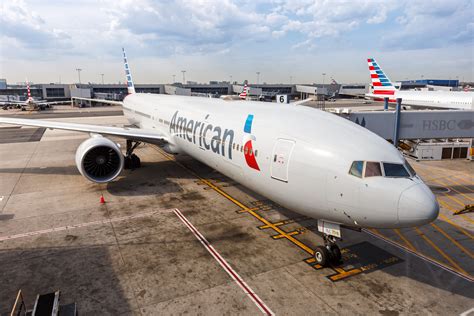
Beyond London, American’s European reach becomes thinner but still strategically placed. Miami–Madrid emerges as the busiest non-Heathrow route, followed by Dallas–Paris. Other destinations such as Barcelona, Lisbon, Dublin, Amsterdam, Zurich, Rome, and Frankfurt fill out the map, though none approach the scale of the London operation.
American’s transatlantic identity is shaped by shorter average stage lengths compared with United and Delta. This contributes to its status as the world’s largest airline by number of flights overall, but also explains why its ASM production trails its rivals despite substantial frequency. American prioritizes network density over geographic breadth, and Europe—especially the UK—is where that density lives.
Delta Air Lines: A Balanced European Powerhouse With African Reach
Delta Air Lines takes a broader view of the Atlantic. It is scheduled to operate 56,793 transatlantic flights, carrying 14.8 million seats and generating 63.2 billion ASMs. While Europe still accounts for the vast majority of these flights, Delta distinguishes itself by maintaining a meaningful, if still limited, presence in Africa.
Like American, Delta’s single busiest transatlantic route is Atlanta–London Heathrow, but the resemblance fades quickly after that. Delta’s next-largest flows are to Amsterdam and Paris, with heavy utilization from multiple hubs including Atlanta, New York JFK, Minneapolis–St. Paul, and even Dallas/Fort Worth. This multi-hub, multi-destination approach reduces overreliance on any single airport.
Amsterdam, in particular, is central to Delta’s European strategy due to its long-standing partnership with KLM. Routes from Atlanta, Minneapolis, and Dallas feed into Schiphol, creating a transatlantic spine that complements Delta’s Heathrow and Paris operations.
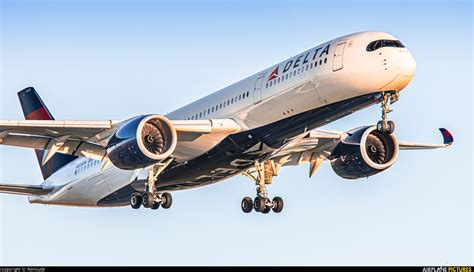
Delta’s fleet choices also shape its transatlantic profile. Unlike its competitors, Delta does not operate the Boeing 787 Dreamliner, instead relying on Airbus A330s, A350s, and aging Boeing 767s. Despite this, Delta achieves nearly the same seat volume as United, underscoring how effectively it deploys higher-capacity widebodies on core routes.
Where Delta truly differentiates itself is Africa. Of its transatlantic flights, 3,164 services—5.6%—are Africa-bound, carrying 840,000 seats. From Atlanta and New York JFK, Delta serves Johannesburg, Cape Town, Lagos, Accra, Dakar, and Marrakesh. South Africa stands out as the crown jewel, with both Johannesburg and Cape Town receiving consistent service.
These routes mix tourism and diaspora demand, with Cape Town and Marrakesh leaning leisure-heavy, while Lagos and Accra serve strong business and VFR (visiting friends and relatives) markets. Delta’s Africa network remains selective, but it is clearly intentional.
United Airlines: The Undisputed Leader by Flight Count
United Airlines emerges as the largest transatlantic operator among US carriers, with 63,021 flights scheduled to Europe and Africa. These flights will carry 14.9 million seats and generate 65.4 billion ASMs, placing United just ahead of Delta in both volume and distance-based capacity.
United’s network is anchored by Newark Liberty International Airport, which functions as the airline’s primary transatlantic gateway. The Newark–London Heathrow route alone accounts for 2,530 one-way flights annually, making it the busiest transatlantic route operated by any US airline. That single corridor illustrates United’s strategy: fewer hubs, higher intensity.
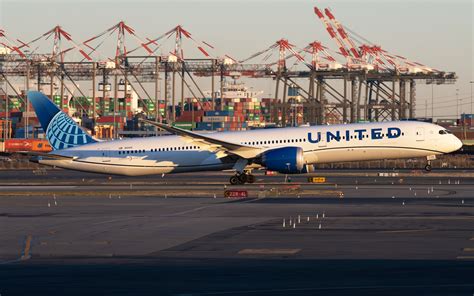
Heathrow dominates United’s top five routes, joined by Orlando, San Francisco, Washington Dulles, and Houston. Beyond London, United expands aggressively into continental Europe, serving Frankfurt, Paris, Dublin, Rome, Berlin, and Barcelona from multiple hubs.
United also operates the longest average transatlantic flights among the big three, a function of its strong West Coast presence and its extensive Boeing 787 fleet. The Dreamliner allows United to profitably operate thinner, longer routes that would be challenging for older aircraft types.
Africa: A Secondary Market With Strategic Weight
For all three airlines, Africa remains peripheral compared with Europe. United schedules 2,573 Africa-bound flights, representing 4.1% of its transatlantic total and carrying 629,000 seats. Services operate from Newark and Washington Dulles to Johannesburg, Cape Town, Lagos, Accra, Dakar, and Marrakesh.
Delta slightly surpasses United in Africa seat capacity, while American remains absent entirely. This absence is notable given American’s once-announced Philadelphia–Casablanca route, which was canceled during the pandemic and never revived.
Despite Africa’s vast size—over 50 countries—the US legacy carriers serve essentially the same small cluster of destinations. Central and East Africa remain unserved directly, with airlines relying on partners such as Ethiopian Airlines and EgyptAir to fill the gaps.
Europe First, London Above All
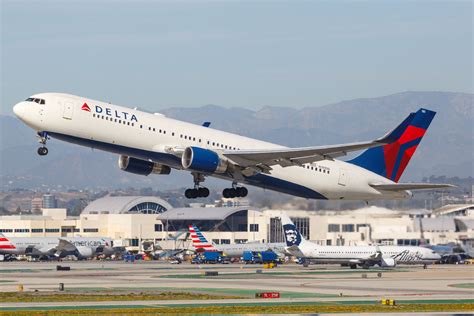
Across all three airlines, Western Europe dominates. London Heathrow absorbs a disproportionate share of flights, especially for American and United. Eastern Europe remains largely absent, due partly to lower demand and partly to geopolitical restrictions that have banned flights to Russia, Belarus, and Ukraine since 2022.
This concentration underscores a fundamental truth of transatlantic aviation: scale follows yield. London, Paris, and Amsterdam deliver premium passengers, alliance connectivity, and year-round demand. Everything else is secondary.
So Who Really Wins the Transatlantic Race?
By raw flight count, United Airlines leads decisively, operating roughly 6,700 more transatlantic flights than Delta and 12,500 more than American. By seat count, United and Delta are nearly tied, while American lags behind. By geographic reach, United again comes out ahead, thanks to its longer routes and broader European footprint.
Delta distinguishes itself through Africa exposure and balanced hub usage, while American leans heavily on frequency and London-centric strategy. Each model works, but only United combines volume, distance, and diversity into a single dominant transatlantic operation.
In the end, the Atlantic does not crown a single champion by brand alone. It rewards airlines that align aircraft, hubs, and partnerships with ruthless efficiency. On that measure, United currently holds the edge—by numbers, by miles, and by reach—while Delta and American each dominate their own carefully chosen lanes in the vast, competitive airspace between continents.