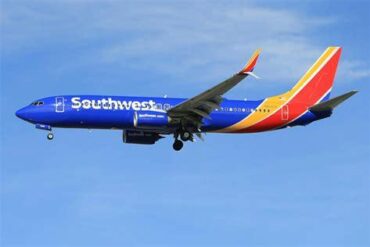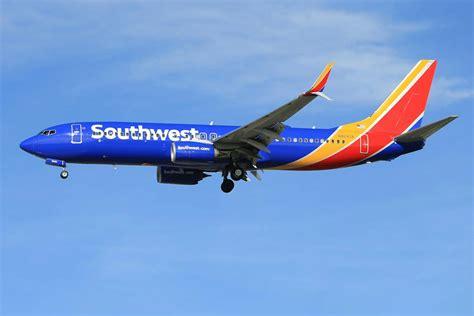
Southwest Airlines is making a major adjustment to its U.S. network for the third quarter of 2026, cutting 68 nonstop routes compared with the same period in 2025. The changes affect some of the airline’s most important airports, including Chicago O’Hare International Airport (ORD), Denver International Airport (DEN), and St. Louis Lambert International Airport (STL). Yet the headline figure does not tell the entire story. Southwest is also adding 67 new routes, leaving its overall route count down by just one.
The scale of the changes nevertheless makes this one of the more significant network reshuffles for the airline in 2026. Rather than simply shrinking its schedule, Southwest appears to be moving capacity away from selected city pairs and toward markets it considers more attractive. That distinction is important for travelers because a route disappearing from the timetable does not necessarily mean Southwest is retreating from either airport involved.
The Q3 2026 schedule provides an early indication of how Southwest is adapting its network to a changing commercial strategy. The airline has been transforming its passenger proposition after ending its long-running open-seating model. On January 27, 2026, Southwest introduced assigned seating and new seating categories, including Standard, Preferred, and Extra Legroom options. The changes represent a major departure from practices that had defined the airline for decades.
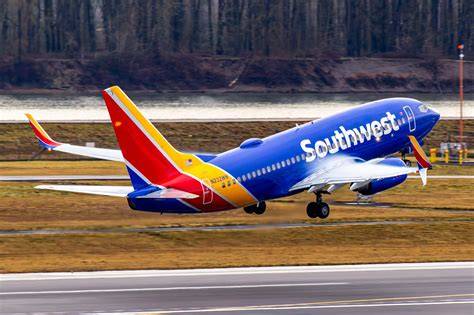
Southwest Airlines Route Cuts Hit Chicago, Denver and St. Louis
The largest reductions are concentrated around several major Southwest markets. The most heavily affected individual city pair is Atlanta–New York LaGuardia, which recorded 694 departures during Q3 2025. Southwest is also removing Denver–Chicago O’Hare, which had 534 departures, and Denver–Washington Dulles, which had 496.
Other major cuts include Dallas Love Field–Chicago O’Hare, with 475 Q3 2025 departures, as well as Orlando–Chicago, Las Vegas–Chicago, and Oklahoma City–St. Louis. The numbers show that Chicago is one of the clearest focal points of the restructuring, with Southwest eliminating numerous connections from ORD to destinations that previously supported substantial nonstop service.
St. Louis is experiencing another concentrated round of pruning. Routes connecting STL with Oklahoma City, Little Rock, Des Moines, Wichita, and Tulsa are among those disappearing from the Q3 2026 schedule. Several of these city pairs previously operated frequently enough to accumulate hundreds of departures during the comparable period.
The cuts extend beyond the largest markets. Southwest is also eliminating routes including Kansas City–Oakland, Austin–Chicago, Nashville–Chicago, Baltimore–Chicago, and Phoenix–Chicago. Some shorter and leisure-focused services are also being removed, demonstrating that the restructuring is not limited to one specific type of market.
Southwest Adds 67 Routes as It Rebuilds Its Network
Despite the 68 cuts, Southwest is adding 67 routes during Q3 2026. That nearly equal exchange changes the interpretation of the headline considerably. The airline is not conducting a broad retreat from nonstop flying; instead, it is replacing many existing city pairs with new opportunities.
Southwest has historically adjusted its network by adding new itineraries while pruning services that no longer meet its commercial objectives. The latest schedule follows that same principle, although the scale of the changes is notable. Travelers may therefore see fewer familiar nonstop options in certain markets while gaining new choices elsewhere.
The airline’s broader network remains substantial. Southwest reported 871 nonstop city pairs in 2025, compared with 850 in 2024 and 805 in 2023. That growth illustrates why the Q3 2026 reduction should not automatically be interpreted as a reversal of the carrier’s long-term network expansion.
Instead, Southwest is becoming more selective about where it deploys aircraft. A route can disappear even when the airport itself remains strategically important, particularly if Southwest believes another market can generate stronger demand, better aircraft utilization, or higher revenue.
Why Southwest Is Changing Its Network Strategy
The route changes arrive during a period of unusually significant transformation for Southwest Airlines. The carrier is attempting to generate more revenue from its existing customer base through assigned seating, extra-legroom products, revised fare structures, and new premium-oriented options.
That strategy changes how the airline evaluates its network. Southwest’s historic model emphasized simplicity and a large point-to-point network, but the commercial environment has become more competitive. Passenger expectations have also shifted, particularly as major U.S. airlines increasingly differentiate their products through premium seating, loyalty benefits, and multiple fare categories.
The airline’s summer 2026 schedule demonstrates that cuts are occurring alongside targeted growth. Southwest has planned a new San Diego–Boston service, additional flying from Austin, and changes to its Los Angeles schedule. These moves suggest that the carrier is looking for markets where its aircraft can produce stronger results rather than maintaining every established route simply because it has existed for years.
What the 68 Route Cuts Mean for Travelers
For passengers, the most important consequence is not the overall route count but where the changes occur. A traveler who regularly flies between Chicago and Denver, Chicago and Orlando, or St. Louis and Oklahoma City could lose a convenient Southwest nonstop option even though the airline’s overall network remains almost the same size.
The near one-for-one replacement of cuts with additions also means the impact will vary considerably by airport. Some communities may gain new Southwest service while others lose important connections. Travelers should therefore check the latest schedules before assuming that a previously available nonstop flight will continue through the third quarter.
Southwest’s Network Is Changing Shape, Not Simply Shrinking
Southwest’s 68 route cuts and 67 additions ultimately point toward a network that is being reshaped rather than dramatically reduced. The net change is only one route, but the geographic distribution of those changes is far more consequential than the headline total suggests.
Chicago and St. Louis face particularly heavy pruning, while other markets are receiving new opportunities. At the same time, Southwest is using its broader commercial transformation to pursue higher-value passengers and strengthen revenue performance.
The result is a Southwest network that may look familiar in size but noticeably different in structure. Q3 2026 is therefore less about Southwest Airlines getting smaller and more about the carrier deciding where it wants to fly, how often it wants to fly there, and which markets fit its new business strategy.