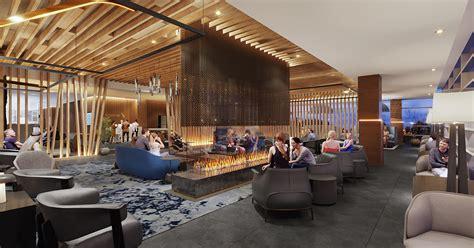
Air travel lounges have evolved far beyond quiet rooms with complimentary snacks and Wi-Fi. Today, they serve as carefully designed spaces where airlines shape the pre-flight experience for premium passengers. American Airlines is taking a bold step in that evolution by introducing the first outdoor terrace in its Admirals Club network, a feature that will debut at Austin–Bergstrom International Airport (AUS) in Texas.
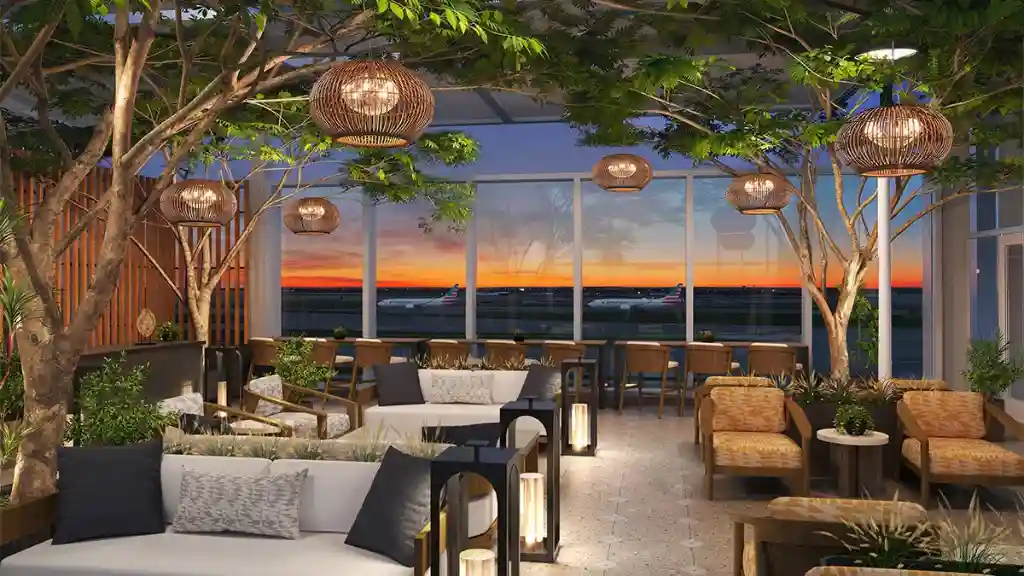
Announced on March 10, 2026, the new lounge marks a notable shift in American Airlines’ lounge design philosophy. Traditionally, Admirals Clubs have focused on interior comfort—calm lighting, business workspaces, and buffet dining areas. The Austin project expands that formula by introducing fresh air, natural sunlight, and open-air views of the runway, a concept already popular in some international premium lounges.
The location is no accident. Austin’s mild climate makes it one of the few U.S. airports where an outdoor terrace can be comfortably used for much of the year. Travelers will be able to step outside, relax under Texas skies, and momentarily escape the sealed environment typical of airport terminals. For many passengers, that simple ability to breathe outside air during a long journey can transform the travel experience.
A Larger Admirals Club Designed for Comfort and Function
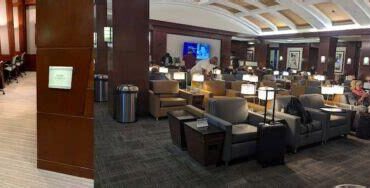
The new Admirals Club will also represent a major expansion of American Airlines’ footprint inside the Barbara Jordan Terminal. According to early development plans, the lounge will span more than 12,000 square feet, roughly double the size of the airline’s current Austin lounge.
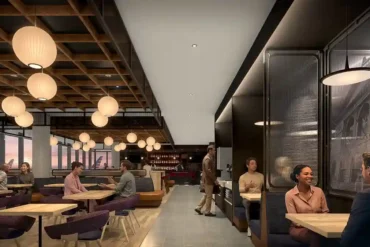
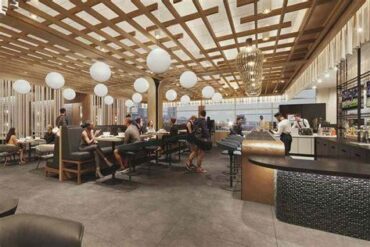
This increased space allows American to rethink the lounge layout with distinct zones tailored to different traveler needs. The interior design will include:
- Dedicated dining areas for light meals and refreshments
- Quiet relaxation zones for passengers waiting on long connections
- Workspaces designed for business travelers needing productivity before departure
- Recharge areas equipped with power stations and comfortable seating
The design reflects a growing trend among airlines to transform lounges into multi-purpose environments rather than simple waiting rooms. Passengers can move seamlessly between work, dining, and relaxation areas depending on their needs.
Construction is expected to begin later in 2026 on the west side of the terminal, placing the lounge in a strategic position for travelers departing from American Airlines’ gates.
A Strategic Expansion of American Airlines’ Austin Presence
The lounge expansion is closely tied to American Airlines’ updated lease agreement at the airport. Under the renewed agreement finalized earlier in 2026, American will increase its gate presence from four to nine gates within the terminal.
That expansion signals a renewed commitment to the Austin market. Although the airline scaled back significantly in recent years, the new gate allocation allows American to deliver a stronger premium experience while maintaining operational flexibility.
Future route planning from Austin will emphasize connections to the airline’s major hubs, including:
- Dallas/Fort Worth (DFW)
- Charlotte (CLT)
- Chicago O’Hare (ORD)
- Los Angeles (LAX)
- Miami (MIA)
- New York JFK
- Philadelphia (PHL)
- Phoenix (PHX)
In addition to these domestic connections, the airline plans to maintain service to several popular leisure destinations in Mexico, strengthening Austin’s role as a gateway for vacation travel.
American Airlines Chief Customer Officer Heather Garboden highlighted the importance of the project in a statement announcing the development. She emphasized that the new lounge will reflect the vibrant culture and creative energy of Austin, aligning the airport experience with the city’s identity.
An Outdoor Terrace Built for Aviation Enthusiasts
The outdoor terrace introduces something rarely found in U.S. airline lounges: direct runway views in open air. For aviation enthusiasts—often known as “AvGeeks”—this feature may become one of the most exciting aspects of the new Admirals Club.
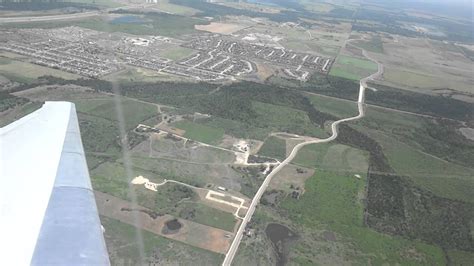
Austin–Bergstrom International Airport offers unusually dynamic aircraft activity thanks to its joint-use operations with several military units. While commercial traffic includes a steady flow of narrowbody and widebody airliners, the airfield also hosts operations from various branches of the U.S. military.
The airport supports the Texas Army National Guard’s aviation unit, along with reserve elements from the Army, Navy, and Marine Corps. These military operations significantly expand the variety of aircraft visible from the airport.
The Army Aviation Support Facility alone maintains approximately 33 permanently stationed aircraft, many of them UH-60 Black Hawk helicopters. Visitors watching from the lounge terrace could witness these helicopters conducting training flights alongside routine commercial departures.
Military aircraft sightings may also include:
- Navy fighter jets during training rotations
- Large military transport aircraft such as the C-130 Hercules
- Various support and logistics aircraft visiting the base
This blend of civilian and military aviation activity makes Austin one of the more interesting observation locations in the United States. The terrace effectively turns the lounge into a comfortable plane-spotting platform with premium amenities.
American Airlines’ Complex Relationship With Austin
Despite the new investment, American Airlines’ history with Austin has been anything but linear. The carrier first launched operations at the airport in 1999, quickly establishing a meaningful presence as the city’s technology sector began to expand.
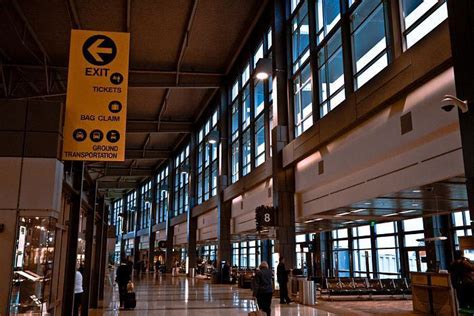
In recent years, however, the airline dramatically reduced its Austin operations. Following a rapid expansion in 2021, American later scaled back by cutting roughly 35 nonstop routes between 2023 and 2025. The shift reflected broader strategic adjustments toward hub-focused flying, which tends to produce stronger profitability than point-to-point services from smaller focus cities.
Today, American ranks as the third-largest airline at Austin–Bergstrom, accounting for approximately 15% of total passenger traffic.
The competitive landscape has shifted significantly. Southwest Airlines dominates the airport, carrying close to 40% of passengers, while Delta Air Lines holds the second-largest share at roughly 20%.
Even so, American Airlines remains an essential tenant at the airport and continues to participate in Austin’s massive $5 billion airport expansion program. The investment in a modern Admirals Club—particularly one featuring a first-of-its-kind outdoor terrace—signals that the airline intends to maintain a meaningful role in Austin’s aviation future.
As airports increasingly compete to offer memorable passenger experiences, features like open-air terraces may become a defining element of next-generation lounges. For American Airlines, the Austin project represents more than just a new lounge—it is an experiment in how design, atmosphere, and aviation culture can reshape the airport journey before passengers even step onto the aircraft.