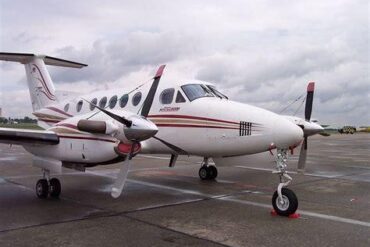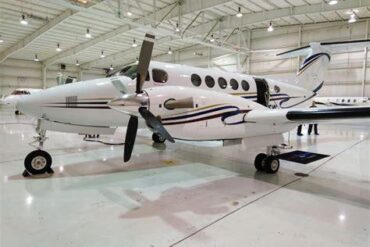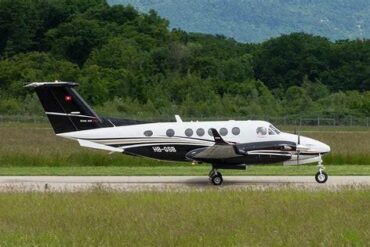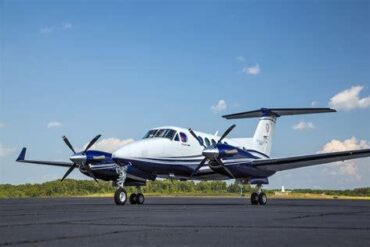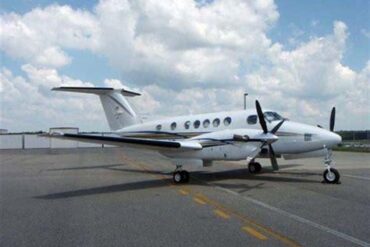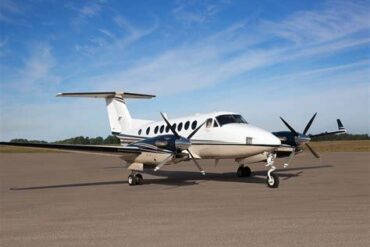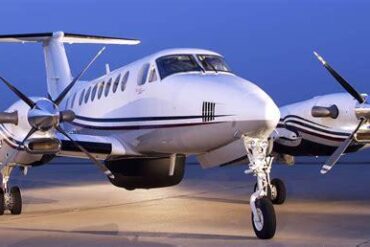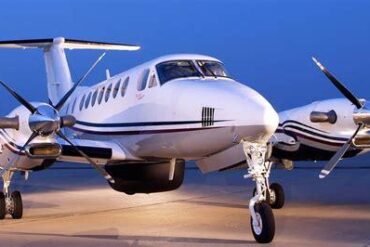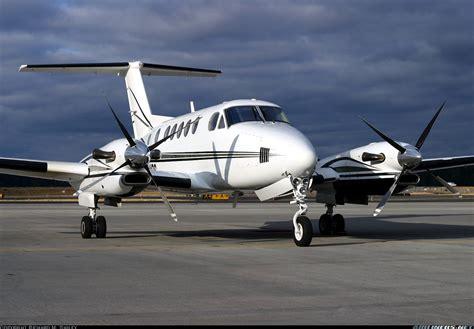
Built on the legacy of the King Air Model 100, the Super King Air series has outlasted every competitor in its class. Since entering production in 1974, it has demonstrated unmatched reliability and adaptability, spawning derivatives such as the Beechcraft 1900 regional airliner and special‑mission platforms around the globe.
Designed for versatility, the Super King Air excels in passenger transport, air ambulance, surveillance, calibration, and military training roles. Its pressurized cabin, robust airframe, and efficient Pratt & Whitney Canada PT6 engines have made it a favorite among airlines, governments, and private operators alike.
Introduction to the Super King Air Lineage
Tracing its roots to the King Air Model 100, the Super King Air family began life as the Model 200 (Model 101 during development). Its debut in October 1972 introduced a T‑tail configuration, reinforced fuselage, and more powerful PT6A‑41 engines rated at 850 shp. Civil certification followed in December 1973, with first deliveries in February 1974. This marked the start of the longest continuous production run for any civilian turboprop utility aircraft.
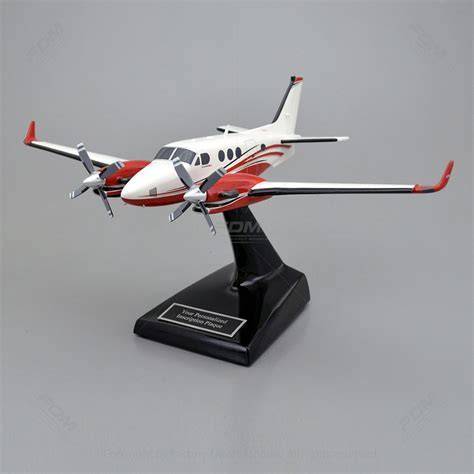
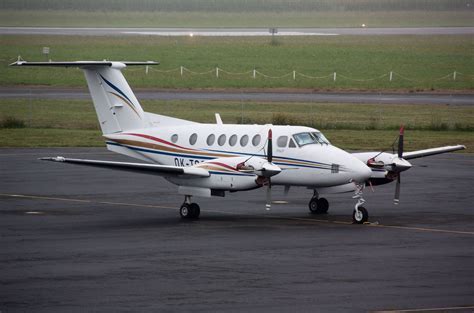
Development Milestones of the Model 200 Series
The original Model 200 boasted a 3 ft 10 in fuselage stretch over the A100, a 4 ft 3 in wingspan increase, and an extra 60 US gal of fuel capacity—yielding a 1,000 lb MTOW bump. In 1976, the 200T variant added wingtip fuel tanks, a belly camera hatch, a surveillance radar pod, and domed observation windows for aerial survey work. The 1979 200C introduced a 4 ft 4 in × 4 ft 4 in cargo/airstair door, establishing the platform’s air ambulance credentials.
By 1981, the B200 emerged with PT6A‑42 engines, 6.5 psi pressurization, and initial EFIS avionics in the B200SE Special Edition. The Rockwell Collins Pro Line 21 suite arrived in 2003, bringing integrated flight displays and advanced navigation. Concurrent military variants—A200, A200C, RC‑12, and RU‑21J—served the U.S. Army, Air Force, Navy, and allied forces in transport and intelligence‑gathering roles.
The Rise of the B200GT (King Air 250)
On May 21, 2007, Beechcraft unveiled the B200GT—later marketed as the King Air 250—with new PT6A‑52 engines optimized for high‑altitude performance. Certified November 16, 2007, it offered improved climb, cruise, and hot‑and‑high capabilities. By the end of 2009, 97 B200GTs had been delivered. In 2014, the 250EP upgrade raised MTOW to 13,420 lb, providing extra payload capacity. As of 2019, unit cost hovered at US$6.61 million.
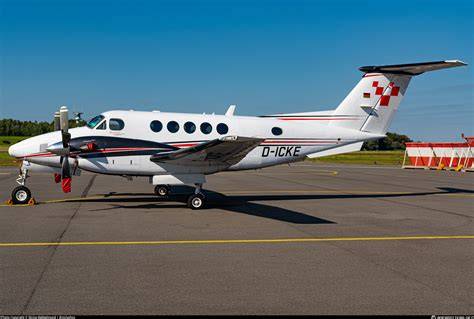
Introducing the King Air 260: Next‑Generation Turboprop
Textron’s King Air 260, launched December 2, 2020, integrates autothrottle, a Multi‑Scan weather radar, and a redesigned cabin. With a 1,720 nmi range and 310 kt cruise, it offers nine‑passenger comfort at light jet‑competitive speeds. FAA certification arrived in March 2021, followed by EASA approval in September 2021. Equipped price in 2023 stands at US$7.78 million.
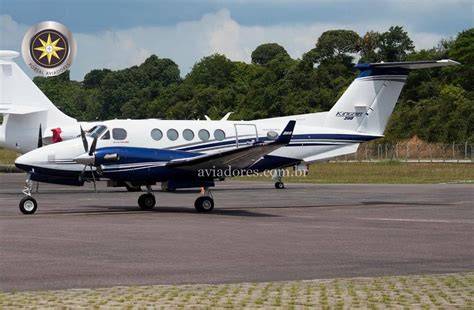
Evolution of the Model 300: From Calibration to Corporate Travel
The Model 300 prototype flew September 3, 1983, featuring PT6A‑60A engines (1,050 shp) and a 14,000 lb MTOW. The 300LW variant, limited to 12,500 lb to meet certain national regulations, joined the lineup. Between 1987 and 1988, 19 special FAA calibration aircraft entered service, showcasing the platform’s navaid calibration prowess. Civil operators appreciated the 300’s blend of speed, range, and payload.
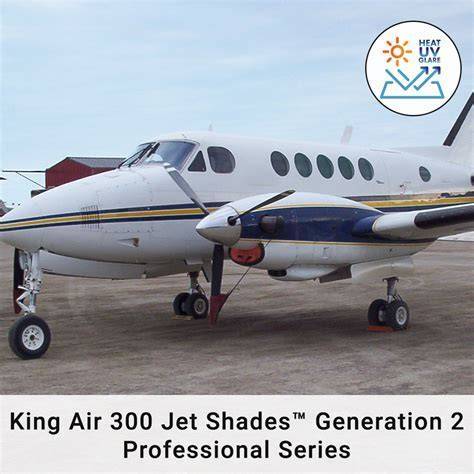
King Air 350/350C/350ER: Stretching for Comfort and Range
Introduced in 1990, the King Air 350 stretched the Model 300 by 2.9 ft for over 17 ft of main cabin length, added winglets, two extra cabin windows per side, and raised MTOW to 15,000 lb. The 350C cargo variant mirrored the 200C’s door, targeting air ambulance and freight missions. In June 2005, the 350ER emerged with a 16,500 lb MTOW, engine‑nacelle fuel tanks, heavy‑duty landing gear from the 1900 series, and a belly pod for surveillance gear.
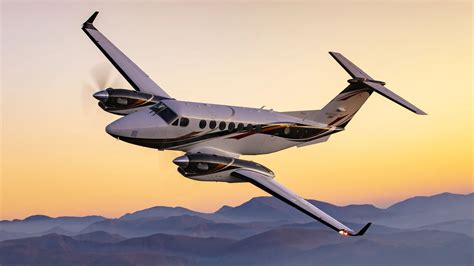
In October 2008, Beechcraft introduced the 350i cabin upgrade—LED dimmers, iPod docks, HD monitors, USB ports, and fold‑out tables—reducing cabin noise to 78 dB. Over 440 units delivered in ten years, the 350i cruises at 292 kt at FL350 burning 503 lb of fuel per hour, with direct operating costs of $1,300–1,500 per hour.
The Advanced King Air 360 and 360ER
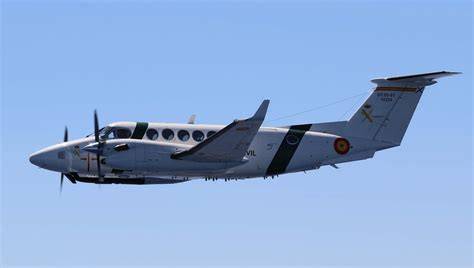
August 2020 saw the debut of the King Air 360 and 360ER, featuring digital pressurization, autothrottle, and a cabin 10% lower in pressure altitude. The 360 offers a 1,806 nmi range, while the 360ER extends that to 2,539 nmi. Both achieved FAA and EASA certification by September 2021, with 2023 prices of US$9.255 million and US$9.76 million respectively.
Military Variants and Special Missions
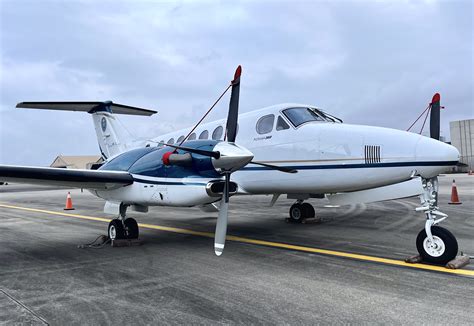
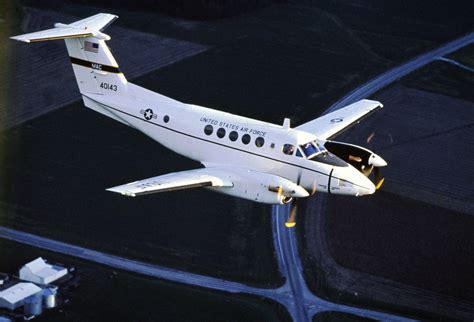
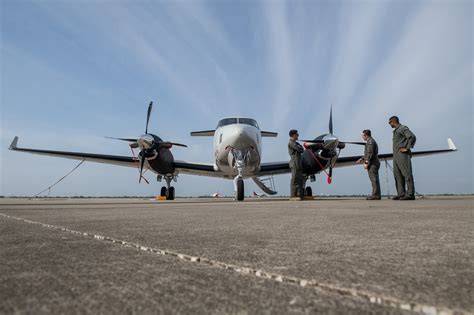
The Super King Air has served as the U.S. Army and Air Force’s C‑12 Huron for personnel transport, the RC‑12 Guardrail for signals intelligence, and the Navy’s T‑54A Marlin II trainer. Allied operators include the RAF (multi‑engine trainer), RAAF navigational trainers, RMAF maritime patrol B200Ts, JGSDF LR‑2 reconnaissance, and Canadian CT‑145 trainers. Contracts as recent as April 2024 ensure continued military relevance.
Experimental PD 290: Turbofan Trials
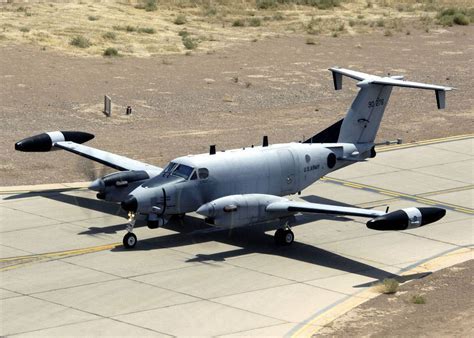
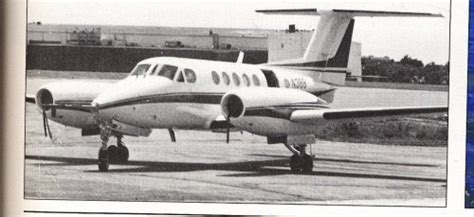
In the mid‑1970s, Beechcraft experimented with a jet‑powered Super King Air. The PD 290 prototype, fitted with overwing JT15D turbofans, first flew March 12, 1975, but program cancellation in 1977 ended turbofan ambitions.
Upgrades & Aftermarket Modifications
A robust aftermarket ecosystem offers wing front spar reinforcement kits, electro‑hydraulic landing gear retrofits, nacelle wing lockers, ram‑air recovery systems, quiet turbofan propellers, and dual aft‑body strakes from Raisbeck Engineering. Nose‑cargo conversions, FLIR‑equipped extended noses, winglets for earlier series, and 12 cu ft nose pods (introduced November 2019) further enhance mission flexibility.
Operational Legacy and Value Retention
By December 2020, over 7,600 King Airs had been delivered, logging 62 million flight hours. Australia’s Royal Flying Doctor Service operates 34 B200/B300C airframes. Retired military airframes support U.S. law enforcement and missionary aviation. The 6,000th King Air milestone arrived January 24, 2005. In 2017, used King Air 250 values ranged from US$3 million (2011 models) to US$5 million (2015‑16), with 350i prices commanding US$3.8–6 million.
Safety Record: Notable Accidents & Lessons Learned
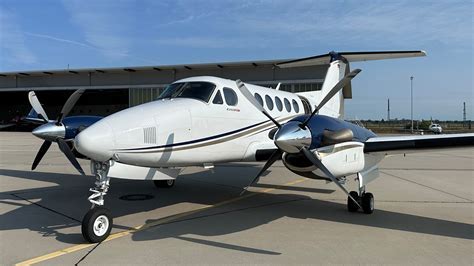
While renowned for safety, the Super King Air has suffered high‑profile accidents: Advance Airlines Flight 4210 (Feb 21, 1980; 13 fatalities), Ecuadorian Air Force B200 (May 24, 1981; President Roldós Aguilera among nine), Turkish AF B200 (Feb 17, 1993), “Ghost Flight” Perth–Burketown (Sept 4, 2000), OSU Basketball crash (Jan 27, 2001), Macedonia State crash (Feb 26, 2004), Hendrick Motorsports fatal crash (Oct 24, 2004), Wichita crash (Oct 30, 2014), Delhi crash (Dec 22, 2015), Essendon crash (Feb 21, 2017), Rawalpindi crash (July 30, 2019), Calamba crash (Sept 1, 2019), Kaduna crash (May 21, 2021), Ampatuan crash (Feb 6, 2025), and Zeusch Aviation Flight 1 (July 13, 2025). Each incident spurred enhancements in crew training, maintenance protocols, and system redundancies.
Detailed Specifications Comparison
Crew: 1–2 Capacity: Up to 11 passengers
Length: 43’10″–46’8″ Wingspan: 57’11”
MTOW: 12,500–16,500 lb Engines: 2× PT6A‑52/‑60A (850–1,050 shp)
Cruise Speed: 303–312 kt Range: 1,720–2,670 nmi
Service Ceiling: 35,000 ft
Conclusion: The Endless Flight of Innovation
For over half a century, the Beechcraft Super King Air has soared above expectations, marrying versatility, efficiency, and comfort in a rugged turboprop package. From its humble Model 101 beginnings to the technologically advanced 360ER, each variant reflects continuous refinement. As operators worldwide continue to rely on its proven performance, the Super King Air’s legacy of reliability and adaptability ensures it will remain a dominant force in civil and special‑mission aviation for decades to come.