Introduction
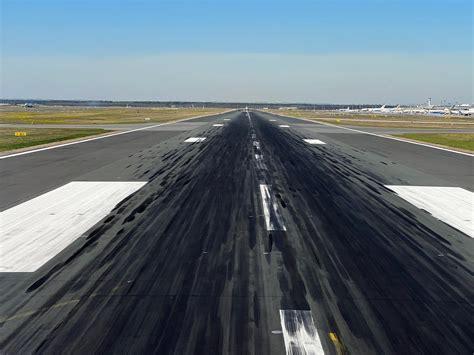
When an aircraft lands, its landing gear wheels begin to rotate. This rotation creates friction, which causes some rubber to wear off the tires. This process continues until the speed of the wheels matches the speed of the aircraft. As a result, the touchdown zone often sees a buildup of rubber deposits.
Problems Caused by Rubber Deposits
Rubber buildup on runways can lead to several issues. First, it can obscure runway markings, which might confuse pilots. Second, when wet—such as during rain—these deposits can become slippery, increasing the risk of runway excursions.
Methods for Removing Rubber Deposits
There are various methods to remove rubber from runways:
-
Chemical Solvents: This approach involves spraying a solvent on the affected area. After waiting a specified time, the area is washed and swept. Different solvents are chosen based on the surface type, whether concrete or asphalt. Care must be taken during application, as the chemicals can be aggressive and may damage runway paint or pavement if left too long. When washing off the solvent, it must be diluted to protect surrounding vegetation and prevent pollution.
-
High-Pressure Water Blasting: This mechanical method uses equipment ranging from a simple nozzle to advanced self-propelled trailers. It’s effective for lightly contaminated areas, but its efficiency decreases with deeper contamination.
-
Combination of Chemical Solvents and High-Pressure Water Blasting: A modern technique involves first using chemical solvents to dissolve the rubber, followed by a thorough wash with high-pressure water.
-
Hot Compressed Air: This method burns off rubber deposits using high-temperature gases. The air-gas mixture ignites in a combustion chamber, producing exhaust at about 400 m/s and around 1200°C. These hot gases soften and remove rubber particles. When applied to concrete surfaces, a small amount of carbon residue is created, which can be brushed away easily. This technique poses minimal risk of damaging the runway surface; however, care should be taken when using it on asphalt runways to monitor the pavement’s condition closely.