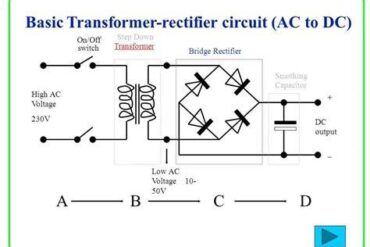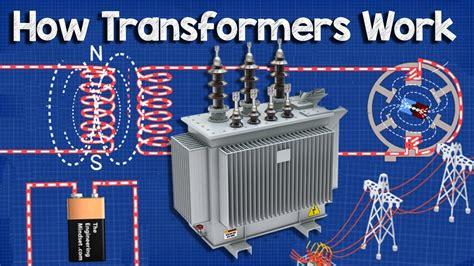
A transformer is a device that adjusts AC voltage levels for various uses. It increases or decreases voltage by transferring electrical energy from one circuit to another using inductively coupled conductors. These conductors, known as windings or coils, are wrapped around a ferromagnetic core inside the transformer.
When alternating current flows through the primary winding, it creates a changing magnetic flux in the core. This changing flux generates a varying magnetic field in the secondary winding. As a result, an electromotive force (EMF), or voltage, is induced in the secondary winding. If there’s a load connected to this winding, current will flow, allowing electrical energy to transfer from the primary circuit through the transformer to the load.
The induced voltage in the secondary winding is related to the primary voltage. This relationship is determined by the ratio of turns in the secondary winding to those in the primary winding. For example, to step down a voltage from 120V to 12V, the primary winding must have ten times more turns than the secondary winding.