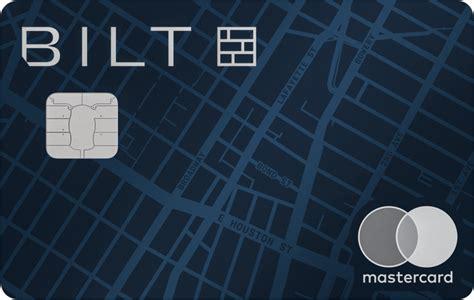
The promise of a no annual fee credit card has a magnetic pull. No sunk cost, no mental math about whether you “earned back” the fee, no pressure. The Bilt Blue Card leans directly into that appeal. It positions itself as the accessible entry point into the broader Bilt Rewards ecosystem, a system built around one unusually powerful idea: earning points on housing payments. That alone makes it different from almost every other rewards card on the market.
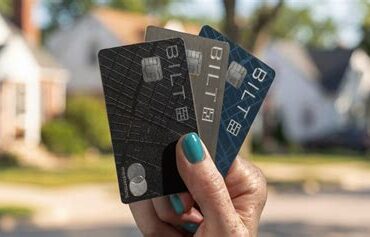
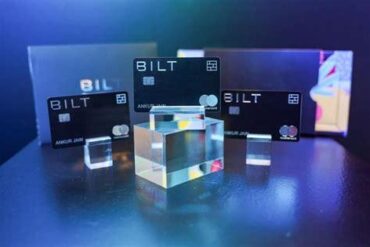
Bilt has evolved rapidly from a rent-rewards startup into a three-card Mastercard portfolio serviced by Cardless. The lineup now includes the Bilt Blue Card (no annual fee), the Bilt Obsidian Card ($95 annual fee), and the Bilt Palladium Card ($495 annual fee). On paper, Blue looks like the safe, sensible choice. But credit cards are not about safety. They are about leverage. The real question is whether Blue quietly unlocks meaningful value, or whether it exists mainly to nudge you upward.
Before dissecting the strategy, it helps to understand the mechanics. The Bilt Blue Card earns 1x Bilt Rewards points on eligible purchases. That alone would be unremarkable if not for the currency itself. Bilt Rewards points are transferable and versatile, and the program’s unique twist allows users to indirectly earn rewards on rent, mortgage, and even HOA payments.
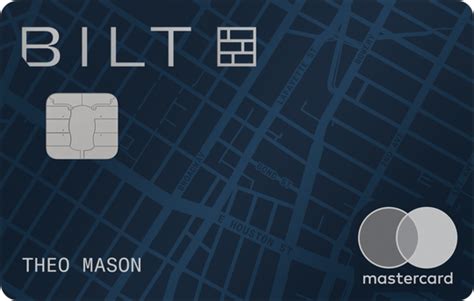
Bilt Blue Card Basics: Simple Structure, Strategic Design
The foundation of the Bilt Blue Card is straightforward. There is no annual fee for the primary cardholder or authorized users. Approval triggers a $100 Bilt Cash welcome bonus. Spending earns 1x points, and every purchase generates 4% back in Bilt Cash.
At first glance, that 4% figure looks explosive. But it is not cash back in the traditional sense. Bilt Cash is a separate internal currency. It can be redeemed in multiple ways, but its most strategic use is to generate additional points on housing payments.
This is where the card becomes more interesting than it first appears. Redeem $30 in Bilt Cash and you can earn 1,000 Bilt Rewards points on a housing payment. The redemption can be repeated as often as you like. That conversion ratio—3 dollars for 4 points—is the engine that changes the math.
Let’s translate that into real numbers. If you spend $10,000 on the Bilt Blue Card, you earn $400 in Bilt Cash. Converting that Bilt Cash into housing rewards yields roughly 13,333 additional points. Combine that with the 10,000 base points from everyday spending, and suddenly your effective earning rate approaches 2.33x points per dollar spent—if you optimize precisely.
That optimization is not automatic. It requires intentional redemption behavior. But if you have consistent housing payments, especially rent or a sizable mortgage, the compounding effect becomes meaningful.
Earning Points on Housing: The Core Advantage
Most rewards cards treat housing payments as invisible. Landlords do not accept credit cards easily, mortgage servicers often charge fees, and HOA payments rarely integrate cleanly with rewards systems. Bilt carved out a niche by turning housing into a points-earning category.
With the Bilt Blue Card, you are not directly earning 1x on housing by default. Instead, you use Bilt Cash earned from everyday purchases to unlock housing rewards. It is an indirect pipeline, but it works.
For renters in high-cost cities, this becomes especially compelling. A $3,000 monthly rent translates to $36,000 per year. Even a modest flow of redeemed Bilt Cash toward that payment means thousands of additional transferable points annually. For homeowners with mortgages or significant HOA dues, the logic holds.
The cleverness lies in the leverage. You can potentially earn points on housing in excess of what you actually charged to the card. That inversion feels counterintuitive, and that is precisely why the model stands out in the crowded credit card landscape.
Who Should Seriously Consider the Bilt Blue Card
The Bilt Blue Card is not flashy. It does not offer lounge access, luxury hotel credits, or high multipliers in dining or travel. It is a tool. The right user profile makes all the difference.
It works best for someone who insists on no annual fee cards and refuses to cross that psychological threshold. It also works for someone who spends consistently and can generate enough Bilt Cash to meaningfully offset housing costs.
If you are disciplined about converting Bilt Cash into housing rewards, and if your rent or mortgage is substantial, the card’s theoretical 2.33x effective rate becomes practical rather than hypothetical. That is strong performance for a no-fee product in a world where most no-fee cards cap out at 1–1.5% in value.
However, this is not a passive card. You must understand the redemption mechanics. Ignoring Bilt Cash reduces the Blue Card to a plain 1x card. Used lazily, it is mediocre. Used strategically, it becomes quietly powerful.
Bilt Obsidian Card: The $95 Upgrade That Changes the Math
Now the uncomfortable comparison. The Bilt Obsidian Card costs $95 annually, but it adds significant earning categories. Cardholders earn 3x points on dining or groceries (dining uncapped, groceries capped at $25,000 annually), 2x on travel, and 1x on other purchases. Crucially, it still provides 4% back in Bilt Cash.
That shift in multiplier structure changes everything. Dining and groceries are two of the most common spending categories. At 3x, point accumulation accelerates dramatically compared to Blue’s flat 1x.
Obsidian also unlocks enhanced Bilt Cash redemptions. The points accelerator allows you to redeem $200 in Bilt Cash to earn an extra 1x on the first $5,000 spent. This can be used up to five times per year. That mechanism alone can swing annual value well beyond the $95 fee.
There is also up to $100 in Bilt travel portal hotel credits per calendar year, structured as two $50 semiannual credits on two-night stays. The credit is not universally flexible, but for frequent travelers it offsets the annual fee without gymnastics.
When the improved earning rates are layered onto the same housing rewards engine, Obsidian often outperforms Blue decisively for moderate spenders.
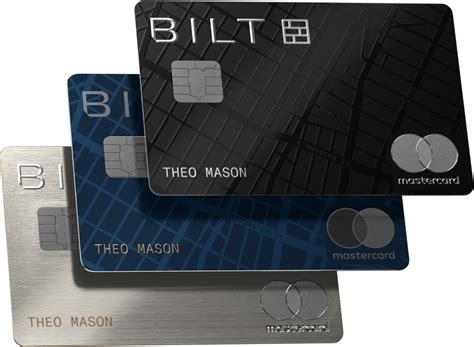
Bilt Palladium Card: High Fee, High Ceiling
The Bilt Palladium Card sits at the top with a $495 annual fee. High annual fees demand justification, and Palladium attempts to deliver it.
The welcome bonus includes 50,000 bonus points after $4,000 in spending within three months (excluding housing), plus $300 in Bilt Cash upon approval, and automatic Bilt Gold status. That first-year value alone can overshadow the fee for many users.
Ongoing benefits include 2x points on everyday spending, which is remarkably strong for a transferable currency. There is also $200 in extra Bilt Cash annually, up to $400 in Bilt travel portal hotel credits, and a Priority Pass membership with two guests included.
For high spenders, 2x on all purchases dramatically simplifies strategy. Instead of juggling multiple cards, Palladium becomes a primary driver of point accumulation. When layered with housing redemptions, the earning velocity is difficult to match.
The annual fee is undeniably steep. But for someone already spending heavily and valuing lounge access and hotel credits, the net value can exceed cost with relative ease.
Is the Bilt Blue Card the Weakest Link?
In isolation, the Bilt Blue Card is respectable. It offers no-fee access to a valuable transferable points currency and an innovative housing rewards mechanism. Many no-annual-fee cards cannot claim either of those advantages.
In context, however, Blue sits at the bottom of a carefully tiered ladder. The incremental fee for Obsidian unlocks disproportionately stronger earning categories. The jump to Palladium adds premium benefits and a higher everyday earning rate that compounds quickly.
The decision hinges on spending volume and psychological tolerance for annual fees. If avoiding fees is a core principle, Blue is a credible solution. If maximizing return is the objective, the higher-tier cards almost always create more upside.
Final Assessment: Practical Entry Point or Strategic Compromise
The Bilt Blue Card succeeds in one crucial area: it grants access. Access to Bilt Rewards. Access to housing-based earning potential. Access without financial commitment. That matters.
But access alone does not equal optimization. For disciplined users with meaningful housing payments and steady spending, Blue can generate an effective return approaching 2.33x transferable points per dollar. That is impressive for a no-fee product.
Yet the broader Bilt portfolio makes a compelling case that modest annual fees unlock disproportionately greater value. The Obsidian Card refines the earning engine. The Palladium Card supercharges it.
In the end, the Blue Card is neither a trap nor a triumph. It is a strategic foothold. For some, that foothold is enough. For others, it is the first rung on a ladder that leads to far greater rewards.