
Consol, derived from the German term Sonne, means “by the sun”. This long-range navigation system was developed during World War II by Germany. It served as a vital navigation aid for bomber aircraft and U-boats in the North Atlantic. When the British recognized its effectiveness and accuracy, they adopted it under the name Consol to track those same submarines.
After the war, many original German transmission stations continued to operate, and new ones were built to broaden coverage. However, as more user-friendly systems like LORAN-C and Omega emerged, Consol’s popularity waned. The last Consol station shut down in the early 1990s.
At its core, Consol is a hyperbolic navigation system. It generates a line of position (LOP) based on the time difference of synchronized transmissions. Yet, it’s a ‘collapsed’ hyperbolic system. The distance between the transmitting antennas was so short that the hyperbolas turned into radials quickly, making it more like a bearing system. Each station functioned independently, featuring a transmission system with three closely spaced antennas. A basic radio receiver was all that was needed to utilize Consol. Users determined their position by counting dots and dashes that corresponded to a position line on a pre-published chart. Since only one line of position could be identified from a single station, another station or navigation aid was necessary for an intersecting LOP to pinpoint the current location.
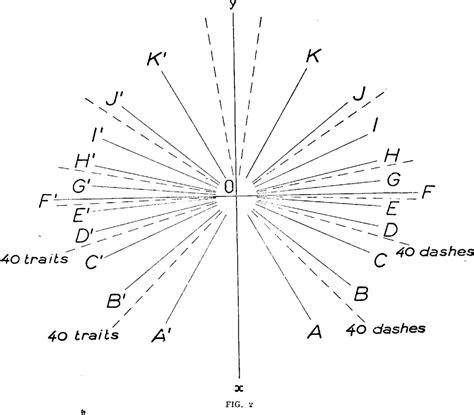
Consol utilized three antennas aligned in a straight line, spaced about 1000 meters apart, which was roughly three wavelengths at the operating frequency of 300 kHz. Each antenna received an identical signal, but the center antenna had a stronger signal. One outer antenna’s signal was delayed by 90 degrees, while the other was advanced by 90 degrees relative to the center. This phase shift caused the antennas to create multiple lobes with deep nulls in between. By regularly adjusting the phase shift in the outer antennas every 30 seconds, these lobes would sweep across the area. Additionally, the phase of the outer antennas was switched quickly in sync with a Morse code pattern. Thus, each lobe transmitted either dots or dashes, alternating over the 30-second period.
During this cycle, a total of 60 dot/dash patterns were sent. When the two outer antennas were perfectly out of phase, their signals canceled each other, leaving only the center antenna’s signal. This moment produced what was known as the equisignal. The sweeping lobes defined hyperbolic lines of position, and the time lapse from the start of the transmission cycle to the equisignal helped identify the LOP for the receiver.
Using Consol was quite straightforward. The essential equipment was a standard radio receiver capable of tuning into the transmitter frequency. A Radio Direction Finder (RDF) loop antenna could assist in estimating the receiver’s position, but it wasn’t mandatory. Consol stations initiated their transmission by stopping the phase-shifted signals from the outer antennas, using only the center antenna to broadcast the station identifier in Morse code. With RDF capability, navigators could determine an approximate bearing to the Consol station during this segment.
Once the station identifier was transmitted, the phase-shifted signals resumed for 30 seconds along with the dot-dash keying signal. Navigators would hear a series of dots merging into the steady tone of the equisignal, followed by a series of dashes. They simply counted the dots or dashes before the equisignal and plotted their position on an appropriate map. However, sometimes the equisignal wasn’t clear due to poor signal conditions. In such cases, it was common to count both dots and dashes, knowing their total should be 60. Any missing counts were split equally between dots and dashes, adjusting the pre-equisignal count before plotting the position. For instance, if the actual count was 18 dots and 36 dashes, with 6 missing counts, the navigator would assume 3 dots and 3 dashes were lost. Therefore, the corrected count would be 21 dots and 39 dashes, with the 21 dots defining the LOP since the timing before the equisignal was used.