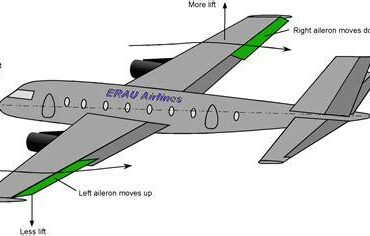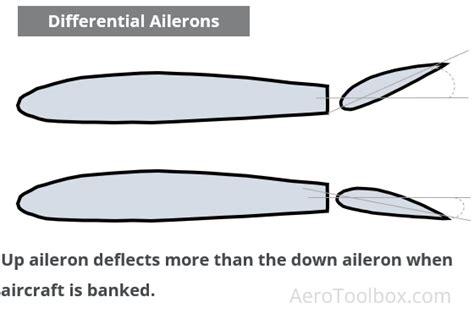
Ailerons are essential flight control surfaces that help steer an aircraft around its longitudinal axis. Differential ailerons work similarly to symmetrical ailerons, but with a key difference: the aileron that moves upwards is displaced further than the one that moves downwards. When the upward-deflecting aileron raises, it reduces camber and, consequently, lift on that wing. On the other hand, the downward-deflecting aileron increases both camber and lift.
This increase in lift on the raised wing also leads to higher drag, which tends to rotate or yaw the aircraft around its vertical axis. In a differential aileron setup, the greater deflection angle of the aileron on the wing that is descending creates additional drag. This effect helps to balance much of the lift-induced drag from the ascending wing. As a result, differential ailerons significantly reduce adverse yaw, improving overall aircraft handling.