The hospitality industry thrives on whispers, and few rumors have traveled faster or hit harder than speculation that Marriott International could be preparing to acquire Rosewood Hotels & Resorts. The story, fueled by an alleged leaked legal document referencing a “critical strategic acquisition initiative” known internally as Project Pegasus, has triggered intense debate among investors, hoteliers, and loyal guests alike. While the idea sounds dramatic, the underlying realities of brand philosophy, ownership structure, and luxury execution make this rumor far more complicated than it first appears.
At its core, this is not simply a question of whether Marriott has the financial muscle to buy Rosewood. It is about whether two fundamentally different visions of luxury hospitality could ever coexist without one eroding the other. The skepticism surrounding this potential deal is not emotional reflex. It is rooted in how luxury hotels are built, operated, and protected over time.
The Origins of the Marriott–Rosewood Speculation
The rumor gained traction after a FlyerTalk post circulated an alleged screenshot describing preparations for regulatory filings with the U.S. Federal Trade Commission and Department of Justice, complete with a looming February deadline. The language was oddly formal and vague, which raised eyebrows even among seasoned industry observers. International legal teams often communicate in unusual phrasing, but the lack of context and the partial nature of the document immediately placed this story in the “possible, but unproven” category.
What made the rumor harder to dismiss outright was timing. New World Development, Rosewood’s Hong Kong–based parent company, has been navigating liquidity pressure, and recent discussions around asset sales have already surfaced publicly. That backdrop alone is enough to make any major hospitality group start sharpening its pencils.
Rosewood’s Unique Position in Global Luxury Hospitality
Rosewood occupies a rare position in the hotel world. With roughly 40 open properties and a similarly sized pipeline, the brand competes most directly with Four Seasons, though with a noticeably stronger emphasis on local culture, architecture, and storytelling. Rosewood hotels often feel less standardized and more embedded in their surroundings, whether in Paris, Hong Kong, or the Caribbean.
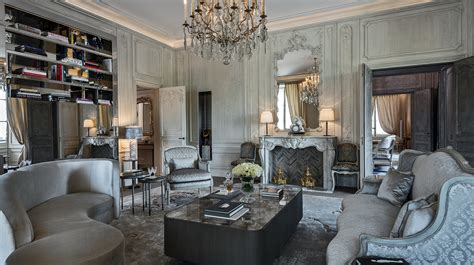
Unlike most global hotel brands, Rosewood is not purely asset-light. Through New World Development, it frequently maintains ownership stakes in properties, allowing for deeper capital investment and tighter control over long-term quality. This structural choice explains why Rosewood properties tend to excel in guest experience, design coherence, and service consistency—and why any acquisition becomes exponentially more complex.
Marriott’s Scale Versus Rosewood’s Soul
Marriott International operates on a vastly different wavelength. With thousands of hotels across dozens of brands, its strategy prioritizes scale, distribution, and loyalty monetization. The asset-light model allows rapid expansion, but it also shifts much of the operational burden to owners, sometimes at the expense of nuance.
If Marriott were to acquire Rosewood, the likely first move would be to divest owned real estate, keeping only the brand and management contracts. That approach mirrors Hyatt’s Playa acquisition, where ownership was never the endgame. From a balance-sheet perspective, the logic is sound. From a luxury perspective, the risks are obvious.
Rosewood’s value lies precisely in the things that do not scale well: obsessive attention to detail, heavy capital reinvestment, and leadership empowered to say no to growth when it threatens quality.
The Loyalty Program Question No One Can Ignore
A major incentive for Marriott would be folding Rosewood into Marriott Bonvoy, instantly elevating its luxury redemption portfolio. On paper, this looks like a win for travelers. In practice, it is far murkier. Ultra-luxury hotels tend to resist broad loyalty participation because it can distort pricing, availability, and guest mix.
Marriott’s track record at the top end of luxury is mixed at best. The so-called “Ritz-Carlton effect” looms large, where properties retain famous names but gradually lose distinctiveness under centralized standards and cost controls. For a brand like Rosewood, whose reputation depends on emotional resonance rather than point arbitrage, that risk is existential.
Leadership, Legacy, and the Sonia Cheng Factor
Another critical variable is Sonia Cheng, Rosewood’s CEO and a driving force behind its modern identity. Her leadership style is deeply personal and brand-centric, shaped by years of hands-on involvement. The idea that she would willingly subsume Rosewood into a corporate ecosystem as vast as Marriott’s strains credibility.
While retention clauses and leadership continuity are common in acquisitions, fulfillment is another matter entirely. Running Rosewood as an independent luxury house is fundamentally different from operating it as one label within a 30-brand portfolio.
Why This Deal Feels Strategically Awkward
From Marriott’s perspective, acquiring Rosewood would be a prestige play, instantly closing a perceived gap in ultra-luxury authenticity. From Rosewood’s perspective, the upside is far less clear. Capital access is not the same as creative freedom, and luxury guests are acutely sensitive to even subtle shifts in service culture.
There is also a broader industry question at stake: whether true luxury can survive inside mega-conglomerates without becoming performative rather than personal. History suggests caution.
A Developing Story Worth Watching Carefully
The rumor of Marriott acquiring Rosewood is plausible enough to discuss, but fragile enough to doubt. Financial pressures, regulatory filings, and strategic ambition can align quickly in today’s market. Yet alignment does not guarantee success.
Rosewood has grown deliberately, investing in properties that feel irreplaceable rather than interchangeable. Marriott has mastered global distribution and loyalty economics. Combining those strengths without diluting one or the other would require restraint rarely seen in acquisitions of this scale.
For now, the story remains unresolved. What is clear is that the future of ultra-luxury hospitality hinges not on who owns the brand, but on who protects the experience.