
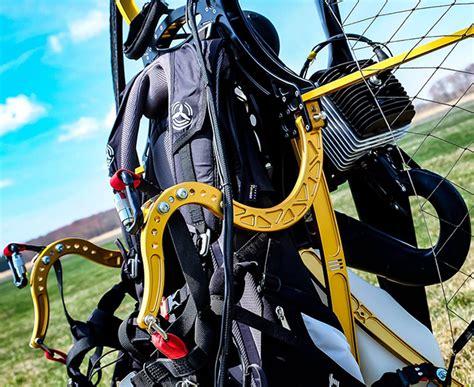
A paramotor, also known as a powered paraglider (PPG), is a type of lightweight aircraft that uses a flexible wing. It can be launched by foot or with a tricycle undercarriage for wheel launching. The setup includes a frame that houses the motor, propeller, harness, and in the case of wheel-launched models, a pilot seat. This frame connects to the paraglider wing via two attachment points, enabling powered flight.
The method of launch can impact whether a pilot license is needed. In many places, foot-launched paramotors do not require a license or formal training. However, regulations can vary, especially regarding airspace access. Most paramotors use small two-stroke internal combustion engines ranging from 80cc to 350cc, running on a gasoline and oil mixture. These engines are popular due to their high power-to-weight ratio and often consume less than 4 liters of fuel per hour. Fuel efficiency depends on factors like design, engine weight, pilot weight, and flying conditions.
While some electric engines powered by batteries, fuel cells, or solar cells exist, they usually provide shorter flight times. Additionally, there has been experimentation with Wankel rotary engines in paramotors. Overall, paramotors offer a unique way to experience flight with relatively simple equipment.