
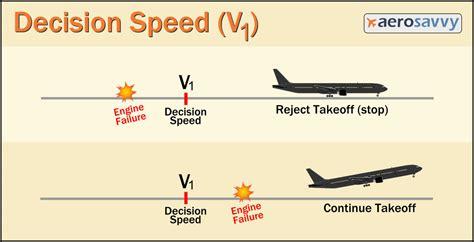
V1 is an important term in aviation, representing the maximum speed at which a pilot can safely decide to abort a takeoff during an emergency. It is also the minimum speed needed to continue the takeoff if an engine failure occurs. Essentially, if an engine fails before reaching V1, the pilot must reject the takeoff. However, if the failure happens after V1, the takeoff must proceed.
Transport category aircraft are certified based on these definitions, and their performance charts reflect this information. Over time, the interpretation of V1 has evolved alongside engineering definitions and certification standards. Many aviation authorities now refer to V1 as “Decision Speed,” which reflects a growing consensus among operators and regulators that this speed indicates when a decision must be made.
Transport Canada defines V1 as the Critical Engine Failure Recognition Speed but notes that operators may use other definitions from the Aircraft Flight Manual, as long as safety is not compromised. Recently, both the FAA and EASA have refined their definitions of V1, emphasizing its role as an “action” speed. According to these definitions, V1 is the maximum speed during takeoff at which the pilot must take the first action to stop the aircraft, such as applying brakes or reducing thrust.
It’s important to note that V1 also represents the minimum speed at which a pilot can safely continue the takeoff after a critical engine failure. The Engine Failure Speed (VEF) must occur at least one second before V1 and cannot exceed the Rotation Speed (Vr). When operating at the minimum allowable field length for the aircraft’s weight, there is a specific V1 speed that meets all criteria. If there is more runway available than the minimum required, pilots may choose from a range of V1 speeds based on various factors, including temperature and weight.
The operational implications of V1 are significant. Before reaching V1, pilots must be prepared to abandon the takeoff if necessary. If an engine failure is detected before V1, the takeoff should be rejected, allowing the aircraft to stop within the available distance. Conversely, if the failure occurs at or after V1, the aircraft should be able to take off and reach the required altitude.
Initiating a rejection above V1 carries risks, as it may lead to a runway excursion unless there is ample runway available. The decision to stop or continue the takeoff relies on timely and informed judgment, along with swift actions. The V1 call should coincide with reaching that speed. If a rejection is decided, full braking capabilities must be employed. If the takeoff continues, pilots must correct for engine failure yaw and ensure they reach the proper climb speed to achieve the necessary altitude. For more insights, the FAA’s Pilot Guide to Takeoff Safety offers valuable information.