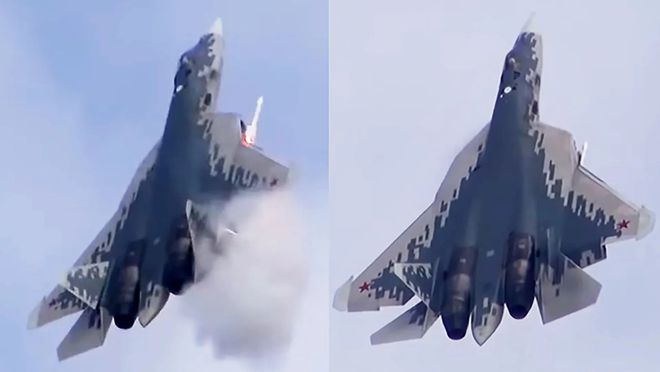
The Su-57, Russia’s flagship fifth-generation stealth fighter, has been a subject of intense scrutiny and anticipation since its development. Designed to compete with advanced aircraft like the U.S. F-22 Raptor and the F-35 Lightning II, the Su-57 promises cutting-edge capabilities, including supercruise, advanced avionics, and stealth features. However, as of 2024, the program faces significant challenges that could delay its full operational deployment and limit its global export potential. This article provides an in-depth examination of the current status of the Su-57, including production numbers, technological hurdles, geopolitical factors, and international market dynamics.
Current Production and Deployment Status of the Su-57
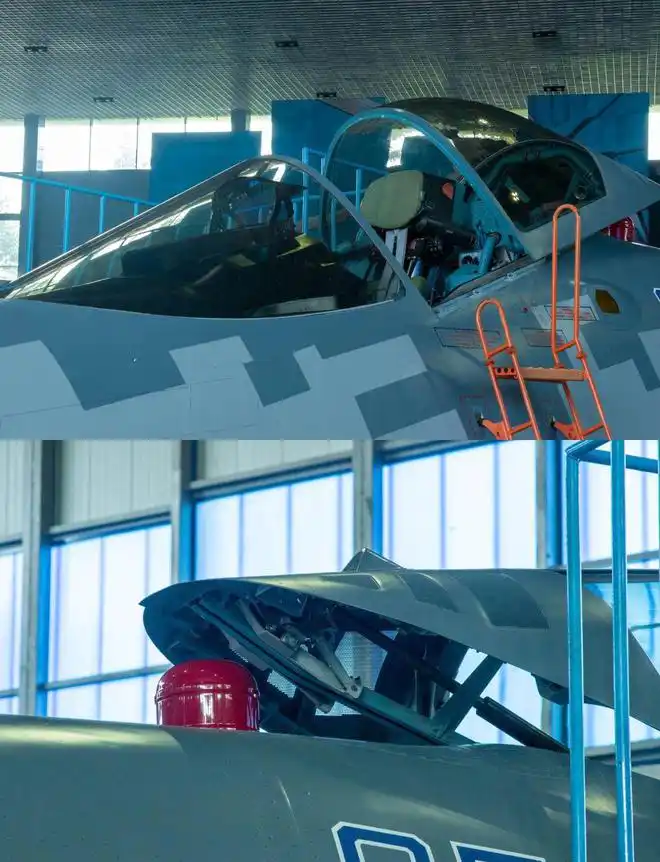
As of October 2024, Russia has produced 31 Su-57 aircraft. However, a substantial portion of these planes is still in the prototype or test stage, with over one-third not yet ready for active duty. In total, only 12 Su-57s are considered combat-ready, and only about 10 aircraft are actively operational due to various technical issues, including combat losses and ongoing maintenance challenges.

Challenges in Meeting Production Targets
The initial Russian production target for 2024 was the delivery of 20-24 Su-57 units. However, by September 2024, only five aircraft had been confirmed as delivered, indicating a significant shortfall in meeting production goals. This delay is attributed to various factors, including supply chain disruptions, ongoing technological difficulties, and insufficient industrial capacity. Despite this, Russia’s long-term plans remain ambitious, with a goal to deliver 76 Su-57s by 2027. Yet, this goal seems increasingly unattainable due to persisting production challenges.
Supply Chain and Production Limitations
A major barrier to Su-57 production is Russia’s dependence on imported components, particularly electronic systems and other high-tech parts. The imposition of Western sanctions has disrupted access to critical materials and technologies. These sanctions have had a direct impact on the availability of components necessary for manufacturing the Su-57, slowing down both the pace and scale of production.
While Russia has made efforts to develop domestic substitutes for these parts, such as attempting to replace Western-made avionics with locally produced systems, it faces significant technical challenges. The Russian defense industry has struggled to match the quality and performance standards of imported components, particularly in areas like stealth technology and electronic warfare systems. As a result, the Su-57’s production and operational deployment continue to be hindered by these technological bottlenecks.
Technological Hurdles and Limitations
The Su-57’s design features advanced technologies meant to give it a distinct edge over rival aircraft, but several aspects of its performance remain in question. These include stealth capabilities, avionics, and engine performance.
Stealth and Radar Cross Section
One of the primary features of the Su-57 is its stealth design, intended to reduce its radar cross section and improve its survivability in contested airspace. However, there have been concerns regarding the aircraft’s true radar stealth capabilities, with some reports suggesting that the Su-57’s stealth features may not be on par with those of the F-22 or F-35. Critics point to the visible airframe design and the use of older materials as factors that could compromise its radar signature.
Moreover, the Su-57 has faced difficulties in achieving the desired level of electromagnetic signature control, essential for evading detection by advanced radar systems. These concerns have led some analysts to question whether the Su-57 can effectively rival more advanced stealth fighters on the global stage.
Avionics and Electronics
The Su-57 is equipped with advanced avionics, including a new electronic warfare system and radar. However, the performance of these systems has been a point of contention. The aircraft’s active electronically scanned array (AESA) radar, while touted as a significant advancement, has been criticized for being inferior to that of competitors like the F-35. Moreover, the aircraft’s cockpit systems and sensor fusion capabilities still face developmental challenges, which undermine the Su-57’s ability to fully integrate with modern networks of combat systems.
Engine and Performance Issues
The Su-57 was initially designed with an advanced, indigenous engine capable of providing the aircraft with supercruise capabilities, allowing it to maintain high speeds without afterburners. However, the Su-57 has faced significant delays in the development of its AL-41F1 and Izdeliye 30 engines, which are crucial to its overall performance. The AL-41F1 engine, used in earlier variants of the Su-57, has faced reliability and power issues, limiting the aircraft’s ability to fully utilize its high-speed and high-altitude capabilities. Meanwhile, the newer Izdeliye 30 engine, which promises improved performance, has faced delays and is yet to be fully integrated into the fleet.
Stealth and Radar Performance Controversies
There are ongoing debates in military circles regarding the effectiveness of the Su-57’s stealth features. While the aircraft is considered stealthy compared to older generation fighters, its radar signature might still be detectable by advanced air defense systems. Some experts suggest that its stealth design may have been compromised due to the use of older technologies and materials, which might leave the Su-57 vulnerable in highly contested airspaces.
International Market and Export Potential
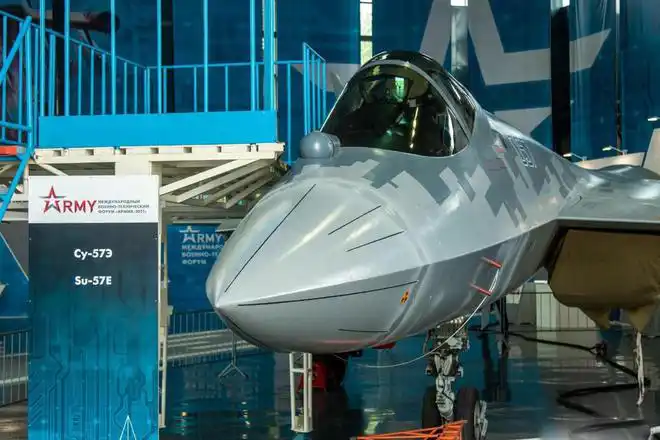
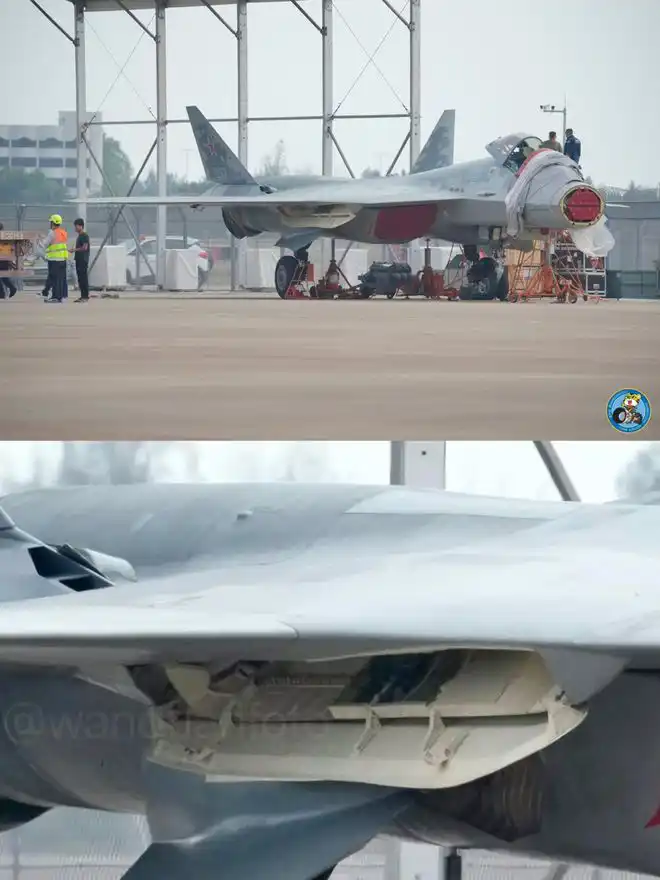
Despite these challenges, the Su-57 remains a potential contender on the global export market. Its appearance alongside the F-35 at the 2025 Indian Airshow signaled Russia’s efforts to promote the Su-57 internationally, particularly in markets like India, which is seeking to diversify its air combat capabilities.
F-35 vs. Su-57 in International Markets
At the 2025 Indian Airshow, the Su-57 was shown alongside the F-35, with the latter cancelling its planned flight demonstration. This move has been interpreted as a sign of the United States’ lack of confidence in the Indian market. The F-35’s absence from the airshow may open the door for Russia to secure potential export deals, especially with nations seeking a less expensive alternative to Western-made aircraft.
Challenges in Exporting the Su-57
While the Su-57’s appearance at the Indian Airshow may have opened some doors, production limitations and technical concerns present significant challenges for Russia in exporting the aircraft. With only a handful of aircraft in service and ongoing production delays, Russia’s ability to meet the demand for large-scale exports is questionable. Furthermore, the global market for fifth-generation fighters is already highly competitive, with the F-35 and F-22 dominating the high-performance sector.
Geopolitical Factors and Sanctions
Geopolitical dynamics also play a significant role in the Su-57’s international prospects. The Western sanctions imposed on Russia, combined with its strained relationships with NATO and the European Union, limit Russia’s ability to access international markets for high-tech components, further affecting the Su-57’s exportability. Additionally, many potential customers may hesitate to purchase the Su-57 due to concerns about the lack of support infrastructure and the long-term reliability of the aircraft.
Conclusion: A Long Road Ahead for the Su-57
The Su-57 remains one of the most ambitious projects in Russian military aviation, but as of 2024, it faces significant technical, logistical, and geopolitical hurdles. Despite its impressive design features and potential as a fifth-generation fighter, the aircraft’s production and operational readiness have been hampered by delays, supply chain issues, and unresolved technical challenges.
With only a handful of aircraft in service and ongoing questions surrounding its performance, the Su-57 is unlikely to achieve large-scale deployment in the immediate future. Furthermore, its export potential is limited by production constraints, technical concerns, and the broader geopolitical context.
For the Su-57 program to succeed, Russia will need to address these multiple issues, particularly its reliance on imported components, ongoing technical delays, and the challenges posed by international sanctions. Only time will tell if the Su-57 can overcome these obstacles and establish itself as a credible competitor to other fifth-generation aircraft in global markets.