A business class seat can cost $2,500 on one flight and $8,000 on another, even when the two journeys cover a similar distance and use the same aircraft. To passengers, that can make premium-cabin pricing look almost random. In reality, airlines use sophisticated revenue-management systems to decide how much each seat is worth, and the number displayed on a booking website is only the visible part of a much larger process.
Business class pricing is shaped by seat design, demand forecasts, corporate contracts, fare classes, aircraft assignments, booking patterns, and competitive conditions. The same physical seat can effectively have several different prices depending on when it is purchased, who is buying it, how flexible the ticket needs to be, and how the airline expects demand to develop before departure.
That is why two passengers sitting next to each other may have paid dramatically different amounts for essentially the same journey. One may have booked months ahead using a discounted fare bucket, while another may have purchased a fully flexible corporate ticket days before departure. Both passengers receive a business class seat, but the airline has classified their willingness to pay very differently.
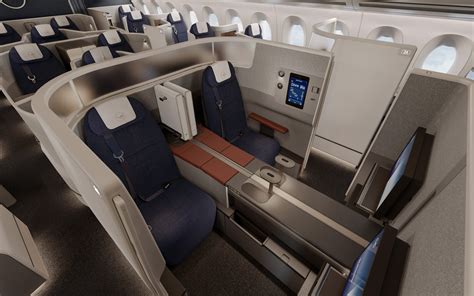
The modern premium cabin has also become more complicated. Airlines increasingly treat business class not as one uniform product but as a collection of products with different levels of privacy, comfort, flexibility, and convenience. Understanding those differences reveals several pricing secrets that are easy to miss when looking only at the headline fare.
1. Business Class Is No Longer One Single Product
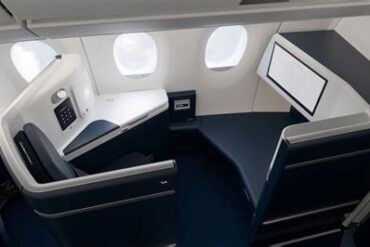
One of the biggest changes in premium aviation is the emergence of tiers within business class. Airlines do not necessarily need a traditional first-class cabin to charge passengers more for the most desirable seats. Instead, they can place their best business class products inside the same broad cabin and charge different prices for different levels of convenience.
This strategy is particularly attractive because maintaining a dedicated first-class cabin requires valuable aircraft space, specialized service procedures, additional crew considerations, and expensive seats that may be difficult to fill consistently. A premium business class suite can deliver many of the features passengers once associated with first class without requiring the airline to operate a separate cabin.
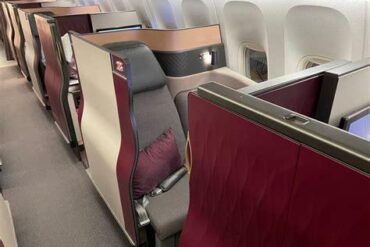
The result is a business-class-plus economy within the premium cabin. A passenger might choose a standard business class seat, while another pays extra for a suite with a door, greater privacy, more storage, or a particularly desirable location. The difference may be subtle, but airlines know that some travelers place enormous value on it.
Products such as Qatar Airways Qsuite demonstrate how far this concept can go. A highly private suite can command a premium because the physical product itself has become part of the pricing proposition. Airlines can also differentiate seats by location. A front-row suite, a single seat beside the window, or a seat with particularly convenient aisle access may be more valuable than another business class seat in the same cabin.
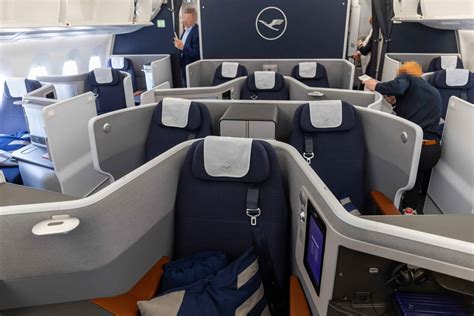
This approach allows carriers to increase revenue per square foot. Rather than treating every business class seat as identical, revenue managers can monetize the most desirable portions of the cabin separately. For passengers, it means that simply searching for “business class” is no longer enough. The aircraft’s actual seat map and cabin configuration can have a major impact on the value being offered.
2. Newer Business Class Seats Can Support Higher Prices
The second hidden factor is surprisingly physical: the seat itself can influence the fare. Airlines invest millions of dollars in new premium cabins, and they expect those investments to generate additional revenue over many years.
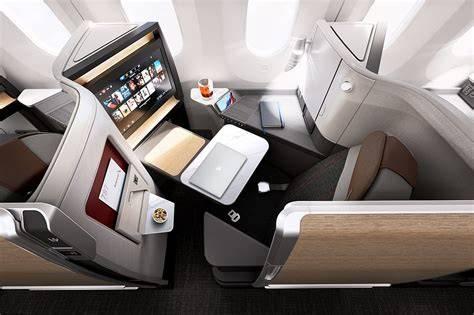
A modern business class suite with a fully flat bed, direct aisle access, a privacy door, larger entertainment screen, improved storage, wireless connectivity, and upgraded dining can be considerably more attractive than an older business class configuration. Airlines understand this and can position newer products as premium assets on important routes.
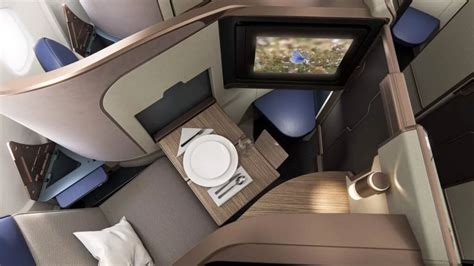
This is why an aircraft swap can create an awkward situation for passengers. Imagine booking a route because the scheduled aircraft has a modern suite with a door, only to discover later that an older aircraft has been substituted. The ticket price may remain unchanged even though the physical experience has deteriorated.
From the airline’s perspective, the fare was determined by a combination of demand, inventory, route economics, and the expected value of the product. A temporary aircraft substitution does not necessarily cause the revenue-management system to automatically recalculate every ticket already sold.
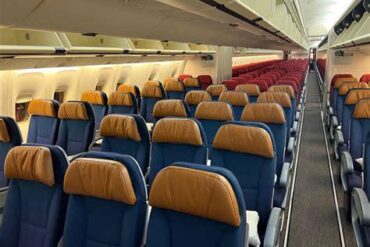
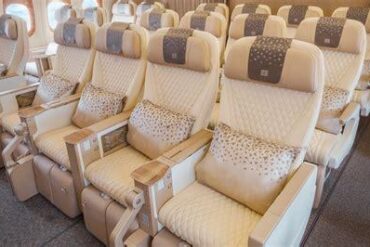
The difference between business class products can be substantial. An open-plan lie-flat seat may represent the standard premium product, while an enclosed suite can justify a meaningful premium because passengers value privacy. An angled-flat seat, meanwhile, may be positioned in a lower-priced premium tier where the airline is targeting travelers who want business class service without paying the highest fare.
Features such as direct aisle access, privacy doors, larger screens, premium Wi-Fi, better bedding, and improved dining therefore become more than marketing features. They can become components of the airline’s revenue strategy.
For passengers, this creates an important lesson: never evaluate a business class fare without checking the aircraft and seat configuration. Two tickets with the same cabin label can provide very different experiences.
3. Corporate Travelers May Not Pay the Public Price
Perhaps the most frustrating discovery for individual travelers is that the fare displayed online is not necessarily the price paid by everyone sitting in the cabin. Large corporate customers can negotiate private fares that are unavailable to ordinary passengers.
Airlines place enormous value on companies that consistently purchase premium-cabin tickets. A multinational company might send employees around the world every week, producing a predictable stream of high-value bookings. That reliability can be more valuable to an airline than waiting for individual travelers to appear at whatever price the market happens to support.
Corporate agreements can therefore include negotiated discounts, flexible conditions, priority availability, reduced change penalties, and volume-based incentives. The exact structure varies by airline and contract, but the basic principle is simple: a company promising substantial annual spending has negotiating power that an individual passenger does not.
This explains why a passenger can see a business class ticket priced at $7,000 while a colleague traveling for a major corporation may have access to a significantly lower negotiated rate. The public fare is not necessarily a prediction of what every traveler pays.
Corporate demand can also influence the inventory that remains available to the public. Airlines forecast how many premium seats they expect to sell through corporate channels and how many should be exposed through different retail fare classes. This means the individual traveler is not simply shopping for a seat in an empty cabin. They are competing with sophisticated demand forecasts built around customers who may already have commercial agreements with the carrier.
That makes business class pricing especially difficult to “hack.” The airline is effectively managing several markets at once: individual leisure travelers, individual business travelers, corporate accounts, travel agencies, loyalty members, and other distribution channels.
4. Business Class Prices Can Change in Real Time
A fourth secret is that the price is constantly being reassessed. Airlines use revenue-management systems that monitor booking activity and compare actual sales against forecasts.
If a flight is selling business class seats faster than expected, the system may close cheaper fare buckets and expose more expensive ones. If demand is weaker than forecast, lower-priced inventory may remain available for longer, or the airline may adjust its strategy to stimulate additional bookings.
This process can make business class prices appear unpredictable. A passenger may search for a flight in the morning, return later in the day, and discover that the fare has changed. That does not necessarily mean the airline has singled out that individual traveler. More often, the underlying inventory or demand conditions have changed.
Booking velocity is particularly important. If a premium cabin suddenly receives a wave of reservations because of a major conference, sporting event, trade show, festival, or corporate gathering, the system can recognize that demand is developing faster than expected. Higher fare inventory can then become available.
The opposite can happen on a weakly booked flight. If business class demand remains below forecast, the airline may preserve cheaper inventory in an effort to attract price-sensitive passengers.
Historical booking patterns are central to this process. Revenue managers study how similar flights performed in previous years, how quickly seats typically sell, how many passengers cancel, what percentage of customers connect onward, and how much demand normally appears close to departure.
The objective is not simply to sell every seat. It is to determine the highest realistic total revenue from the cabin. Selling a business class seat today for $2,500 may look better than leaving it empty, but if historical data indicates that someone will pay $5,000 closer to departure, the airline may deliberately hold back cheaper inventory.
5. Fare Buckets Are Hidden Price Tiers Inside the Same Cabin
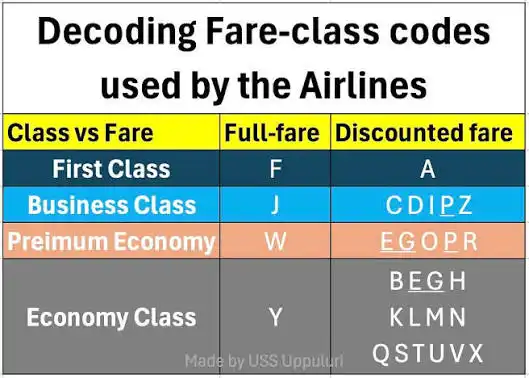
The fifth secret is one of the most important: business class has multiple fare classes, even though passengers often see only the cabin name.
A business class cabin might contain several inventory buckets, each carrying different restrictions and prices. The physical seats may look identical, but the fare conditions attached to them can be completely different.
Codes such as J, C, D, I, and other airline-specific fare classes are used to manage this inventory. The exact meaning varies by carrier and market, but generally some buckets are associated with higher fares and greater flexibility while others provide discounted pricing with more restrictions.
This creates a slow-motion auction for every seat on the aircraft.
An airline might initially release several discounted business class seats to capture price-sensitive customers. As those seats sell, the cheaper inventory disappears and the next pricing tier becomes available. Eventually, travelers booking close to departure may encounter only expensive, flexible fares.
That familiar message saying that only a small number of seats remain at a particular price can therefore reflect genuine inventory control rather than a simple marketing trick. If only two seats are available in a lower fare bucket, the third customer may indeed have to pay substantially more.
This system protects the airline from selling too much inventory too cheaply. A traveler willing to pay $6,000 should not necessarily receive the same price as someone who booked six months earlier for $3,000 simply because both passengers occupy the same seat.
The distinction becomes even more important when flexibility is involved. A cheaper fare may carry restrictions on refunds, changes, mileage earning, or other conditions. A more expensive fare can effectively sell flexibility as a product. Corporate travelers often value that flexibility enough to justify paying considerably more.
The modern system can be extraordinarily granular, with airlines able to manage numerous combinations of fare conditions and prices. From the passenger’s perspective, however, the result is simple: the price shown today is only the price of the inventory currently available.
What This Means for Passengers Shopping for Business Class
The most useful lesson is that business class pricing is not based simply on distance. A 10-hour flight does not automatically have a particular business class price, and a longer flight is not necessarily more expensive.
Airlines are pricing the expected value of a seat, the characteristics of the product, the strength of demand, the competitive environment, the timing of the purchase, and the passenger’s likely willingness to pay.
That is why two flights covering similar distances can have completely different fares. One might have a new suite-equipped aircraft, strong corporate demand, limited premium inventory, and heavy competition for seats. Another could use an older configuration and have weak demand, creating opportunities for lower fares.
Passengers can improve their chances of finding value by looking beyond the headline fare. Check the aircraft type, verify the exact business class seat, examine the fare conditions, monitor multiple departure dates, and understand whether the route has strong corporate demand. A cheaper business class ticket is not automatically a better deal if it comes with an inferior seat or restrictive conditions.
The opposite is also true. A seemingly expensive fare can represent strong value when it provides a genuinely superior suite, generous flexibility, valuable connections, and a much better overnight experience.
Ultimately, airline business class pricing is a carefully engineered system rather than a simple price tag. Every seat represents a revenue decision, and that decision can change as the aircraft fills, demand develops, competitors respond, and the departure date approaches.
For passengers, understanding those hidden rules changes the way business class should be viewed. The goal is not merely to find the lowest number on a booking screen. It is to recognize what the airline is selling, which pricing tier is available, and why that particular seat costs what it does. Once those mechanisms become visible, the seemingly mysterious world of premium-airline pricing starts to make considerably more sense.