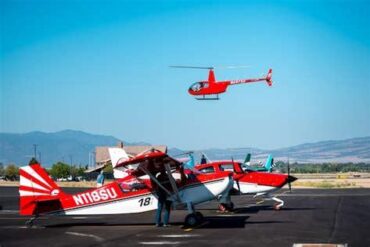
Flying a helicopter looks dramatically more demanding than flying an airplane. A helicopter can hover in place, move sideways, land in confined spaces, and remain airborne without the forward speed that gives a fixed-wing aircraft its natural stability. Those abilities come at a cost, however. Pilots generally agree that helicopters are more demanding to fly, particularly during the early stages of training, because the pilot must constantly coordinate several flight controls at once.
The fundamental difference comes from how each aircraft produces and manages lift. An airplane’s wings generate lift as the aircraft moves through the air, creating a degree of natural stability. Once established in cruise, a properly trimmed airplane can maintain relatively steady flight with surprisingly little control input. A helicopter has no such luxury. Its rotor system must continuously provide lift, while the pilot manages the aircraft’s attitude, altitude, direction, and power almost simultaneously.
Why Flying a Helicopter Is More Difficult
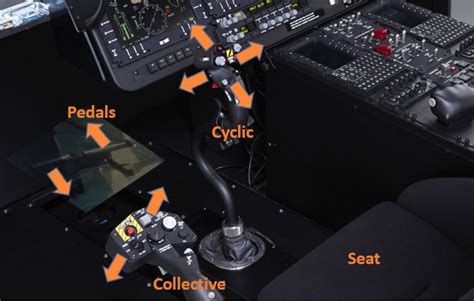
The biggest challenge is the helicopter’s three-dimensional control system. The cyclic controls the helicopter’s attitude and helps determine its direction and speed. The collective changes the pitch of the main rotor blades, increasing or decreasing overall lift, while also incorporating the engine or rotor-speed control on many helicopters. The pedals control the tail rotor and help manage yaw.
These controls cannot simply be treated as independent systems. Moving one can create changes that require corrections elsewhere. Raising the collective, for example, increases lift but also changes torque, requiring pedal input to keep the helicopter properly aligned. The pilot is therefore engaged in a continuous cycle of anticipating, correcting, and coordinating rather than simply making occasional control adjustments.
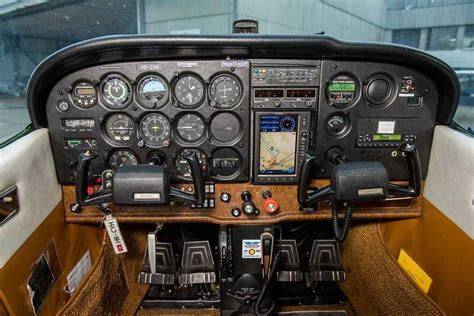
An airplane is generally more forgiving. A pilot can use one hand on the yoke or control column and another on the throttle, while the rudder pedals remain available for directional control. Once the aircraft reaches cruise altitude and is correctly trimmed, it can often maintain stable flight without constant hands-on corrections. Even a basic training airplane without sophisticated automation can provide a relatively relaxed workload under favorable conditions.
Hovering Is One of the Hardest Helicopter Skills
For helicopter students, hovering is often the moment when the difference becomes obvious. Instead of simply accelerating down a runway and climbing away, the student must keep the aircraft nearly stationary while making tiny, coordinated control movements. A helicopter can drift forward, backward, sideways, or rotate surprisingly quickly if those inputs are not balanced.
The difficulty is partly psychological as well as physical. New pilots may instinctively make large corrections when the aircraft begins to move. Those corrections can create even more movement, producing a cycle of overcorrection. Experienced helicopter pilots learn to make small, deliberate inputs and, crucially, to anticipate what the aircraft will do before the movement becomes obvious.
Training Makes Helicopter Flying Feel Natural
Despite the initial complexity, helicopter flying becomes much easier with experience. Pilots do not remain consciously focused on every individual control forever. With enough practice, coordinated movements become automatic, much like shifting gears or steering becomes instinctive for an experienced driver.
Helicopter training is deliberately structured to build that skill progressively. Students begin with ground school, learning the aerodynamic principles, systems, procedures, and safety considerations before taking on increasingly demanding flight exercises. Basic hovering, takeoffs, turns, climbs, descents, and landings gradually become familiar.
In the United States, a private helicopter pilot certificate generally requires at least 40 hours of flight training, although reaching that regulatory minimum does not necessarily mean a student is ready for a check ride. Instructors must be satisfied that the pilot can operate safely and demonstrate the required proficiency.
So, Is a Plane or Helicopter Harder to Fly?
For most new pilots, a helicopter is harder to fly initially because it demands continuous coordination and offers less inherent stability. An airplane generally gives beginners more time to think, particularly once it is trimmed and established in stable flight.
That does not mean airplanes are easy. Weather, navigation, air traffic, engine management, abnormal situations, and landing technique can all create substantial challenges. The difference is that a helicopter demands more continuous hands-on control, especially during hovering and low-speed operations.
Ultimately, pilots tend to agree on an important point: the aircraft that feels difficult at first can become remarkably intuitive with enough experience. The helicopter’s complexity does not disappear, but the pilot’s workload becomes more manageable as skills become automatic. The real dividing line is not simply the aircraft itself, but how much training and experience the pilot has accumulated.