The premium cabin arms race has quietly become one of the most intense innovation battles in modern aviation. Airlines are no longer competing only on routes and fares; they are engineering immersive micro-environments in the sky, fusing design, neuroscience, hospitality psychology, and aerospace ergonomics into a single seat. Business class has become the laboratory for aviation’s future, a space where airlines test how humans want to work, sleep, dine, and think at 35,000 feet.
By 2026, the next wave of business class products will mark a clear evolutionary leap. Privacy doors are becoming default. Ultra-wide seats are redefining what “personal space” means in a pressurized aluminum tube. Bluetooth-enabled 4K screens, architectural cabin layouts, and cultural design motifs are transforming cabins into branded experiences rather than generic transport modules. Below is a deep dive into seven new business class concepts arriving in 2026 that will likely set the global benchmark for premium air travel.
Singapore Airlines’ Next-Generation A350 Business Class Cabin
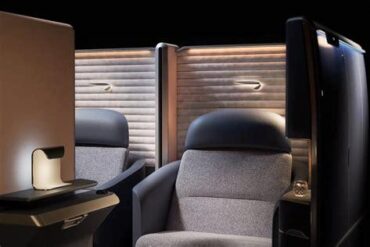
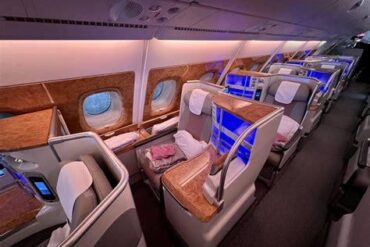
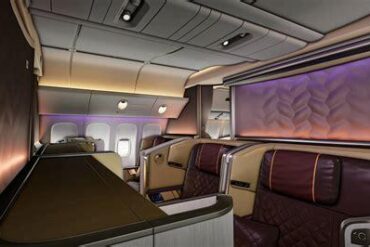
Singapore Airlines has long treated cabin design as a philosophical statement, not just an engineering task. The carrier’s upcoming 2026 business class product for its Airbus A350 fleet continues this tradition, pushing privacy and spatial psychology into new territory. Teaser images suggest unusually high walls and integrated doors, hinting at a semi-enclosed suite concept that borrows cues from first class but scales for business-class density.
This cabin was originally conceptualized for the Boeing 777X, but persistent delays forced Singapore Airlines to pivot and deploy the design on the A350 instead. That pivot is revealing. It signals that airlines are no longer waiting for future aircraft platforms to debut next-generation interiors; they are retrofitting innovation into existing fleets to stay ahead in the premium segment.
Expect a design language rooted in Singapore Airlines’ signature understated luxury—earthy tones, minimalist architecture, and tactile materials that feel closer to boutique hotels than aircraft cabins. The psychological goal is clear: reduce sensory fatigue, increase perceived space, and create a cocoon-like environment where passengers can work or sleep with minimal disturbance.
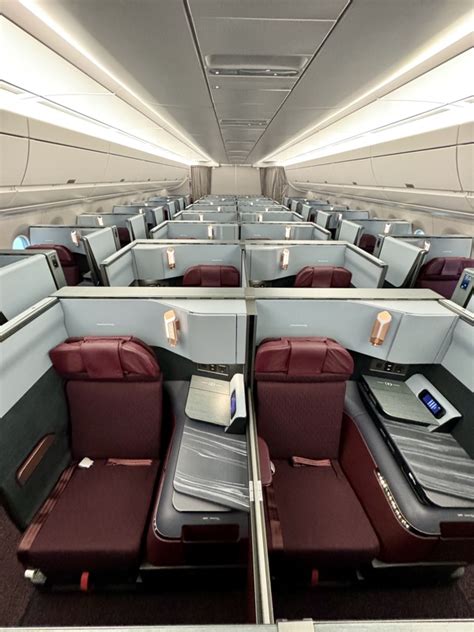
All Nippon Airways The Room FX on the Boeing 787
All Nippon Airways (ANA) shocked the industry with “The Room” business class on its refurbished Boeing 777 fleet, a seat so wide it challenged the boundary between business and first class. The Room FX is the evolutionary successor, redesigned to fit the narrower Boeing 787 fuselage without losing its signature spaciousness.
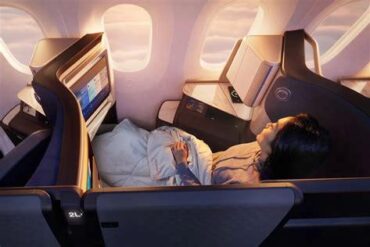
The 1-2-1 layout includes alternating forward- and backward-facing seats, a configuration familiar to passengers who have flown Qatar Airways’ Qsuite. This design allows ANA to maximize width while preserving direct aisle access for every passenger. A 24-inch 4K screen with Bluetooth connectivity transforms the seat into a personal cinema and workstation hybrid, reflecting how business travelers increasingly treat flights as mobile offices.
Notably, The Room FX removes electric recline mechanisms, replacing them with manual lounge configurations that allow passengers to lie flat. This choice is both ergonomic and philosophical: fewer moving parts reduce mechanical failure risk and allow designers to prioritize cushioning, space, and modular comfort.
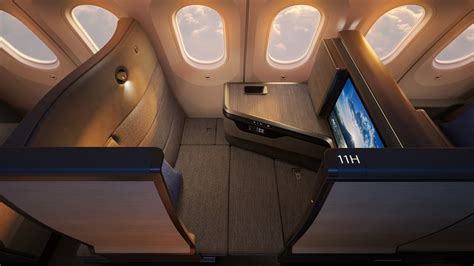
United Airlines United Elevated Business Class
United Airlines’ Polaris business class was revolutionary when it launched in the mid-2010s, but premium aviation evolves at jet speed. The United Elevated product is the carrier’s response to a new era of enclosed suites, advanced ergonomics, and global competition from Middle Eastern and Asian carriers.
United Elevated will debut on Boeing 787 Dreamliners, featuring the Adient Ascent seat with integrated privacy doors. This seat platform is already used by Qatar Airways and American Airlines, but United’s implementation will carry its own design language and service philosophy. The airline has strategically chosen flagship routes such as San Francisco–Singapore and San Francisco–London Heathrow for the debut, signaling a direct challenge to the world’s most competitive long-haul premium markets.
The significance here is not just the seat but the route strategy. Ultra-long-haul flights amplify cabin comfort differences; a seat that feels fine for six hours becomes existential for seventeen. United Elevated is designed to keep travelers cognitively sharp and physically comfortable across half-day flights, blending privacy, workspace ergonomics, and sleep science into one coherent product.
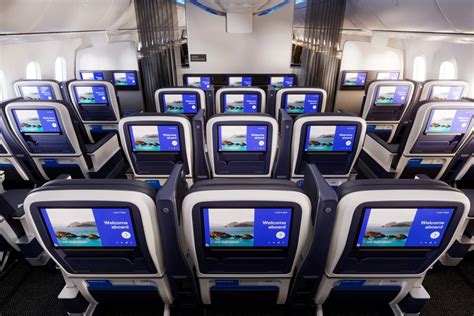
Air Canada’s A321XLR Long-Haul Narrowbody Business Class
Air Canada’s decision to deploy business class on the Airbus A321XLR represents a structural shift in global route economics. The A321XLR enables “long and thin” routes—markets too small for widebodies but too far for traditional narrowbodies. Air Canada plans to use the aircraft on transatlantic routes from Montreal to cities like Edinburgh, Toulouse, Palma, and Dublin.
The business class cabin will feature a 1-1 configuration with 14 seats, giving every passenger direct aisle access and a sense of exclusivity that rivals widebody cabins. This is strategically fascinating: a single-aisle aircraft offering a premium cabin that feels boutique and private, almost like a private jet charter experience but at commercial scale.
Operational challenges exist, including payload constraints on shorter runways and high-temperature environments. Yet the strategic implication is profound. Narrowbody business class on intercontinental routes could redefine airline network planning, making premium cabins accessible on routes previously deemed commercially unviable.
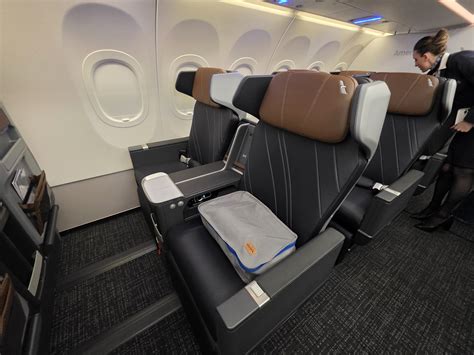
Riyadh Air’s Debut Business Class on the Boeing 787
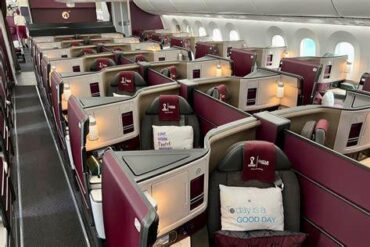
Riyadh Air’s launch is more than the birth of a new airline; it is the emergence of a national aviation identity built from scratch. Its business class cabin will feature Safran Unity seats, already proven on carriers like Qantas, Air India, and Japan Airlines, but customized with Riyadh Air’s distinctive purple branding and “canopy twist” architecture inspired by traditional Arabic tents.
This fusion of heritage and technology is deliberate. Airlines increasingly use cabin design as cultural storytelling, and Riyadh Air is positioning itself as a bridge between tradition and futurism. The 24-inch 4K screens with Bluetooth audio reflect the global premium standard, but the aesthetic narrative sets the carrier apart in a crowded Gulf aviation market dominated by Emirates, Qatar Airways, and Etihad.
For passengers, this means not just a seat but an identity-rich environment—a curated sensory journey that begins before takeoff and continues long after landing.
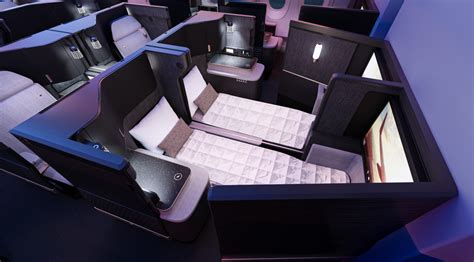
LOT Polish Airlines’ 787 Business Class Retrofit
LOT Polish Airlines has historically lagged behind competitors in business class innovation, particularly with its outdated 2-2-2 layout that denied aisle access to many passengers. The late-2026 retrofit of its Boeing 787 fleet will finally bring LOT into the modern premium era with a 1-2-1 configuration and Recaro R7 seats.
The Recaro R7 is already deployed on Iberia’s A350 “NEXT” aircraft and represents a mature, ergonomically refined platform. LOT’s implementation includes 17.3-inch 4K screens, Bluetooth pairing, and expanded charging options, reflecting the modern traveler’s device-heavy ecosystem.
This retrofit is more than cosmetic. It is a strategic repositioning of LOT in the transatlantic and long-haul market, signaling that Central and Eastern European carriers are no longer content to be premium laggards. Expect LOT to pair this cabin with improved catering and digital services to reframe its brand perception among global business travelers.
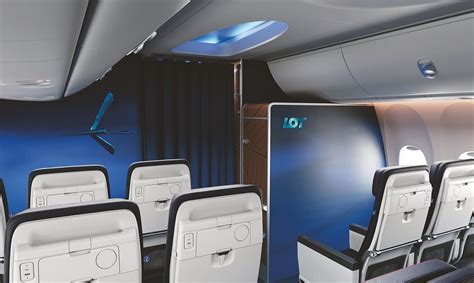
China Southern’s A350 Business Class Suites with Vantage XL+
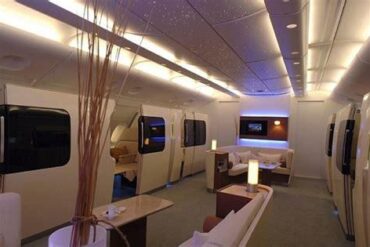
China Southern’s upcoming A350 business class product is a study in design restraint and spatial generosity. Developed with UK-based design consultancy Tangerine, the cabin uses cream, platinum, and powder blue tones reminiscent of private aviation interiors. This aesthetic choice suggests a strategic pivot toward understated luxury rather than ostentatious design.
The centerpiece is Thompson Aero Seating’s Vantage XL+ platform, offering expanded personal space optimized for widebody aircraft like the A350. While privacy doors are absent, the seat’s geometry emphasizes openness, legroom, and intuitive ergonomics. This design choice reflects a philosophical split in premium cabins: some airlines prioritize cocoon-like privacy, while others emphasize spatial openness and visual calm.
China Southern’s role as launch customer for Vantage XL+ positions the carrier as a design innovator in mainland China’s aviation market, historically conservative in premium cabin experimentation. The collaboration with Tangerine underscores a broader trend: airlines are increasingly partnering with global design firms to craft distinctive passenger experiences rather than relying solely on seat manufacturers.
Why 2026 Marks a Turning Point for Business Class
The seven products arriving in 2026 share a common philosophy: business class is no longer just a lie-flat seat; it is a personalized micro-suite with digital, ergonomic, and psychological layers. The convergence of privacy doors, high-resolution screens, Bluetooth audio, and boutique-hotel aesthetics suggests that airlines are targeting not just comfort but emotional well-being and productivity.
These cabins also reveal macro-trends in aviation strategy. Narrowbody long-haul business class expands route possibilities. Retrofit programs signal that airlines see premium cabins as long-term revenue anchors. Cultural design narratives, like Riyadh Air’s tent-inspired canopy and China Southern’s private-jet color palette, indicate that brand identity now extends deep into cabin architecture.
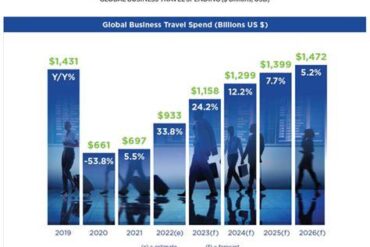
The implications extend beyond passenger comfort. Premium cabins drive disproportionate revenue, influence corporate travel contracts, and shape airline brand prestige. In a world where economy class is increasingly commoditized, business class is becoming the emotional and financial battleground of commercial aviation.
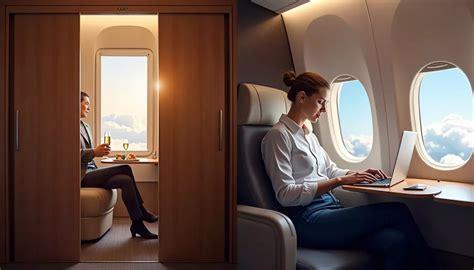
As 2026 approaches, these seven innovations will not just improve seats; they will redefine what it means to travel for work, for creativity, and for contemplation at cruising altitude. The aircraft cabin is becoming a flying office, bedroom, cinema, and sanctuary, and the next generation of business class products is the blueprint for that airborne future.