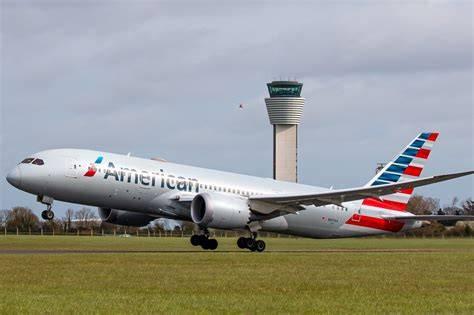
Flight AA41—a Boeing 787-8 Dreamliner carrying 234 passengers and 11 crew members—declared an emergency at Chicago O’Hare International Airport (ORD) on Tuesday after pilots reported a right brake “that might be dragging” during the final approach from Spain. The widebody touched down around 2:30 PM local time, rolled to a stop at the end of the runway with two flat tires, and triggered a full emergency response that ultimately sent one person to a local hospital in good condition.
Brake Warning Came Before Touchdown on AA41
The crew of the transatlantic service from Barcelona–El Prat Airport (BCN) contacted air traffic controllers in the closing stages of the arrival, telling them the aircraft had a right-side brake that appeared to be applying without command and asking that emergency crews follow the jet to the gate. That request turned an otherwise routine arrival of a long-haul widebody into a monitored emergency, with airport firefighters and rescue teams staged and ready as the 787-8 crossed the threshold.
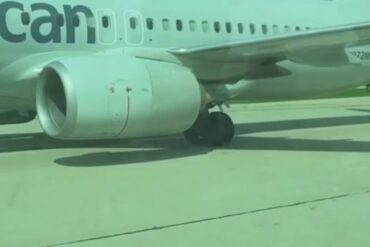
The problem became visible the moment the aircraft settled onto the pavement. Passenger John Abbate described a “really big boom” as the main gear met the runway, and the jet remained stationary at the far end of the strip for several minutes before the captain confirmed over the public address system that its tires had blown. Passengers deplaned on the apron using mobile stairs rather than a jet bridge, then were bused to the terminal while first responders examined the aircraft and the runway surface.
Boeing 787-8 Registration N806AA Towed Off Runway for Inspection
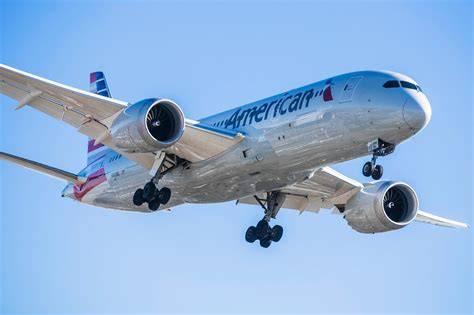
The aircraft involved is an 11-year-old 787-8 registered as N806AA, which flight tracking data showed parked on the ground in Chicago at the time of reporting. American Airlines withdrew the jet from service for inspection, and the Federal Aviation Administration (FAA) has opened an investigation into the events surrounding the landing. Neither American nor the FAA had publicly confirmed the condition of the brake assembly, the exact mechanism of the tire failure, or what the inspection of the wheel and brake components had uncovered by Wednesday.
The Chicago Fire Department transported one individual to a local hospital, describing that person’s condition as good. Officials have not said whether the patient was a passenger or a crew member, and American has not released additional details about injuries or the medical status of anyone on board. The remaining 244 people aboard the flight were moved to the terminal without further reported medical attention.
How a Dragging Brake Destroys Tires at Landing Speed
A dragging brake is one that stays applied once the crew has released it, clamping down on a wheel that should be spinning freely. On a landing rollout the aircraft is still traveling at well over 130 knots when the main gear makes contact, and a wheel that is either slowed or locked by a stuck brake cannot roll with the runway. Instead, the tire is dragged across the pavement at high speed, abrading the tread and generating friction heat far beyond anything seen in normal braking, where carbon brake stacks are designed to absorb that energy deliberately and progressively.
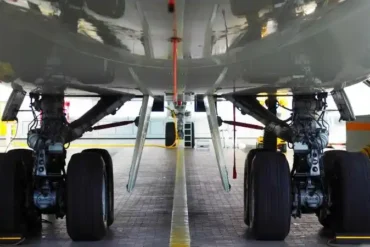
The consequences build in sequence. A locked wheel scuffs a flat spot into the tire within seconds, which can strip rubber down to the casing and cause the tire to fail under the shock of landing. Heat alone can also compromise the brake assembly itself. Modern transport aircraft wheels are fitted with fusible plugs—small inserts that melt at a set temperature to release tire pressure in a controlled way—so that extreme heat produces a deliberate deflation rather than an explosive blowout that could throw debris into the wing, flaps, or fuselage. Two flat tires on one main gear leg, as happened on AA41, points to exactly that chain of events rather than to a random puncture.
A Year of Tire Failures at Chicago O’Hare
Tuesday’s emergency extends an unusual streak at O’Hare that began in mid-August. On August 13, a United Airlines flight aborted its takeoff after blowing tires. On August 17, two separate arrivals—American flight AA386 and United flight UA739—each ended with blown tires after landing. Four days later, an American Boeing 737-800 suffered a tire failure while taxiing toward the gate. On August 25, a Republic Airlines flight reported a braking problem, and the following day American AA3280 blew both right main gear tires while taxiing for departure.
The cluster has drawn attention to O’Hare’s runways and taxiways, but investigators have not established a common cause linking the incidents. They span different airlines, different aircraft types from narrowbody 737s to the 787-8 Dreamliner, different phases of flight from takeoff roll to taxi, and different failure modes from blown tires to reported brake faults. Runway debris, heat exposure, maintenance practices on shared ground equipment, and plain statistical clustering at one of the busiest airports in the world have all been floated as explanations without being confirmed, and the FAA has not publicly characterized any of them as related to AA41.
What Investigators Will Examine After the AA41 Landing
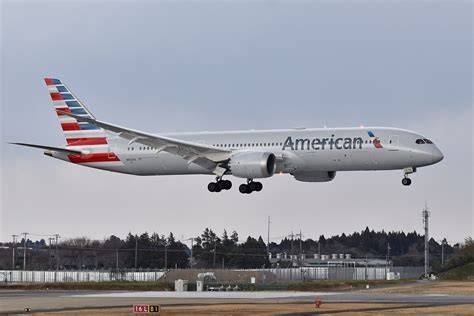
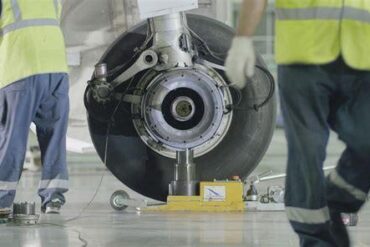
The investigation will likely open with the wheel and brake assembly removed from the right main gear, including the brake control valve that regulates hydraulic pressure to the carbon stack and the antiskid system that governs wheel speed. Maintenance records for the aircraft’s recent checks, the landing data recorded by the 787’s onboard health monitoring, and the runway condition where the tires deflated will also be reviewed. The 787’s brake system is electrically actuated rather than hydraulically driven, a design detail investigators will examine closely given the crew’s report that the brake appeared to apply itself.
Whatever the findings, the practical effect at O’Hare is a sustained runway hazard picture that airport and airline safety teams will be pressed to explain. For the 245 people aboard AA41, the outcome was one hospitalization, two shredded tires, and an aircraft laid up in Chicago pending inspection—a serious event that stopped well short of catastrophe because the crew warned controllers early and the aircraft came to rest with its landing gear intact on the runway.