Alaska Airlines has bet its future on turning Seattle into a global gateway, yet the airline’s own numbers now show how costly that bet has become in the near term. Despite an aggressive expansion of its long-haul network, the carrier posted a $147 million loss in the third quarter, a result it ties to a higher-than-expected tax rate but one that analysts and observers link just as strongly to the heavy costs of standing up brand-new intercontinental flying. The Seattle-based airline reportedly expects a total loss of roughly $650 million in the fourth quarter, a forecast that underscores how painful rapid route growth can be before maturity arrives.
Why New Long-Haul Flying Acts as a Drag on Earnings
Rapid growth pressure is a familiar chapter in airline history, and it rarely resolves quickly. A new long-haul route demands aircraft, crew bases, marketing spend, ground handling agreements and brand awareness that can take months, sometimes years, to mature. Alaska’s international operations improved their load factors by 7.5 points in the third quarter, and unit revenues climbed 24%, signs that demand is following the capacity. Even so, the airline acknowledges that performance in the first year on new routes may remain subdued, making the network a near-term drag even as it improves.
London Heathrow Leads the Premium Demand Story
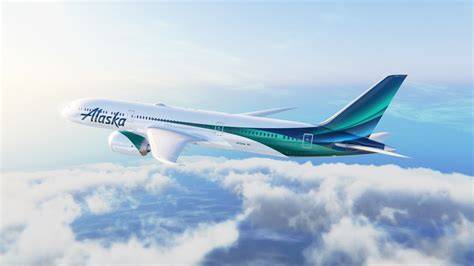
Among the carrier’s international additions, London Heathrow Airport (LHR) has become the most recognizable and commercially encouraging. Demand is holding up, particularly in premium cabins, a favorable signal for an airline entering a city pair already contested by alliance partner British Airways alongside Delta Air Lines and Virgin Atlantic. Flight AS100 departs Seattle-Tacoma International Airport (SEA) at 7:40 PM and reaches Heathrow at 12:20 PM the following day in 9 hours and 40 minutes aboard a Boeing 787-9 Dreamliner, while AS101 returns from LHR at 2:45 PM and lands in Seattle at 5:00 PM after 10 hours and 15 minutes.
The Nine Nonstop Routes and Their Load Factor Reality
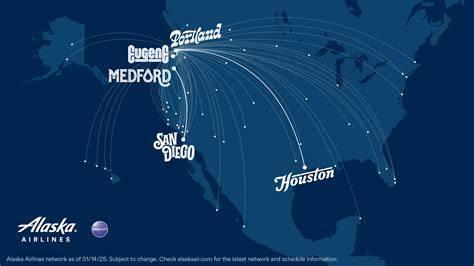
Alaska’s map now spans nine long-haul routes across ten airports and 45,040 network miles, stretching from Seattle to Athens, Paris, Rome, Seoul, Reykjavik, London, Tokyo Narita, Osaka and Papeete. Load factors tell a story of uneven maturity. Tokyo Narita leads at 85.9% with 47,797 passengers in the twelve months to July 2026, having launched in May 2025. Reykjavik follows at 82%, Seoul at 81.7%, London at 74.8%, Rome at 68.1%, with Seoul carrying 42,397 passengers since September 2025 and Rome 38,613 since April 2026.
Connecting Traffic Through Seattle Holds the Strategy Together
Alaska is betting on demand not only from local Seattle travelers but from transiting passengers funneled through its Seattle hub, a connecting model that multiplies the reach of every new flight. Routes to London, Rome, Reykjavik, Seoul and Tokyo are already flying, with Athens and Paris arriving next year. The carrier also plans to deploy Hawaiian Airlines’ Airbus A330s for new Seattle services to Osaka and Papeete from 2027, with Papeete filling the South Pacific gap left when Air Tahiti Nui cut its Seattle link earlier this year.
Where Alaska Might Expand Next
With Athens, Paris, Papeete and Osaka on the horizon, attention turns to the next frontier. Speculation has pointed toward Asian gateways such as Shanghai, Beijing, Bangkok and Ho Chi Minh City, while Sydney Kingsford Smith Airport (SYD) has been floated after the Sydney Harbour Bridge appeared in the airline’s first onboard safety video. None of these routes has been formally announced, leaving Alaska room to let its newest markets mature before the next wave of expansion arrives.