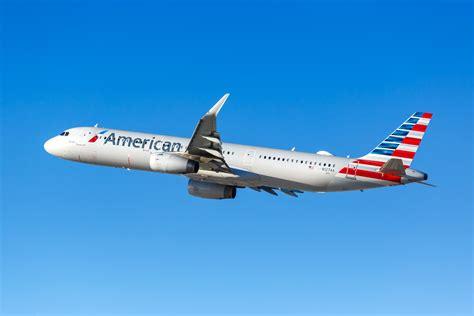
American Airlines enters December with a reordered hierarchy of international performance, revealing a reshaped network where strategic frequency shifts and evolving market pressures have produced a new chart-topping route. This fresh alignment underscores how intensively the carrier deploys capacity into short-haul cross-border markets while balancing long-standing hubs, competitive pressures, and seasonal travel surges. The airline’s international structure now spans 284 airport pairs across 56 countries, supported by 21 hubs and focus cities, demonstrating the breadth of an operator that remains the world’s largest in several dimensions even if not always by seats or passengers carried.
The new number one is Dallas/Fort Worth to Cancun, a route that decisively rises to the top with 225 one-way flights in December. This ascent was not inevitable, especially given how Miami to Havana held the crown just a year earlier. But the decline in Cuban frequencies, combined with sustained demand for Mexico’s most powerful leisure market, propelled Dallas–Cancun ahead. The shift is a reminder that American’s strongest routes are rarely static; they flex according to regional dynamics, regulatory conditions, and the carrier’s own capacity recalibration strategies.
Beyond this headline change, the network’s depth becomes more apparent when looking at the broader field. Miami–Cancun only narrowly misses a higher ranking, while lesser-known contenders such as Miami–Beef Island and Charlotte–Cancun each hover just below the Top 10 threshold. These razor-thin margins illustrate how heavily American leans on high-frequency international flying, particularly in the Caribbean, Mexico, and Canada—regions where demand is both constant and strategically valuable.
Dallas/Fort Worth To Cancun Becomes The New Leader
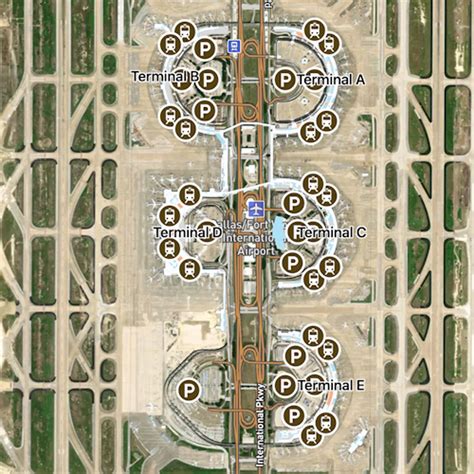
The rise of Dallas/Fort Worth–Cancun to the top position follows a 35-year history of American’s presence in this corridor. U.S. Department of Transportation data shows more than 15 million passengers moved between the two destinations aboard the airline, with 828,000 round-trip passengers recorded between August 2024 and July 2025 alone. An 89% seat load factor further emphasizes how consistently strong demand remains.
This is more than a simple point-to-point leisure connection. Roughly 70% of passengers connect through Dallas before heading to Cancun, turning the route into a funnel for American’s enormous domestic network. Las Vegas, Los Angeles, Sacramento, Portland, Omaha, Milwaukee, San Antonio, Oklahoma City, and Indianapolis rank among the top feeders. This pattern reveals a high-value strategy built on frequency dominance, wide distribution of connecting markets, and competitive resilience against carriers such as Frontier, Spirit, and Sun Country.
Miami–Havana Declines But Remains A Key Player
While Miami to Havana once held the crown, its diminished position today reflects changing diplomatic, regulatory, and airline scheduling conditions. The route still delivers immense cultural and logistical importance, but a 19% frequency reduction year-over-year pushes it to second place. The fluctuations in U.S.–Cuba market access often influence capacity decisions more sharply than competitive trends, making Miami–Havana an inherently variable performer.
Even with these constraints, the corridor continues to command outsized relevance within American’s Latin American network. Aircraft type diversity—including the A319, 737-800, and 737 MAX 8—allows the carrier to scale the route sensitively to demand while preserving operational flexibility across Miami, its most globally diverse hub.
O’Hare’s Revival Elevates Chicago–Toronto Into The Top Tier
A significant storyline in this year’s reshuffled ranking is the rise of Chicago O’Hare to Toronto Pearson into the Top 10 for the first time. This shift displaces Charlotte–Cancun, proving that not all rising markets are leisure-driven. The Chicago–Toronto corridor has grown from 122 to 142 monthly departures, a strong 16% year-over-year increase that aligns with American’s notable resurgence at O’Hare.
The rebound is dramatic. When combining domestic and international flying, American’s O’Hare activity has climbed 30% in a single year. International flights alone have surged by three-quarters, marking the carrier’s strongest December international footprint at the airport in a decade. The momentum suggests a renewed long-term commitment to Chicago as a competitive Midwestern anchor capable of supporting more international depth.
A Network Defined By Frequency, Short-Haul Reach, And Strategic Consistency
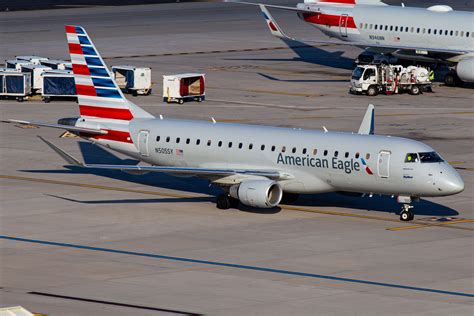
American’s December international map underlines how uniquely the carrier leans on dense, short-haul, high-frequency flying. Routes to Toronto, Cancun, Nassau, Mexico City, Santo Domingo, and Monterrey collectively dominate the upper rankings, reflecting enduring demand patterns and the airline’s commitment to maintaining market leadership through volume rather than aircraft size.
In this structure, even small adjustments—such as the retreat of Miami–Havana or the growth of Chicago–Toronto—can meaningfully alter the hierarchy. The cumulative effect is a network that balances hub strength, competitive positioning, and revenue optimization, while reminding us that international leadership is rarely a matter of sheer distance. Instead, American’s dominance thrives in cross-border corridors where frequency is the ultimate instrument of control.
As this reshaped Top 10 demonstrates, the airline continues refining where and how it deploys capacity, producing a dynamic map that mirrors shifting travel patterns and strategic ambitions.