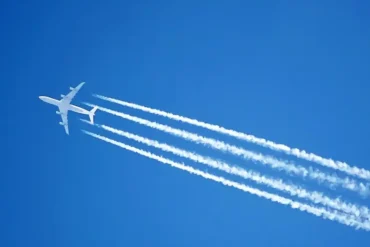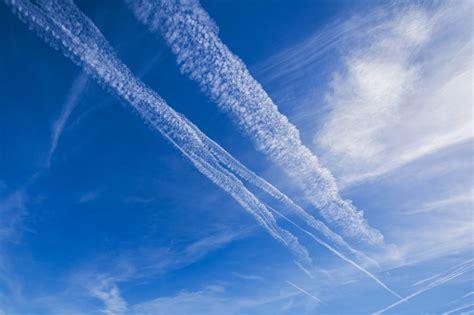
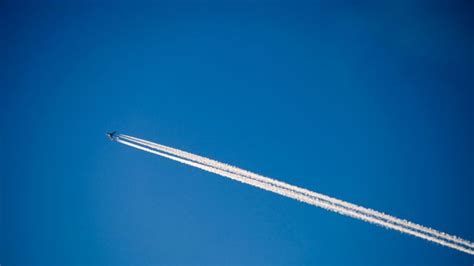
Contrails form when water vapor from the exhaust of jet engines encounters the cold, low-pressure air found at high altitudes. This vapor condenses into tiny water droplets or ice crystals, creating the visible trails behind aircraft. These trails usually dissipate quickly, but in some conditions, they persist and form extensive cloud cover.
The formation of contrails is influenced by several factors, including temperature, altitude, and humidity. Airlines typically fly at cruising altitudes of 30,000 to 38,000 feet, where the air is thin, and these conditions are most favorable for contrail formation. However, not all flights create persistent contrails. A significant percentage dissipate within minutes, having little lasting effect on the environment. About 65% of jets create contrails at these altitudes, but only 10% of these form persistent contrails, which can last for hours.
The Role of Contrails in Global Warming
While contrails may seem like nothing more than fleeting clouds, their impact on global warming is far more complex. When contrails form, they can create a layer of clouds that trap heat in the atmosphere. This is a phenomenon known as “radiative forcing,” where the cloud layer prevents heat from escaping into space, thereby warming the Earth below. This warming effect is most pronounced when contrails form at night, as the natural cooling of the Earth is obstructed by the artificial clouds.
According to recent studies, contrail-induced warming might be even more significant than the carbon dioxide emissions from airplanes. A European Union study that tracked airline flights over more than a decade found that the warming effect of contrails could be a larger contributor to global warming than previously thought. This revelation has led to increased concern within the aviation industry about the environmental consequences of air travel.
The Complex Science Behind Contrails
The science of contrails is still evolving, and while experts have a general understanding of how they form, predicting when and where they will form remains a challenge. One of the primary issues is that the conditions required for contrail formation are highly variable and difficult to predict. Factors such as atmospheric pressure, humidity, temperature, and altitude all play a role in determining whether a contrail will form and how long it will last.
At present, there is no precise way to predict when a plane will create a contrail, especially considering that flights travel at speeds of around 600 miles per hour. However, new technological advancements, such as satellite imaging and airplane sensors, are helping scientists and aviation experts gain a better understanding of contrail formation. By combining this data with weather predictions and flight plans, it may be possible to mitigate the environmental impact of contrails in the future.
Efforts to Mitigate the Impact of Contrails
In response to growing concerns about the environmental impact of contrails, the airline industry is beginning to take action. Several major airlines, including American Airlines and Southwest Airlines, are collaborating with organizations like the Rocky Mountain Institute to better understand contrail formation and its impact on global warming. The goal is to identify which flight routes and conditions create the most harmful contrails and determine if changes in flight planning could mitigate their effects.
One potential solution is to adjust flight altitudes to avoid the conditions that lead to persistent contrails. Studies have shown that modest changes in altitude could significantly reduce contrail formation, but this approach comes with its own set of challenges. Airlines would need to balance the environmental benefits of avoiding contrails with the operational costs, including fuel consumption and potential delays caused by altering flight paths.
The Challenges of Implementing Contrail Reduction Strategies
Predicting and managing contrail formation is no simple task. The atmospheric conditions required to form contrails are highly variable, and adjusting flight paths to avoid contrails could lead to increased fuel consumption and longer flight times. Additionally, the potential environmental benefits of reducing contrail formation would need to be weighed against the impact of burning more fuel.
For instance, flights that adjust their altitude to avoid contrails could end up consuming more fuel, which in turn could increase the carbon emissions associated with the flight. While this might reduce the warming effect of contrails, it could exacerbate the overall carbon footprint of air travel. As such, any efforts to mitigate contrail formation would need to carefully balance the environmental benefits with the potential downsides.
The use of advanced satellite imaging and sensors is critical to overcoming these challenges. By studying contrail formation in real-time, scientists and aviation experts can better understand the factors that contribute to persistent contrails and develop more effective strategies for avoiding them. Additionally, collaborations between airlines, aviation manufacturers, and research institutions are essential for advancing this field of study and developing practical solutions.
Future Prospects: Can We Eliminate Contrails?
While it is unlikely that contrails can be completely eliminated from the skies, there is hope that their environmental impact can be reduced through a combination of improved technology, better flight planning, and increased collaboration within the aviation industry. Airlines are increasingly aware of the need to address contrail formation as part of their broader sustainability goals.
In the future, the development of more fuel-efficient engines, sustainable aviation fuels, and alternative propulsion technologies such as hydrogen or electric engines may help reduce both the carbon emissions and contrail formation associated with air travel. However, these technologies are still in the early stages of development and may not be widely available for several years.
In the meantime, industry leaders are focusing on refining contrail prediction models and exploring operational changes that can reduce their environmental impact. This may involve altering flight altitudes, adjusting flight routes, or adopting new technologies that can detect and mitigate contrail formation in real-time.
Conclusion: The Growing Awareness of Contrail Impact
Contrails may seem like a minor issue in the broader context of climate change, but their potential role in global warming cannot be ignored. As more research is conducted and the science behind contrail formation becomes clearer, the aviation industry is taking steps to better understand and address this environmental challenge.
While there is no simple solution to the problem of contrails, the growing awareness of their impact is a positive step toward mitigating their contribution to climate change. Through collaboration, innovation, and continued research, the aviation industry can work toward a future where air travel is not only more fuel-efficient but also less damaging to the environment.