Definition
Arrival Manager (AMAN) is an advanced tool designed to optimize aircraft arrival sequences and timings for flights approaching specific constraint points. It considers various factors such as preferred flight profiles, aircraft types, performance, weight categories, airspace and runway conditions, inbound flow rates, and meteorological (MET) conditions. The system applies suitable optimization criteria to present the planned traffic flow at controller working positions, providing advisories to ensure adherence to the planned arrival sequence and timings.
Introduction
AMAN systems have been developed and implemented across Europe and beyond over many years. Their primary purpose is to automate the sequencing of traffic arriving at airports. These systems continuously calculate arrival sequences and times for incoming flights, considering the local landing rate and required spacing between aircraft. AMANs also function as metering tools, helping regulate traffic flow into terminal maneuvering areas (TMAs) around busy airports. By optimizing available capacity and creating a more efficient arrival management process, AMANs can reduce low-level holding and tactical interventions by air traffic controllers (ATCOs). This leads to lower fuel consumption and reduced noise and pollution. Significant efforts are underway in initiatives like SESAR and NextGen to provide earlier arrival management information, allowing for timely sequencing actions. Additionally, research is exploring how AMAN can work alongside other arrival management techniques, such as Controlled Time of Arrival (CTA).
Description
The operational requirements for AMAN were established in the late 1990s, and many systems are now operational across Europe and other regions. Arrival management support for ATCOs is divided into two main groups: Basic Flight Data Processing System (FDPS) functionality, which provides essential arrival information for flights in an inbound traffic flow, and Dedicated AMAN systems, which make up the majority of current operations. In Dedicated AMAN systems, aircraft are sequenced based on specific needs, principles, and rules, enabling ATCOs to interact with the system more collaboratively and actively.
How it Works
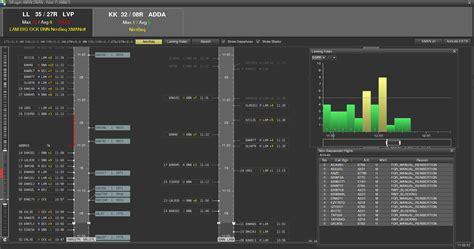
The AMAN system collaborates with several other systems, including the host Flight Data Processing System (FDPS) and Radar Data Processing System (RDPS). It utilizes a mix of flight-plan data, radar information, weather data, local airspace, route details, and aircraft performance models to predict trajectories, generating a planned time for each flight. When two or more aircraft are expected to land simultaneously, the AMAN calculates a sequence and establishes new required times to maintain that order. The system provides sequence information to ATCOs and outputs necessary timing adjustments, such as Time to Lose or Time to Gain (e.g., ‘L2’ means the flight must lose two minutes to fit its position in the sequence). ATCOs then determine how to adjust the aircraft’s timing through methods like vectoring, speed changes, or holding.
AMAN Functionality
In some advanced systems, the required timing and delay information can suggest specific actions for controllers to consider. If circumstances allow, these suggestions can be communicated to the aircraft, such as adjusting speed to 230 knots. Even more sophisticated versions offer combined speed and route advisories, though this is not yet widespread. Current investigations aim to explore how AMAN advisories can be translated into Controlled Time of Arrival (CTA) directives, allowing ATCOs to inform aircrews of required times, enabling them to use onboard systems to fly towards these targets.