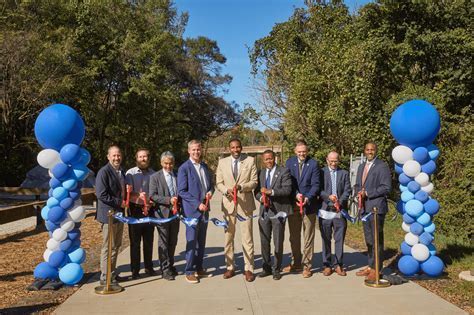
In a historic moment for Atlanta, Mayor Andre Dickens, alongside key figures from Atlanta BeltLine, Inc. (ABI), community leaders, and elected officials from Fulton County and Atlanta Public Schools, gathered to mark the completion of Westside Trail Segment 4. This significant milestone establishes the city’s longest continuous trail segment, representing a crucial advancement in Atlanta’s transformation into a pedestrian- and cyclist-friendly metropolis. The newly completed 6.7-mile segment of trail stretches from University Avenue in southwest Atlanta to Huff Road in northwest Atlanta, enabling walkers, runners, and cyclists to traverse this vital urban corridor continuously.
This accomplishment brings the city closer to realizing the full potential of the BeltLine, an ambitious initiative aimed at converting abandoned rail corridors into vibrant, multi-use spaces for recreation, transportation, and community engagement. The completion of the Westside Trail not only enhances recreational opportunities but also serves as a catalyst for economic development in the region, linking diverse neighborhoods and fostering a sense of community.
The BeltLine Vision: A 22-Mile Loop Around Atlanta
Upon its expected completion in 2030, the BeltLine will consist of a 22-mile loop encircling the city, with an additional 11 miles of connector trails. The completion of Segment 4 extends the total length of the mainline trail to 12.6 miles, complemented by an additional 10.3 miles of connector trails that interlink important neighborhoods, parks, and cultural sites. The new trail segment, spanning 1.3 miles, runs from the terminus of the Westside Trail at Lena Street, north to Law Street. This stretch connects seamlessly to the Westside BeltLine Connector and Westside Trail Segment 3, creating a continuous corridor that significantly improves access to Washington Park, one of Atlanta’s most historically significant areas.
Historical Significance of Washington Park
Washington Park anchors the new section of the BeltLine and holds tremendous historical significance for the African American community in Atlanta. Established during the era of segregation, it was Atlanta’s first recreational space designated for African Americans, featuring amenities such as a swimming pool, dance hall, pavilions, and tennis courts. These facilities provided a much-needed sanctuary for leisure and social gatherings at a time when opportunities for African Americans were severely restricted. The surrounding neighborhood emerged from the aftermath of the Great Atlanta Fire of 1917, evolving into one of the first planned Black suburbs in the city.
Under the leadership of Heman E. Under Perry, Washington Park flourished into a vibrant hub for Atlanta’s African American middle class, with homes and institutions designed and built by Black architects and builders who overcame systemic racial barriers. To honor the park’s enduring legacy, a new historical marker was unveiled at its entrance, commemorating Washington Park’s vital role in the history of Atlanta’s Black community. This marker, revealed by Clyde Higgs, President and CEO of Atlanta BeltLine, Inc., alongside Councilmember Byron Amos and Chair Christi Jackson of The Conservancy at Historic Washington Park, serves as a symbol of resilience, pride, and a commitment to preserving the park’s legacy for future generations.
A Thoughtfully Designed Trail for All
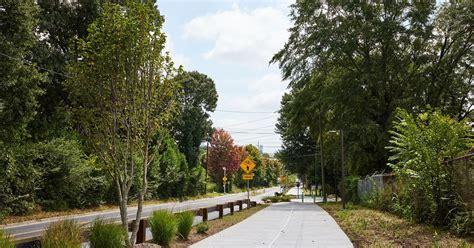
The new Westside Trail segment features a 14-foot-wide concrete multi-use path, complemented by three-foot soft shoulders on each side. Thoughtful design elements enhance the user experience, including stainless steel handrails, LED lighting, and security cameras for safety. Environmental considerations were also prioritized, incorporating green infrastructure solutions to manage stormwater runoff and address the corridor’s industrial past. The trail ensures accessibility for surrounding neighborhoods through ramps and stairs that connect the pathway to adjoining streets, making it easy for community members to access the BeltLine from various points along the route. These design features aim to create a more inclusive environment for people of all ages and abilities to enjoy the trail.
Collaborative Efforts for the BeltLine’s Success
The success of the BeltLine project has been made possible through the collaboration of various stakeholders and partners, including public agencies, philanthropic organizations, and private contractors. Funding for the trail primarily comes from public sources through the BeltLine Tax Allocation District, supported by contributions from Atlanta Public Schools, Fulton County, and the City of Atlanta. Additionally, the project benefits from support from the BeltLine Special Service District investors. Significant philanthropic contributions from the Robert W. Woodruff Foundation, Inc. and The James M. Cox Foundation have been instrumental in the continued development of the BeltLine. Their support is helping fund the construction of the entire 22-mile trail corridor, ensuring that the BeltLine remains a transformative and sustainable urban development project for generations to come.
The construction of the Westside Trail segment required coordination among multiple agencies, including the Atlanta Regional Commission, Atlanta Department of Parks and Recreation, and the Georgia Department of Transportation, among others. The collaboration between these organizations, along with private-sector contractors such as Alta, Sherwood Design Engineers, and other support teams, has made this significant milestone possible.
Future of the BeltLine: A Vision of Connectivity and Growth
With the completion of Westside Trail Segment 4, Atlanta continues to move closer to realizing its vision of a connected, pedestrian-friendly city. Once finished, the BeltLine will not only offer new transportation and recreational opportunities but will also act as a catalyst for economic development. By linking key neighborhoods and fostering community engagement, the BeltLine will have a lasting impact on Atlanta’s culture, economy, and environment. The project has already spurred development in surrounding neighborhoods, with new residential, commercial, and retail spaces emerging along the trail. This urban revitalization has the potential to bring both social and economic benefits to Atlanta’s diverse communities, offering equitable opportunities for all residents.
The BeltLine project is a testament to the power of collaboration, vision, and determination in shaping the future of Atlanta. With each new segment, the city moves closer to creating a seamless, sustainable, and inclusive urban environment that enhances the quality of life for all its residents. Atlanta has marked a major milestone with the completion of Westside Trail Segment 4, offering 6.7 continuous miles for walkers, runners, and cyclists. This new section strengthens the BeltLine’s connection across the city.