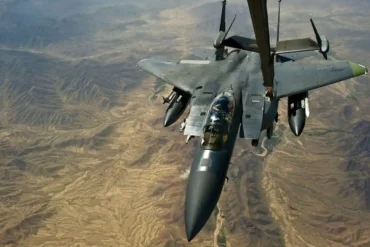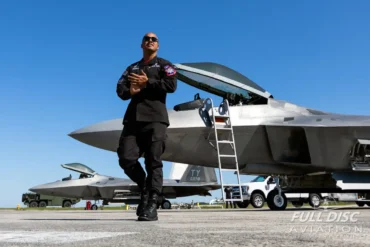
Becoming an F/A-18 pilot is a prestigious and demanding career choice, and one that requires exceptional skill, dedication, and courage. F/A-18 pilots, primarily part of the U.S. Navy or Marine Corps, operate advanced fighter jets like the F/A-18 Hornet and Super Hornet, playing crucial roles in both combat and strategic missions. While the allure of flying one of the most sophisticated aircraft in the world is undeniable, it’s important to understand the financial aspects of being an F/A-18 pilot. This detailed analysis will explore the F/A-18 pilot salary, covering the base pay, allowances, incentives, and other components that contribute to a pilot’s total compensation package.
Base Pay: The Foundation of an F/A-18 Pilot’s Salary
Base pay for an F/A-18 pilot is determined by their rank and years of service. The U.S. military has a standardized pay scale for officers, which applies to naval aviators. This pay scale increases as pilots progress through the ranks and gain more experience. Understanding base pay is essential, as it forms the foundation of an F/A-18 pilot’s overall salary.
F/A-18 Pilot Rank and Base Pay Structure
F/A-18 pilots are typically officers in the U.S. Navy or Marine Corps, with the most common ranks being Lieutenant (O-3) and Lieutenant Commander (O-4). The following table outlines the monthly base pay for these ranks as of February 2025:
| Rank | Pay Grade | Years of Service | Monthly Base Pay ($) |
|---|---|---|---|
| Lieutenant | O-3 | 6 | 7,454 |
| Lieutenant Commander | O-4 | 10 | 9,075 |
| Commander | O-5 | 16 | 12,023 |
As per the 2025 military pay charts, the base pay for a Lieutenant Commander (O-4) with 10 years of service is approximately $9,075 per month or $108,900 annually. For a Lieutenant (O-3) with 6 years of service, the monthly base pay is around $7,454 or $89,448 annually.
While base pay is a significant portion of an F/A-18 pilot’s salary, other factors such as special pays and allowances contribute substantially to their overall earnings.
Additional Compensation: Aviation Incentive Pay and Career Sea Pay
F/A-18 pilots are entitled to several additional forms of compensation, such as Aviation Incentive Pay (AvIP) and Career Sea Pay (CSP), which recognize the specific challenges and responsibilities associated with their role. These payments are designed to incentivize long-term service in aviation and sea duty assignments.
Aviation Incentive Pay (AvIP)
Aviation Incentive Pay is an essential component of an F/A-18 pilot’s earnings, paid based on the number of years an officer has been in aviation service. The longer an officer serves as an aviator, the higher the AvIP they can earn. Here are the AvIP rates based on years of aviation service:
| Years of Aviation Service | Monthly AvIP ($) |
|---|---|
| Less than 2 | 125 |
| 2 to less than 4 | 250 |
| 4 to less than 6 | 375 |
| 6 to less than 8 | 500 |
| 8 to less than 10 | 625 |
| 10 to less than 12 | 750 |
| 12 or more | 840 |
For an officer with 6 years of aviation service, they would earn approximately $500 per month in AvIP, or $6,000 annually. This amount increases as they gain more aviation experience, with pilots who have over 12 years of service earning up to $840 per month.
Career Sea Pay (CSP)
Pilots on sea duty are also eligible for Career Sea Pay (CSP), which is additional compensation for the challenges of living and working on ships. The rate for CSP depends on the officer’s rank and the number of years they have spent on sea duty. A typical Lieutenant Commander (O-4) with 5 years of sea duty would receive about $350 per month, or $4,200 annually. This amount increases with extended service at sea.
Allowances: Housing and Sustenance
In addition to base pay and special incentives, F/A-18 pilots also receive various allowances that significantly boost their total compensation. These include Basic Allowance for Housing (BAH) and Basic Allowance for Sustenance (BAS), which are designed to cover living and meal expenses.
Basic Allowance for Housing (BAH)
BAH is a tax-free allowance paid to military personnel to help cover the cost of housing. The amount varies based on the pilot’s rank, dependency status, and geographic location. For example, in Norfolk, VA, a Lieutenant Commander (O-4) with dependents would receive approximately $2,500 per month in BAH. However, in high-cost areas like Washington, D.C., BAH for the same rank can be as high as $3,240 per month.
Basic Allowance for Sustenance (BAS)
BAS is another essential allowance that helps cover food costs. For 2025, the standard rate for BAS is approximately $406.98 per month, which totals $4,884 annually. This allowance is not affected by geographic location but is fixed for all military personnel.
Total Compensation: Estimating F/A-18 Pilot Earnings
To better understand the total compensation for an F/A-18 pilot, let’s calculate the annual salary for a Lieutenant Commander (O-4) with 10 years of service and 6 years of aviation experience, stationed in Norfolk, VA, with dependents. The calculation would be as follows:
| Component | Amount ($) |
|---|---|
| Base Pay (monthly: $9,075) | 108,900 |
| Aviation Incentive Pay (AvIP) | 6,000 |
| Career Sea Pay (CSP) | 4,200 |
| Housing Allowance (BAH) | 30,000 |
| Sustenance Allowance (BAS) | 4,884 |
| Total Compensation | 153,984 |
As illustrated, the total compensation for this pilot would amount to approximately $153,984 per year. This figure includes base pay, special pays (AvIP and CSP), and allowances for housing and sustenance.
Geographic Location: A Key Factor in F/A-18 Pilot Salary
The location where an F/A-18 pilot is stationed plays a crucial role in determining their total salary. The Basic Allowance for Housing (BAH) is heavily influenced by the cost of living in the area, which means pilots stationed in high-cost locations will receive significantly higher BAH than those stationed in more affordable areas.
For instance, pilots stationed in San Diego, CA, or Washington, D.C., can expect much higher BAH rates compared to those stationed in more rural or inland areas like Oklahoma or Missouri. This geographic variation can substantially affect the pilot’s overall compensation.
Career Path and Salary Progression for F/A-18 Pilots
The career path for F/A-18 pilots generally begins with commissioning as an Ensign (O-1) after flight training, followed by progression to Lieutenant (O-3) and eventually to Lieutenant Commander (O-4). Pilots typically reach the rank of O-4 after about 8–12 years of service. It is at this point that they start earning between $130,000 and $150,000 annually, with higher-ranking officers, such as Commanders (O-5), earning up to $160,000 annually.
Advancement and Pay at Higher Ranks
As pilots advance to higher ranks, their base pay increases significantly. For example, a Commander (O-5) with 16 years of service will earn a base pay of $12,023 per month, or $144,276 annually. Additional pay for aviation incentive and sea duty will push the total compensation even higher.
Conclusion: A Rewarding Career with Competitive Compensation
In conclusion, the salary for an F/A-18 pilot can be substantial, especially when factoring in base pay, aviation incentives, career sea pay, and allowances. Mid-career pilots with 8–15 years of service earn between $130,000 and $150,000 annually, with additional compensation for location, family status, and specific duties further increasing their total earnings. For those considering a career as an F/A-18 pilot, the financial rewards are substantial, and the career offers a sense of purpose and service that few other professions can match. The combination of challenging work, honor, and significant financial compensation makes being an F/A-18 pilot an attractive and fulfilling career option.