Emirates has built a reputation around theatrical levels of comfort in the sky, from lie-flat business class seats to the chandeliered spectacle of first class on select aircraft. The distance between economy and those premium cabins feels less like a step up and more like a dimensional portal. That gap is precisely where Emirates Skywards upgrades live. An upgrade is not merely a seat change; it’s a shift in how time passes on a long-haul flight. Meals become events, sleep becomes plausible, and the journey stops feeling like a tax you pay to reach the destination.
What makes Emirates unusual is not that upgrades exist—nearly every airline offers that lever—but that the program treats upgrades as a core feature rather than a grudging concession. Most tickets booked directly with Emirates can be upgraded with Skywards miles, including award tickets. That detail quietly flips the script. Instead of treating upgrades as a consolation prize for people stuck in economy, the program lets you build an upgrade into your plan from the beginning. The result is a toolkit that rewards timing, ticket type, and a little strategic thinking.
The practical appeal grows when you consider availability. Emirates releases confirmable upgrade space far more openly than many competitors, and then loosens the gate completely on the day of departure with last-seat availability. That means the odds of success are not mystical; they are observable. You can see whether upgrades are confirmable at booking, track availability as the flight fills, and, if necessary, play the day-of-departure card when unsold premium seats become negotiable in miles. This predictability turns upgrades into a deliberate strategy rather than a casino spin.
By design, Skywards miles are the only currency that unlocks upgrades on Emirates-operated flights. Transfer partners can get you onto the plane, but they can’t elevate you once you’re there. That exclusivity matters because it shapes how you stockpile miles. The program’s partners change transfer ratios over time, so the effective cost of an upgrade fluctuates with the points ecosystem. Think of Skywards miles as a specialized tool: not the sharpest knife in every drawer, but uniquely well-shaped for this one job.
Which Emirates Tickets Can Be Upgraded With Miles
Emirates organizes fares into four conceptual buckets: Special, Saver, Flex, and Flex Plus. These labels apply to both paid tickets and award tickets, and they quietly dictate how much control you have over upgrades. Special fares are the no-frills bargains of the system. They are priced to be tempting and locked down to prevent tinkering. Those tickets cannot be upgraded with miles, which is the price you pay for the lowest sticker cost.
Saver fares open the door a crack. They are upgradeable, but only on the day of departure, either at the airport or onboard. This restriction creates a tension between price and certainty. Saver tickets are cheaper than Flex options, but the upgrade becomes a game of timing and remaining inventory. If the premium cabin is crowded, Saver passengers wait their turn. If the cabin is wide open, Saver passengers often glide through.
Flex and Flex Plus fares are the program’s Swiss Army knives. They can be upgraded any time from the moment of booking until the aircraft door closes. This flexibility means you can lock in an upgrade weeks or months in advance if confirmable space exists. The higher fare buys you leverage: the ability to plan the experience rather than react to availability. For travelers who value predictability—sleep schedules, work readiness on arrival, or simply the peace of mind that comes with certainty—Flex and Flex Plus are the most upgrade-friendly tickets in the system.
There is a quiet technical rule that catches people out. The ticket must be issued by Emirates. Codeshares or partner-issued tickets on different ticket stock are typically ineligible for mileage upgrades. This is not an ideological stance; it’s plumbing. The reservation system needs Emirates to control the ticket to process the upgrade.
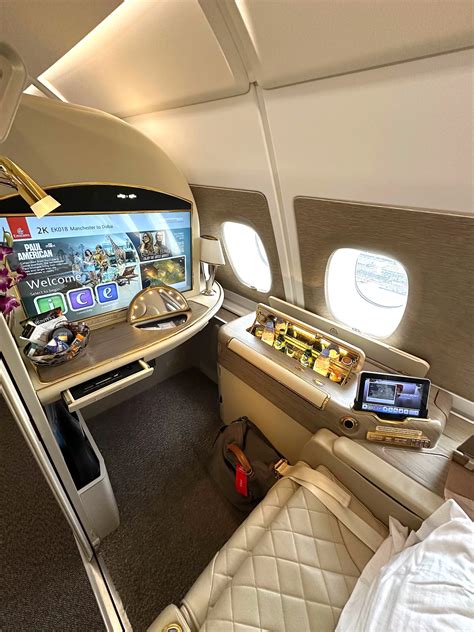
Upgrades generally move you one cabin up. Economy can step to premium economy or business class, and Emirates even allows economy to skip premium economy and land directly in business class. Business can step into first class. The first class gate has a special twist: outright first class awards require Skywards elite status, but upgrades into first class do not. That asymmetry makes upgrades a back door into one of aviation’s most theatrical experiences for non-elite members.
How Many Skywards Miles Upgrades Really Cost
The cost of an upgrade is not a flat fee; it’s a variable function of route, cabin, and fare type. Emirates provides a mileage calculator that reveals the number for a specific itinerary. This transparency is a gift because it lets you model scenarios before you commit to a ticket. The numbers can look intimidating from lower fares, and more forgiving from Flex Plus tickets, which already bake in a higher baseline of flexibility.
There are no additional carrier-imposed surcharges when upgrading. That detail matters because Emirates is known for substantial surcharges on outright premium cabin awards. When you upgrade, you generally pay the miles and any incremental government taxes triggered by the higher cabin, such as higher air passenger duties in certain countries. The absence of extra surcharges means the upgrade cost is mostly a mileage decision rather than a cash shock.
Skywards+ membership can rebate a portion of the miles used for upgrades, up to a fifth of the total in some tiers. This changes the arithmetic for frequent upgraders. The rebate is not a philosophical victory over the mileage price, but it softens the edge. If upgrades are part of your regular travel rhythm, the membership can turn a high nominal cost into a more palatable net cost.
A subtle strategy emerges when you compare outright awards with award-plus-upgrade combinations. On certain long-haul routes, booking a lower-cabin award and upgrading can cost fewer miles and far less in cash than booking the higher cabin outright. The reason is structural: premium cabin awards carry heavy surcharges, while upgrades dodge most of them. The trade-off is optionality. When you upgrade an award, you may lock yourself out of upgrading further into first class on some fare types. The math sometimes favors the upgrade path, but the experiential ceiling may be lower.
Understanding Emirates Upgrade Availability in the Real World
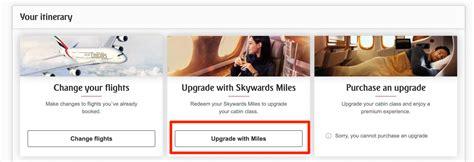
Upgrade availability follows two rhythms: advance inventory and day-of-departure release. Advance inventory behaves like award space. If a flight has confirmable upgrade space in business or first class, you can lock in the upgrade immediately on eligible fares. The availability is visible when you search while logged into your Skywards account. The interface flags flights with “miles upgrade available,” and clicking through reveals which cabins can be confirmed. This visibility lets you plan rather than guess.
If confirmable space does not exist, you can join a waitlist up to 48 hours before departure. The waitlist is not a promise; it’s a polite holding pen. The upgrade may clear any time until the cutoff, after which the list dissolves. This design nudges uncertainty toward the airport, where Emirates unleashes its most traveler-friendly quirk: last-seat availability. On the day of departure, if premium seats remain unsold, Emirates allows upgrades right up to boarding, subject to eligibility and miles in your account.
This last-seat policy changes traveler behavior. It rewards early airport arrival and attentiveness at the gate. It also reframes unsold premium seats as opportunities rather than losses for the airline. From the passenger’s perspective, it removes the fog around chances of success. If you can see empty seats in business class at check-in, your odds are no longer abstract. They are visible, tangible, and often surprisingly good.
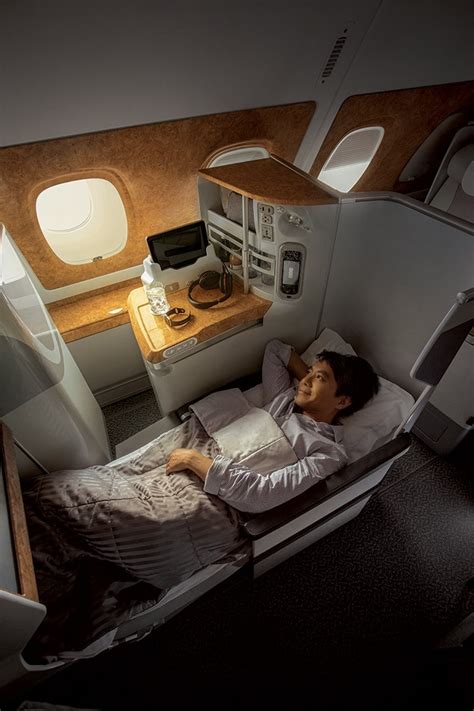
The practical implication is psychological as much as logistical. Upgrades stop feeling like lottery tickets and start feeling like timing puzzles. You watch seat maps, check availability in the app, and time your request. This does not guarantee success, but it transforms the process into a game of observation rather than hope.
When Upgrading With Miles Makes Strategic Sense
The default wisdom in loyalty programs is that outright awards in premium cabins deliver better value than upgrades. On average, that remains true. Outright awards require fewer miles for the same cabin and remove uncertainty. Yet averages are not destinies. The upgrade path shines in specific circumstances.
Work-funded economy tickets are the obvious case. If your company buys the base cabin and you hold Skywards miles, the marginal miles to upgrade can buy disproportionate comfort. The value is not just physical; it is cognitive. Arriving rested can convert a red-eye into a usable workday, which quietly changes the economics of the trip.
Another case is experiential access. Emirates first class is gated behind elite status for outright awards, but upgrades bypass that gate. For travelers who want to sample the top tier without a multi-year loyalty campaign, upgrades are the shortest path. The cost in miles is high, but the alternative is often inaccessible.
The award-plus-upgrade arbitrage is the nerdy sweet spot. On routes such as New York to Dubai, the difference in surcharges between business class awards and economy awards is dramatic. Book economy with miles, pay lower taxes and surcharges, then upgrade with additional miles. The total mileage can be lower than the business class award, and the cash outlay drops sharply. The downside is structural: you cap your upward mobility. The trade becomes a question of whether you value the possibility of first class more than the certainty of saving miles and cash.
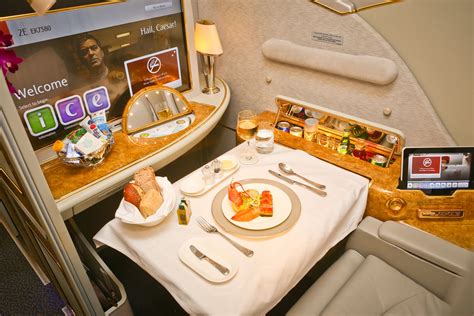
The Real Cost of Comfort: Weighing Value Beyond Miles
Miles are not abstract points; they are stored opportunity. Spending them on an upgrade means not spending them on future trips, gifts, or outright awards. The real question is not whether an upgrade is “worth it” in a spreadsheet sense, but whether it converts a flight you dread into a journey you can use. Long-haul flights compress sleep, productivity, and mood into a narrow space. Premium cabins stretch that space back out.
Emirates upgrades also offer a peculiar form of optionality. You can book a trip with the baseline comfort you can tolerate and then decide, closer to departure, whether to elevate the experience. This is not just a financial choice; it’s a mood choice. Some trips carry emotional weight—family events, pivotal meetings, long-awaited vacations. Spending miles to soften the journey can be a form of self-care disguised as loyalty optimization.
There is a quiet discipline to using upgrades well. The discipline is not asceticism; it is intentionality. Choose fare types that preserve optionality when the upgrade is central to your plan. Monitor availability rather than assuming it will appear. Treat last-seat availability as a lever, not a promise. When the stars align, the transformation from economy to a private suite feels less like a perk and more like a small bending of reality.
Bottom Line: A Toolkit for Turning Time Into Comfort
Emirates Skywards is not the most generous program in the abstract, but it is unusually practical for upgrades. The combination of broad ticket eligibility, visible confirmable space, and day-of-departure last-seat availability turns upgrades into a strategy rather than a superstition. The mileage costs can be steep, yet the structure of surcharges and award pricing creates pockets of surprising efficiency, especially when pairing economy awards with upgrades into business class.
The program rewards travelers who pay attention. Fare type is not just a price; it is leverage. Availability is not a rumor; it is a signal you can read. Miles are not merely points; they are compressed time, traded for sleep, space, and calm at 35,000 feet. In the strange economics of modern travel, that trade can be rational, indulgent, and quietly transformative all at once.