Flying under BasicMed has revolutionized aviation for countless pilots seeking a more accessible path to the skies. Traditionally, a third-class medical certificate was mandatory, but with the emergence of BasicMed, the Federal Aviation Administration (FAA) introduced a practical alternative, reshaping the landscape for general aviation.
Pilots who meet BasicMed requirements can now operate aircraft without an FAA medical certificate, provided they adhere to specific regulations. This article will explore every essential facet of BasicMed, from eligibility criteria to procedural steps and ongoing responsibilities.
Understanding BasicMed: Purpose and Significance
BasicMed was established to offer pilots an efficient, less cumbersome way to maintain their flying privileges without the stringent demands of recurring third-class medical certifications. Recognizing that many aviators possess sufficient health standards but are hampered by bureaucratic barriers, the FAA introduced BasicMed to promote aviation accessibility while maintaining safety.
By allowing pilots to fly with a valid driver’s license and a doctor’s physical examination, BasicMed provides a middle ground — enhancing freedom without compromising airworthiness standards.
Eligibility for BasicMed: Meeting the Standard
Not every pilot automatically qualifies for BasicMed. To fly under these relaxed requirements, you must:
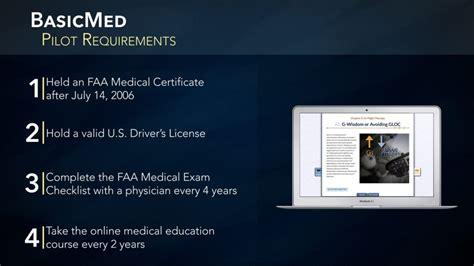
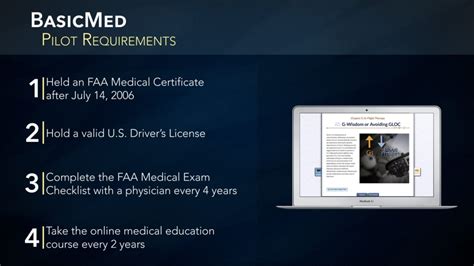
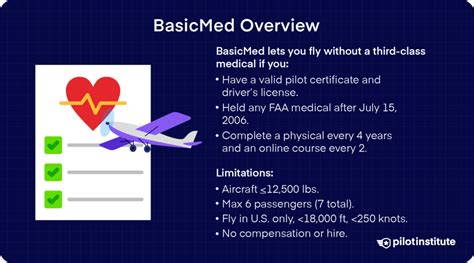
- Hold a valid FAA pilot certificate (Sport Pilot, Recreational Pilot, Private Pilot, or higher).
- Possess a current, valid U.S. driver’s license.
- Have held a medical certificate (first, second, or third class; regular or special issuance) any time after July 15, 2006.
If a pilot has never held a medical certificate or only held one prior to the cutoff date, a one-time issuance is necessary to enter the BasicMed program.
Step-by-Step: How to Qualify for BasicMed
Step 1: Understand BasicMed Requirements
Pilots must affirm they have not had their most recent medical certificate revoked, suspended, or withdrawn. Additionally, they cannot suffer from mental health disorders, neurological conditions, or cardiovascular disease without a proper evaluation or special issuance clearance.
Step 2: The Physical Examination
One distinct advantage of BasicMed is the ability to visit any state-licensed physician for the required examination — not strictly an Aviation Medical Examiner (AME). This flexibility enables pilots to consult doctors who are familiar with their comprehensive medical history.
Prior to the appointment, pilots must complete their portion of the Comprehensive Medical Examination Checklist (CMEC), available from the FAA’s official website.
During the exam, physicians will assess:
- Vision and hearing capabilities
- Cardiovascular health
- Neurological function
- General medical conditions
If any critical concerns arise, especially relating to cardiac, neurological, or psychiatric health, a one-time special issuance medical may be required before proceeding under BasicMed.
Step 3: The BasicMed Online Course
After completing the physical, pilots must enroll in an FAA-authorized BasicMed online course, offered by the AOPA or the Mayo Clinic. The course takes approximately an hour and can be completed at no cost.
Key aspects covered include:
- Identifying disqualifying conditions
- Recognizing warning signs in flight
- Risk management principles for personal flying
Upon successful completion, pilots receive a certificate that must be retained in both physical and electronic formats.
Important Renewal Notes:
- Physical examination: every 48 months
- Online course completion: every 24 months
Failure to meet either timeline would invalidate a pilot’s authority to fly under BasicMed until rectified.
Limitations Under BasicMed
While BasicMed offers remarkable flexibility, pilots must adhere to operational restrictions designed to safeguard the flying public.
The key limitations include:
- Aircraft weight: Maximum certified takeoff weight must be 12,500 pounds or less.
- Occupancy: Aircraft cannot be certified to carry more than six passengers plus the pilot.
- Airspace and speed: Flight operations are limited to below 18,000 feet MSL and under 250 knots.
- Geographic scope: Flights must occur within the United States.
- Compensation: Pilots may not fly for compensation or hire but may share pro-rata expenses.
In December 2022, new amendments clarified that pilots may now serve as safety pilots for simulated instrument flights under BasicMed, further expanding its operational utility.
BasicMed Versus Traditional Third-Class Medical
When comparing BasicMed to the traditional third-class medical system, the distinctions become apparent:
- Accessibility: BasicMed empowers pilots to use personal physicians, reducing wait times and increasing convenience.
- Cost: Standard physician visits are typically less expensive than specialized AME examinations.
- Flexibility: The four-year window for physical exams under BasicMed is twice the duration required for third-class certificates for pilots over 40.
- Operational limitations: Minor operational restrictions exist under BasicMed but are often inconsequential for typical private pilot missions.
Thus, BasicMed represents a balanced compromise between safety assurance and procedural efficiency.
Initiating Your BasicMed Journey
Step 1: Confirm Eligibility
Utilize tools like the AOPA’s BasicMed Eligibility Questionnaire to validate your qualification before proceeding.
Step 2: Obtain and Complete the Checklist
Download the FAA’s Comprehensive Medical Examination Checklist and fill out the pilot portion before scheduling a doctor’s appointment.
Step 3: Schedule and Complete the Physical Exam
Consult any state-licensed physician who will complete the checklist, certifying your fitness to fly.
Step 4: Pass the Online BasicMed Course
Enroll in the AOPA or Mayo Clinic online course. Completion certificates must be stored meticulously, both physically and electronically.
Step 5: Maintain Records and Compliance
Preserve all relevant documentation securely. Be prepared to present it upon FAA request at any time.
Ongoing Responsibilities Under BasicMed
Operating under BasicMed does not absolve pilots from the cardinal responsibility of self-assessment. Before each flight, pilots must affirmatively evaluate their fitness to operate an aircraft.
While BasicMed streamlines administrative procedures, maintaining a strict personal health regimen remains critical. Should any disqualifying conditions develop between required physicals, pilots are expected to ground themselves until fit.
Key reminders:
- Schedule your next physical exam and course renewal before expiration.
- Monitor any evolving health issues proactively.
- Uphold the standards of safety expected within the aviation community.
Conclusion: A New Era for General Aviation
Since its inception, BasicMed has empowered more than 80,000 pilots to continue flying safely and responsibly with fewer bureaucratic hurdles. For private pilots aiming for convenience without sacrificing aviation’s rigorous safety culture, BasicMed is an invaluable innovation.
By staying informed, meticulously adhering to renewal requirements, and embracing the personal responsibility inherent in aviation, pilots can confidently soar under BasicMed, embracing the freedom of flight that defines general aviation.