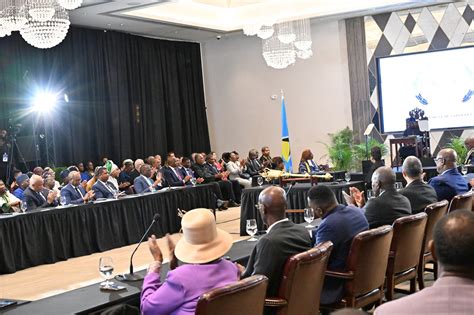
In a groundbreaking move towards enhancing bilateral relations, Nigerian President Bola Tinubu announced a significant development in diplomatic interactions with Saint Lucia and the Organization of Eastern Caribbean States (OECS). This announcement, made during a special joint sitting on June 30, 2025, at the William Jefferson Clinton Ballroom in Sandals Grande, Gros Islet, underscores a commitment to fostering closer cooperation between Nigeria and the Caribbean region, thus solidifying Nigeria’s position as a pivotal stakeholder in regional affairs.
President Tinubu articulated the vision for deepening ties, emphasizing the introduction of visa waivers for official OECS passport holders. This initiative is aimed at facilitating easier travel and promoting institutional cooperation, which he believes will serve as a cornerstone for a flourishing partnership. The response from over 300 attendees, including OECS Heads of Government and the Nigerian community in Saint Lucia, was overwhelmingly positive, marking a historic moment in the evolving relationship between Nigeria and the Caribbean.
A Vision for Deeper Collaboration: Trade and Economic Diplomacy
At the core of President Tinubu’s address was a clarion call for enhanced commercial ties between Nigeria and the OECS. He highlighted Nigeria’s readiness to provide these nations access to Africa’s largest market, advocating for joint ventures particularly focused on sectors like agriculture, manufacturing, and services. Tinubu positioned Nigeria not just as a supplier but also as an emerging destination for OECS exports, thus promoting a mutual enhancement of trade between the two regions.
The Nigerian economy plays a significant role within Africa, contributing substantially to the continent’s growth trajectory. In his address, Tinubu emphasized that through collaborative efforts, both regions could harness opportunities for regional infrastructure development, thereby creating a framework for increased trade and investment partnerships. This proactive approach signals a new era of economic diplomacy, with both Nigeria and the OECS poised to reap the benefits of reciprocal trade agreements.
Education and Capacity Building: Maritime Collaboration and More
In another pivotal segment of his speech, President Tinubu proposed a collaboration between maritime universities in Nigeria and the OECS. He extended Nigeria’s Technical Aid Corps (TAC) program to the Caribbean, aiming to provide skilled professionals in education, healthcare, and engineering to assist in regional capacity building. This initiative promises to enhance the technical capabilities of OECS nations while fostering academic and professional growth across borders.
The collaboration among maritime institutions would address shared maritime challenges, paving the way for training future generations of professionals equipped to tackle pressing issues. Additionally, Tinubu underscored the significance of scientific research initiatives between Nigerian and OECS universities, focusing on common challenges related to health, education, and climate change. Such cooperative endeavors are vital for nurturing a robust educational ecosystem that benefits both regions.
Climate Resilience and Environmental Cooperation
Given the precarious nature of small island states in the face of climate change, President Tinubu called for a unified approach towards joint scientific research on climate adaptation strategies. His proposals included focusing on sustainable agriculture, disaster preparedness, and addressing climate-induced migration. Recognizing the existential threats posed by rising sea levels and hurricanes, he advocated for a formalized agreement on climate research between Nigeria and the OECS.
By sharing crucial climate impact research, these two regions can work collaboratively to bolster their resilience against environmental threats, thereby safeguarding the livelihoods of their citizens and constructing sustainable, climate-resilient economies. Moreover, Tinubu proposed initiatives aimed at improving disaster risk management, which could significantly enhance both regions’ capacities to respond effectively to natural disasters and mitigate their impacts.
Promoting People-to-People Engagement
Reaffirming Nigeria’s commitment to forging deeper ties with the OECS, President Tinubu emphasized the importance of people-to-people engagement. He highlighted the shared African heritage and Pan-African ideals that unite these two regions. His address reflected on Nigeria’s historic role in advocating for global Black solidarity and Pan-African movements, reinforcing the necessity of cultivating deeper connections between Nigeria and the Caribbean in the ongoing fight against colonialism and racial injustice.
As the most populous nation in Africa, Nigeria stands as a gateway for OECS nations to access vast natural resources, making it an ideal partner for trade. Tinubu reiterated that the burgeoning Nigerian market could not only serve as a source of essential imports but also emerge as a promising destination for Caribbean exports, thereby fostering a symbiotic economic relationship.
An Afrocentric Foreign Policy for Nigeria
In the broader context of Nigeria’s foreign policy, President Tinubu reaffirmed his administration’s dedication to Afrocentric diplomacy. He underscored the significance of unity among African nations and the diaspora, positioning Nigeria at the forefront of advocating for the dignity and advancement of Black people globally. His statements served as a rallying cry for stronger bonds with the OECS, rooted in shared history, heritage, and aspirations for a brighter future.
Moreover, Tinubu acknowledged the critical role of the African Union (AU) in embracing the Caribbean and the broader diaspora as the sixth region of the continent, which further underscores the importance of these burgeoning diplomatic ties. By fostering a united front, Nigeria and the OECS can collectively address challenges and capitalize on opportunities for mutual benefit.
Looking Ahead: A Promising Partnership
The establishment of diplomatic linkages between the OECS and Nigeria signifies a transformative moment in the histories of both regions. Through collaborative efforts in trade, education, climate resilience, and cultural engagement, this relationship holds the promise of delivering tangible benefits for all involved. President Tinubu’s vision for intensified connection illustrates the immense potential for cooperative development and shared advancement, laying the groundwork for a fruitful partnership that can withstand the test of time.
As Nigeria and the OECS embark on this new chapter of collaboration, the world will undoubtedly watch with keen interest as they navigate the complexities of international relations and seek to establish a model of mutual respect and shared growth.