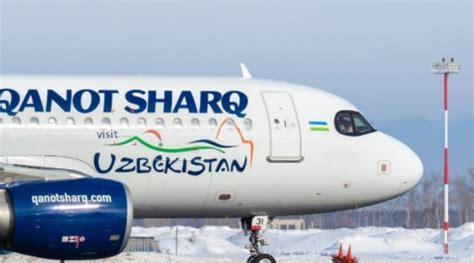
Uzbekistan’s dynamic airline landscape has just taken a bold new leap with Qanot Sharq launching nonstop flights between Tashkent and London Gatwick, marking a significant development in the evolving air connectivity between Central Asia and the UK. The airline, little-known outside its region, has entered a competitive yet underserved transcontinental corridor with an ambitious 8-hour flight aboard the Airbus A321neo—a narrowbody aircraft not typically used for such long-haul routes.
Gatwick Welcomes Qanot Sharq: A Quiet Yet Strategic Entry
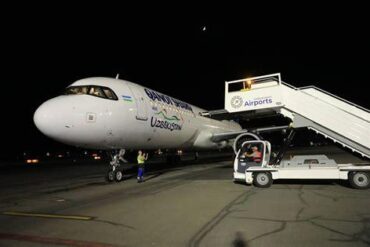
On December 15, London Gatwick Airport, Europe’s 10th busiest, welcomed Qanot Sharq’s inaugural flight, placing the privately-owned Uzbek carrier in direct competition with the national airline, Uzbekistan Airways. The route is not just an expansion of Qanot Sharq’s network—it signals a broader shift in air travel demand patterns, particularly the rise of Central Asia as a strategic aviation hub. Gatwick, a growing player in international connectivity, benefits by increasing its reach into Eastern markets, while Tashkent gains stronger access to Europe’s massive aviation economy.
With an estimated 59,000 annual round-trip passengers traveling between Tashkent and London (as of October 2025), this route carries significant potential. About 50% of travelers previously relied on one-stop services, primarily via Istanbul with Turkish Airlines, due to sanctions limiting transit through Moscow. The entry of Qanot Sharq into the nonstop segment provides greater convenience, time savings, and a competitive edge in pricing and scheduling.
Airbus A321neo on an Unusually Long Route
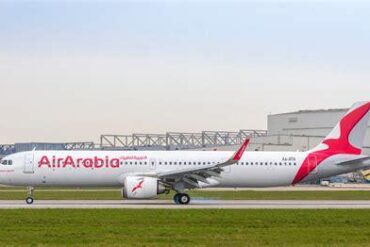
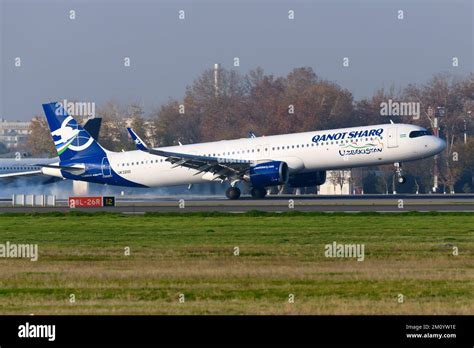
Qanot Sharq operates this 7-8 hour service using its Airbus A321neo, a narrowbody jet configured with 202 seats. While the A321neo is gaining popularity for long thin routes due to its fuel efficiency, using it for 2,844 nautical miles (5,267 km) is near the upper range of its operational envelope, particularly without the Long Range (LR) or XLR variants.
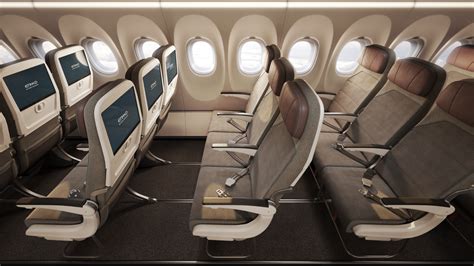
The aircraft used on the inaugural flight—tail number UK32110—is just 3.1 years old and reflects a push toward modern fleet capabilities. However, the high-density seating layout likely imposes payload restrictions, especially if flights operate near full capacity. Still, the choice underscores Qanot Sharq’s commitment to maintaining fleet efficiency while testing the limits of narrowbody long-haul operations.
Schedule and Frequencies: Twice-Weekly Direct Access
Passengers flying between the UK and Uzbekistan now benefit from Qanot Sharq’s twice-weekly services, operating on Mondays and Thursdays:
- Tashkent to Gatwick:
- Mondays: 3:00 PM – 7:40 PM (7h 40m)
- Thursdays: 12:40 PM – 3:35 PM (7h 55m)
- Gatwick to Tashkent:
- Mondays: 7:10 PM – 7:10 AM next day (7h)
- Thursdays: 5:10 PM – 5:10 AM next day (7h)
These timings cater to both leisure and business travelers, strategically allowing overnight arrivals in Uzbekistan, optimizing connection options in Tashkent and minimizing jetlag.
Uzbekistan-UK Market Grows with More Nonstop Options
The Tashkent–London market has traditionally been underserved. The entrance of Qanot Sharq marks a pivotal moment: it is now the first time in nearly 20 years that two carriers offer nonstop passenger service between the two capitals. The only other such period was in the early 2000s, when British Mediterranean (BMED) operated flights via Yerevan or Tbilisi, alongside Uzbekistan Airways.
Further expansion is expected in March 2026, when Centrum Air—another Uzbek carrier—will begin twice-weekly service from Tashkent to Manchester. This will mark the first and only nonstop route from Central Asia to a UK destination outside London, targeting a new demographic of ethnic, diaspora, and business travelers in northern England.
An Emerging Pattern: Uzbekistan’s Aviation Awakening
Uzbekistan is actively positioning itself as a connector between East and West, echoing the strategy of neighboring Kazakhstan. With growing inbound tourism, economic reforms, and improved bilateral relations with European countries, its aviation market is being restructured for international relevance. Qanot Sharq’s new route complements efforts by Uzbekistan Airways to diversify its UK offerings, which now include:
- Tashkent to Heathrow: Twice-weekly (A321neo and 787-8)
- Tashkent to Gatwick: Weekly (primarily A321neo, sometimes A320neo or 787-8)
According to Cirium Diio, even the smaller A320neo will be used on select dates in winter 2024/2025, reflecting flexible fleet planning amid fluctuating demand.
Tashkent’s International Reach: Moscow Still Leads, but Europe Gains Ground
Despite the increasing European interest, Moscow remains Tashkent’s top international market, with around 700,000 annual round-trip passengers—dwarfing Western destinations like Frankfurt (66,000) and London (59,000). Other major connections include:
- Istanbul: 455,000 passengers
- Dubai: 249,000 passengers
- Seoul: 225,000 passengers
Yet Western European cities are gradually gaining share, aided by more nonstop options and the return of major European carriers to Uzbek skies. In 2026, Gatwick alone will host services by Air France, Condor, and Jet2, the latter of which plans a new base with five stationed aircraft—making it a crucial growth platform.
Fleet Plans Hint at Long-Term Ambition
Qanot Sharq is not stopping with the A321neo. Its current fleet of six aircraft—two A320ceos, two A321neos, and two A330-200s—will soon be joined by the A321LR and A321XLR. These variants are game-changers for thin long-haul routes, enabling the airline to reach farther into Europe, Southeast Asia, and potentially East Africa without the cost burden of widebody operations.
The choice to debut the A321neo on such a demanding route is a calculated strategic bet—testing performance while establishing market presence. It also reinforces the airline’s reputation for taking bold steps in a highly conservative market.
Conclusion: Central Asia’s Air Gateways Are Widening
The launch of Qanot Sharq’s 8-hour Airbus A321neo flights to London Gatwick is more than a route announcement—it represents a new era of direct air travel between Central Asia and Europe. With strong market potential, strategic fleet deployment, and growing passenger demand, this development enhances bilateral connectivity, offers greater travel convenience, and strengthens Uzbekistan’s role as a transit and destination hub in the modern aviation network.
As Tashkent rises as a regional air nexus, and Gatwick cements its role as a European expansion airport, the skies between the UK and Uzbekistan will likely see more movement, more carriers, and more ambitious airline plays in the years to come.