Deciding between joining Emirates as a cabin crew member or continuing the upward path in the hospitality industry is a dilemma many ambitious professionals in the UAE and beyond face. The decision is rarely simple: one option offers immediate financial reward and a lifestyle rich in travel and cultural exposure, while the other promises structured career growth, long-term managerial prospects, and eventual high earning potential. This article dives deeply into both career trajectories, examining not only salaries and benefits but also lifestyle implications, professional development, and the hidden costs that may not be apparent at first glance.
Understanding the Cabin Crew Role with Emirates
The allure of flying high with one of the world’s most prestigious airlines is strong, and Emirates makes a compelling case for aspiring cabin crew. At entry level, Emirates offers a tax-free salary package of AED 11,700 per month, along with free furnished accommodation, transportation, and substantial training. The package is immediately attractive, particularly when compared to entry-level roles in the hospitality sector which typically start around AED 2,000–3,000 monthly with added benefits like language allowance and service charges.
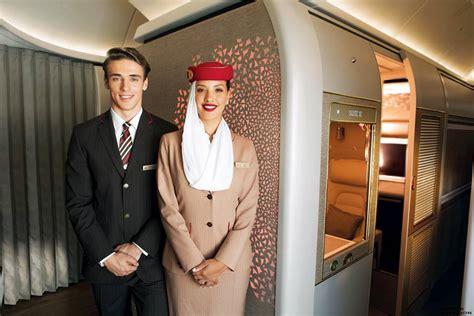
However, it’s essential to understand what the job entails beyond the glossy image. Cabin crew duties extend far beyond in-flight meal service. They are trained in emergency protocols, medical aid, and customer conflict resolution. The training process itself is intense and prestigious, and completing it signals a high level of discipline and professionalism. Emirates invests in grooming its crew to represent the brand globally, placing them under strict grooming, behavior, and performance standards.
Despite the glamour, there are valid concerns. Critics describe the role as a “waiter in the sky”, suggesting limited scope for long-term progression. Promotion within the cabin services hierarchy—economy to business class, purser, and potentially instructor roles—is real but relatively narrow in scope. Furthermore, roles in Emirates’ corporate or HR divisions, while attainable, are extremely competitive and not guaranteed. Career security is often impacted by age, appearance, and physical stamina.
The Lifestyle Tradeoff: Travel and Transience
Emirates crew live a jet-setting lifestyle. On paper, that sounds luxurious—and to a large extent, it is. Employees enjoy free or heavily discounted international travel, hotel stays, layover allowances, and the opportunity to build a global network. These perks are not trivial: flight benefits and face-cards can lead to once-in-a-lifetime experiences and lifestyle upgrades unattainable in traditional hospitality.
But there’s a cost to this mobility. Erratic schedules, time-zone shifts, and physically taxing routines can wear down even the most passionate. Social isolation, inability to maintain stable relationships, and burnouts are frequently cited in ex-crew testimonials. The lifestyle, while vibrant in one’s twenties, can quickly lose charm if not balanced with a long-term growth path.
Hospitality Industry: Slower Climb, Higher Summit
Contrastingly, staying in the hospitality sector, especially in luxury hotels, offers a structured career ladder. The individual considering this dilemma is already positioned to step into a receptionist role—a stepping stone toward positions like front office manager, rooms division manager, and eventually general manager.

While the starting salary may be modest—AED 2,000 plus allowances and service charges—career progression is well-defined. Talented and persistent employees can reach management-level salaries of AED 20,000–30,000 or more, especially within international chains where cross-property transfers and internal promotions are common. Senior general manager or corporate director roles can fetch upwards of AED 40,000, rivaling or exceeding aviation sector compensation.
Still, hospitality is not without its obstacles. Advancement often requires navigating internal politics, cultivating relationships (wasta), and surviving long probationary periods. Some rise quickly; others plateau despite capability. The path is meritocratic in theory, but in practice, soft skills, connections, and timing play a significant role.
Skill Development and Transferability
When choosing between Emirates and hospitality, one must consider not just income but skill accumulation and its market value. Emirates equips crew with soft power skills: communication, crisis management, empathy under pressure, cross-cultural fluency, and top-tier customer service. These can transfer into luxury retail, corporate training, aviation HR, or international event management.
In contrast, hospitality professionals acquire operational and administrative capabilities. These include team leadership, budget handling, guest experience optimization, and property-wide coordination. While less glamorous, these are core competencies for any service-focused business, and they scale well—especially in the UAE’s high-volume luxury segment.
Over time, the hospitality route offers a broader spectrum of lateral and vertical movement. From hotels to restaurants, events, and resorts, skills remain relevant. Moreover, local experience becomes an asset in navigating the Dubai-specific ecosystem of tourism and commerce.
Job Security and Age Sensitivity
A critical distinction lies in age sensitivity and career longevity. Aviation, particularly for cabin crew, is youth-centric. Though Emirates does not have an official age cut-off, most crew members begin between 21–30 years old, and retention beyond age 40 is rare without transitioning into training or ground roles. Layoffs during downturns (e.g., COVID-19) disproportionately affect cabin staff.
Hospitality, by contrast, becomes more rewarding with age and experience. Older professionals are often preferred for senior management positions due to maturity, negotiation skill, and business acumen. There is also less appearance-based bias, providing a safer long-term professional haven.
The Hidden Realities: Burnout, Glamour, and Grind
Much of the debate around Emirates vs. hospitality centers on perceived glamour versus grounded stability. It’s essential to distinguish appearance from reality. Emirates’ lifestyle may seem effortless, but the physical and emotional toll of irregular sleep, makeup mandates, and constant travel is real. Cabin crew are evaluated on their grooming, BMI, and visual demeanor in ways hospitality staff typically are not.
Conversely, hospitality’s challenges are often psychological: navigating ambiguous hierarchies, dealing with entitled guests, and facing slow promotions despite consistent effort. Burnout in hospitality is often mental rather than physical, and advancement may depend more on negotiation than sheer performance.
What About Gender and Market Dynamics?
Male candidates face additional nuance. Male cabin crew in Emirates are a minority, and anecdotal evidence suggests they may experience less stability and fewer promotion options compared to female counterparts. In hospitality, male professionals often have more traditional access to upper management roles, particularly in Middle Eastern markets where gendered workplace expectations persist.
Market saturation is another factor. Emirates receives 20,000 applications for around 1,000 annual hires, making entry extremely competitive. Hotels, by comparison, frequently recruit to meet expansion and turnover, making mobility and hiring cycles more forgiving.
The Financial Picture: Short-Term vs. Long-Term Payoff
In pure financial terms, Emirates wins the short-term game. A tax-free AED 11,700/month, free housing, and flight benefits immediately enhance lifestyle. For a 23-year-old, this is transformative. In two years, savings could exceed AED 200,000—especially if the individual has minimal personal expenses.
However, the long-term ceiling favors hospitality. Within 7–10 years, a successful hotelier could earn double or triple that, plus bonuses and stock options in large hotel groups. Moreover, hotel managers with regional experience often transition to consulting or ownership roles, multiplying earnings.
The Verdict: Clarity Through Intent
The ultimate decision hinges on one’s intent and horizon. For those seeking quick capital, international exposure, and skill broadening, Emirates offers a valuable, if finite, chapter. It’s ideal for early-career exploration, travel desires, and networking on a global stage.
But for those who seek deep industry specialization, leadership ambitions, and long-term UAE residency, hospitality provides a structured and scalable path. It’s a slower climb, but with stronger roots and higher peaks.
In conclusion, both choices are valid—but optimal only when aligned with personal ambition, risk appetite, and life vision. Emirates is a launchpad; hospitality is a ladder. Choosing between flying high now or climbing higher later is less about right or wrong—and more about knowing where you want to land.