Scotland’s rich cultural history is reflected in its unique and ancient architectural structures, with two of the most fascinating being the broch and the blackhouse. These buildings are not only symbols of Scotland’s past but also offer visitors the chance to step back in time and experience life as it was for ancient Scots. Whether they were used for protection, shelter, or social purposes, these structures tell the story of a people who adapted and thrived in some of the harshest environments in Europe.
Brochs: Iron Age Wonders of Scotland
Brochs are large, circular stone towers that were built during the Iron Age, primarily between 400 BCE and 100 CE. Found mainly in the northern parts of Scotland, particularly in Shetland, Orkney, and the Highlands, these structures have long fascinated historians and archaeologists.
Design and Construction
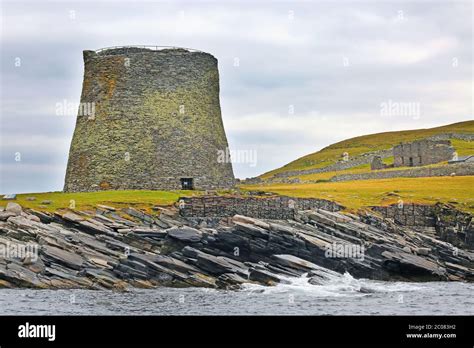
Brochs were engineered using dry-stone masonry, meaning no mortar was used to hold the stones together. The thick, double-layered walls were built to withstand harsh weather conditions and served as strongholds in the unforgiving Scottish environment. Some brochs, like the Broch of Mousa in Shetland, stand as high as 13 meters, showcasing the skill and ingenuity of Iron Age builders. These towers were built in such a way that they had a hollow interior, often featuring an internal staircase that wound upwards, offering access to various levels. Despite being built over 2,000 years ago, many brochs are remarkably well-preserved, allowing visitors to step inside and feel the weight of history. The Broch of Mousa, for instance, is still standing today and offers panoramic views of the surrounding landscapes, making it one of the most iconic and accessible examples of its kind. Other notable brochs include Dun Telve and Dun Troddan in the Glenelg area of the Highlands, which provide a glimpse into the past.
Purpose of Brochs
Brochs are believed to have had multiple functions, including acting as defensive fortresses, elite residences, and symbols of power. While their exact use remains a subject of debate among scholars, it is clear that these structures were more than mere shelters. The internal designs, with living spaces on upper levels, suggest that they were homes for the ruling elite, offering both privacy and security in times of conflict. Some experts believe brochs were not just for protection; they were also used as symbols of wealth and power. With their towering presence in the landscape, brochs would have served to demonstrate the strength of the local leaders who built and occupied them.
Blackhouses: The Traditional Dwellings of the Highlands and Islands
While brochs speak to Scotland’s ancient past, the blackhouse represents a more recent chapter in Scottish history, particularly in the Highlands and the Outer Hebrides. The blackhouse was a traditional dwelling used by Scottish families until the mid-18th century, and it remains an important part of the cultural heritage of rural Scotland.
Architecture and Materials
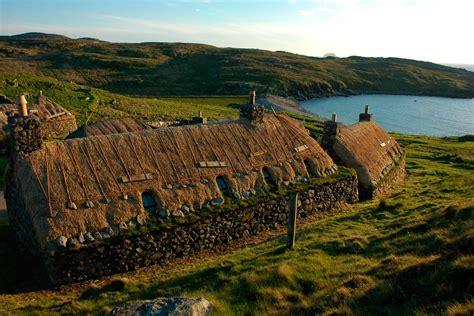
The blackhouse is easily recognizable due to its thick stone walls and thatched roof, materials chosen for their practicality in the often wet and windy conditions of the Scottish Highlands. The walls were made from locally sourced stone, often constructed with the dry-stone technique, while the roof was thatched with straw or turf, materials that provided natural insulation. The interiors were designed to be warm and functional, with a central hearth used for cooking and heating. The blackhouse had a distinctive layout, typically consisting of a rectangular building with a wide, open central space. The living area would be on one side of the hearth, with livestock such as cattle and sheep kept on the other side, separated by a partition. The smell of smoke from the fire would permeate the entire structure, which is where the term “blackhouse” originates. The smoke would escape through small openings in the roof, giving the interiors a characteristic dark hue.
Purpose and Cultural Significance
Blackhouses were designed to withstand the harsh Scottish weather, with the thick stone walls providing shelter from the wind and cold. The design also reflects the close-knit, communal nature of life in the Hebrides. Families lived in close quarters with their livestock, and the blackhouse served as both a home and a stable. These homes were typically built in areas where timber was scarce, and the materials used were practical for the environment. Despite the hard living conditions, blackhouses were the center of daily life in many rural areas, serving as a place for family gatherings, cooking, and socializing. They were a reflection of the self-sufficiency and resilience of the communities that inhabited them.
Visiting Brochs and Blackhouses Today
For travelers keen on experiencing Scotland’s rich architectural heritage, visiting brochs and blackhouses is an unforgettable way to step back in time and explore the roots of Scottish culture. Many of these ancient structures are open to the public, offering visitors the chance to explore their fascinating history.
Must-See Brochs
- Broch of Mousa, Shetland: This well-preserved broch is one of the best examples of its kind and can be accessed via a short boat ride. Standing over 13 meters high, it offers spectacular views of the surrounding Shetland Islands.
- Dun Telve and Dun Troddan, Glenelg: These two brochs are among the most accessible and well-preserved examples on mainland Scotland, offering a more intimate look at their historical context.
Blackhouses to Visit
- Gearrannan Blackhouse Village, Isle of Lewis: This restored village of blackhouses offers a rare glimpse into traditional Hebridean life. The village also includes a visitor center where guests can learn about the history and culture of the area.
- Arnol Blackhouse, Isle of Lewis: Another excellent example of a blackhouse, Arnol offers an immersive experience into the daily life of its former inhabitants.
Conclusion
Scotland’s brochs and blackhouses are more than just ancient buildings; they are living reminders of the country’s rich cultural heritage. The brochs of the Iron Age showcase the ingenuity and strength of Scotland’s ancient people, while the blackhouses reflect the humble yet resilient nature of rural life in more recent times. Whether you are exploring the towering brochs of the Shetland Islands or stepping inside a blackhouse on the Isle of Lewis, these structures provide an intimate connection to Scotland’s past and its enduring traditions. A visit to these remarkable buildings is a must for anyone wanting to experience the authentic history and culture of Scotland.