As anticipation builds across the scientific community, the world prepares for what many are already calling the Eclipse of the Century—the total solar eclipse that will sweep across parts of Earth on August 2, 2027. With its extraordinary duration, optimal viewing location, and scientific significance, this eclipse stands apart from the 224 solar eclipses expected throughout the 21st century. While eclipses are predictable cosmic clockwork, this one carries a rare blend of drama and rarity that captures both scientific curiosity and public imagination.
We explore why this particular event is unlike anything seen in decades, what makes totality so unique, and why Egypt’s Luxor region will become the epicenter of world attention during those 6 unforgettable minutes and 23 seconds.
A solar eclipse unfolds whenever the Sun, Moon, and Earth align in such a precise configuration that the Moon slips directly between our planet and its parent star. The Moon’s shadow sweeps across Earth’s surface, creating a path where daylight collapses into a strange, temporary night. Astronomers rely on meticulous orbital calculations and physics models to determine these events years—sometimes centuries—in advance. NASA describes this forecasting process as feeding exact positions, velocities, and orbital dynamics into complex equations that map the relative motion of the Sun and Moon from Earth’s perspective.
These calculations have long confirmed that early August 2027 will deliver a total solar eclipse of exceptional length and clarity. While many might dismiss an event two years away as a distant curiosity, astronomers have been buzzing for decades about its extraordinary characteristics.
Why This Eclipse Has Earned Its Monumental Title
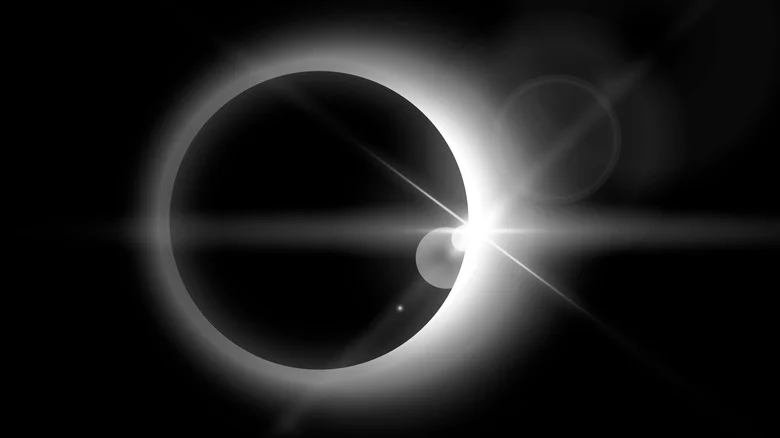
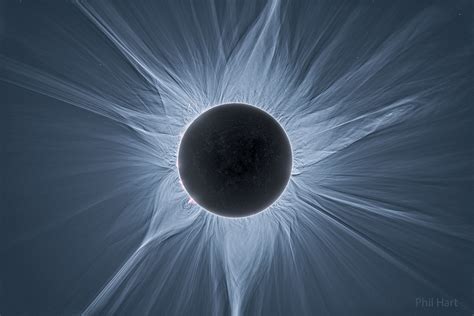
The label “Eclipse of the Century” is not hyperbole. Out of the dozens of eclipses occurring this century, only 68 are expected to be total—and even fewer will match the visual drama promised in 2027. Totality is the most spectacular type of eclipse for one defining reason: it reveals the Sun’s corona, the delicate outer atmosphere usually drowned in daylight. During totality, the corona unfurls like a luminous crown, offering a glimpse into solar physics that is both scientifically invaluable and visually breathtaking.
Total solar eclipses also depend heavily on geography. Their visibility tracks are narrow, often passing over remote or sparsely populated regions. But in 2027, fortune aligns with physics. The center of totality will sweep directly over Luxor, Egypt, one of the most historically resonant landscapes on Earth. Ancient temples, desert horizons, and the Nile Valley will all fall under the Moon’s shadow at the point where the eclipse reaches its peak intensity.

The Enormous Significance of Luxor as the Greatest Eclipse Point
Luxor sits near the midpoint of the eclipse’s path—precisely where the Moon’s shadow will be longest and most stable. Space agencies have identified the region as the “greatest eclipse point,” meaning observers there will enjoy the most extended period of totality anywhere on the planet.
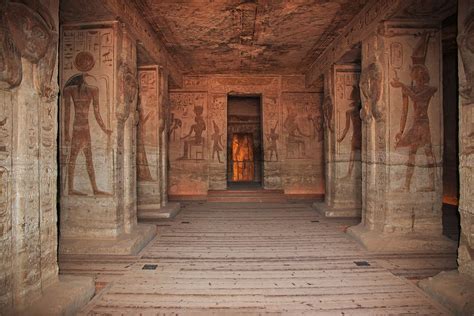
Beyond its scientific appeal, Luxor’s setting adds cultural and atmospheric richness. Few celestial events can rival the sight of an ancient civilization’s monuments plunging into sudden darkness under perfect alignment of cosmic bodies. The temples of Karnak and Luxor, built by pharaohs obsessed with the Sun’s power, will momentarily witness a spectacle they once mythologized.
Visitors will experience an eerie calm as birds quiet, temperatures drop, and the midday sky tears open into a star-flecked twilight. It is a moment that collapses thousands of years of human sky-watching into a single sensory flash.
A Breakdown of the Eclipse Types—And Why This One Outshines Them All
Solar eclipses come in several varieties, each shaped by the Moon’s distance and the geometry of alignment. A partial solar eclipse darkens only a portion of the Sun, offering a softer spectacle where the disc becomes a bitten arc. Annular eclipses create the famous “ring of fire,” a glowing halo that forms when the Moon is too distant to fully cover the Sun. Hybrid eclipses, the rarest form, shift between annular and total depending on where observers stand along the path.
Yet none of these match the emotional and scientific punch of a full total solar eclipse. In 2027, the Moon will sit at precisely the right distance to cloak the Sun entirely, forming a smooth shadow disk that plunges viewers into sudden night. This momentary darkness has long stirred human imagination—though now appreciated through science rather than superstition, the emotional impact persists.
The Extraordinary Duration That Sets 2027 Apart
Much of the excitement surrounding the 2027 eclipse arises from its remarkable duration. Solar eclipse totality can last anywhere from a few fleeting seconds to a theoretical maximum of 7 minutes and 32 seconds. In July 1991, an eclipse lasting 6 minutes and 52 seconds swept across Hawaii and Mexico, becoming one of the longest in modern history.
The 2027 event will not surpass that legendary spectacle, but at 6 minutes and 23 seconds, it is the longest total eclipse since the turn of the millennium and will remain unmatched for decades to come. For context, many totalities last under 3 minutes, meaning this event almost doubles the dramatic window for observation, research, and visual awe.
For astronomers, the extended duration offers rare advantages. Instruments will have more time to capture data on the corona’s temperature gradients, magnetic loops, and plasma flows—features nearly impossible to study outside of totality. For travelers and enthusiasts, the length provides an unusually luxurious window to simply witness the event without the frantic rush common to shorter eclipses.
A Moment Humanity Will Share Under One Shadow
When August 2, 2027 arrives, the world’s gaze will converge on a narrow ribbon of land stretching across North Africa and the Middle East. In Luxor, the desert winds may still, the Nile may shimmer under the dimming light, and millions watching from the region and around the world will join a rare moment of collective wonder.
From scientific discovery to cultural resonance, this eclipse offers far more than darkness; it delivers a reminder of our planet’s place in a grand cosmic ballet. As the Moon slides across the Sun and the world falls briefly silent, the experience will linger long after the last sliver of light returns.