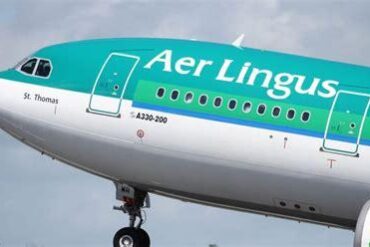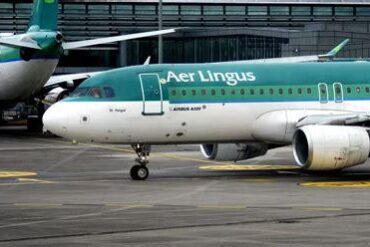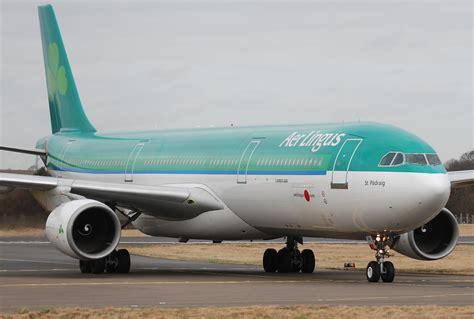
Aer Lingus, the flag carrier of Ireland, has stood as a symbol of national identity and aviation resilience for nearly a century. Founded in 1936 under the auspices of the Irish government, the airline’s journey has mirrored the political, economic, and technological developments of modern Ireland. Today, as a subsidiary of International Airlines Group (IAG), Aer Lingus operates a hybrid model that bridges the gap between low-cost competition and traditional full-service airlines, all while carrying the legacy of its storied past into a new era.
The Humble Beginnings of Aer Lingus
Aer Lingus was founded on 15 April 1936, with a modest capital of £100,000. The airline’s first chairman, Seán Ó hUadhaigh, worked in association with Blackpool and West Coast Air Services under the name Irish Sea Airways before officially registering Aer Lingus Teoranta on 22 May 1936. The name “Aer Lingus,” derived from the Irish term aerloingeas meaning “air fleet,” was suggested by Richard F. O’Connor.
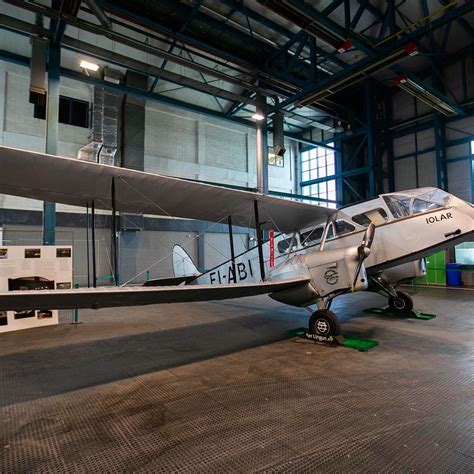
Its inaugural service took off on 27 May 1936, from Baldonnel Airfield to Bristol, using a six-seater de Havilland DH.84 Dragon called Iolar, meaning “eagle” in Irish — a symbolic beginning for what would become an airborne ambassador for Ireland.
That same year, the airline added a DH.86 Express “Éire”, allowing the launch of the Dublin–London (Croydon) route, followed by a Dublin–Liverpool service. These small but significant steps helped Aer Lingus earn the distinction of becoming Ireland’s national airline, firmly cemented by the Air Navigation and Transport Act (1936). In 1937, the creation of Aer Rianta, a parent company, brought Aer Lingus into full government ownership.
Wartime Operations and Post-War Expansion
Like many European carriers, Aer Lingus faced operational constraints during World War II, with services limited to Liverpool and Manchester. However, in January 1940, the airline relocated to Collinstown Airport (now Dublin Airport), acquired a Douglas DC-3, and initiated routes to Liverpool and Shannon, laying the foundation for a post-war revival.
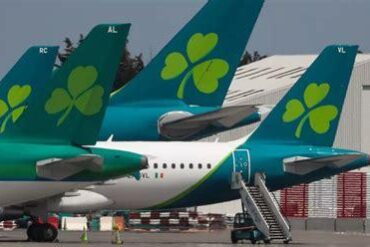
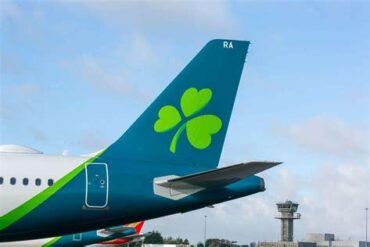
The airline emerged from the war with renewed ambition. In 1945, Aer Lingus resumed London flights using silver and green DC-3s and introduced flight attendants to its crew. The 1946 Anglo-Irish air agreement gave it exclusive UK traffic rights and allowed British Overseas Airways Corporation (BOAC) and British European Airways (BEA) to acquire a 40% stake. Although an early investment in Vickers Vikings proved financially untenable, the airline pushed forward with new aircraft, expanded European routes, and a distinctive green-top livery introduced in 1956, reinforcing Irish identity in the skies.
The Transatlantic Leap and the Jet Age
A monumental milestone came on 28 April 1958 with Aer Lingus’ first transatlantic flight operated by Aerlínte Éireann, a subsidiary created to handle long-haul services. The route from Shannon to New York connected Ireland directly to North America and inaugurated a new era for Irish aviation.
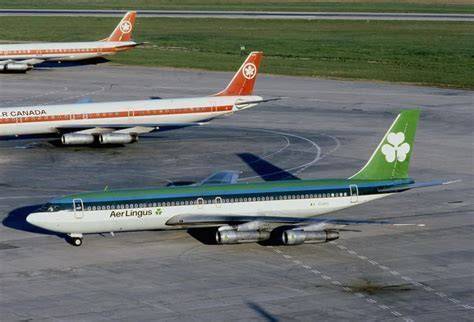
By 1960, Aerlínte Éireann was merged back into Aer Lingus, and the airline entered the jet age with Boeing 720s flying routes to New York and Boston. In 1964, the arrival of the Boeing 707 enhanced transatlantic capacity, while the BAC One-Eleven, introduced in 1965, streamlined European operations.
Through the 1960s, Aer Lingus was not just evolving technologically but also politically. It added routes to Montreal and Chicago, launched services from Belfast, and saw its remaining government shares transferred to the Minister for Finance, indicating the carrier’s growing independence. Yet, the turbulent Troubles forced the suspension of its Belfast–New York route by 1968.
The Jumbo Years: 1970s and Beyond
The arrival of the Boeing 747 in 1971 marked Aer Lingus’ ambition to compete with global heavyweights. However, initial transatlantic traffic numbers proved insufficient to sustain three jumbos, and one aircraft was leased out. Despite these challenges, the airline pressed on with innovation: it unveiled a new livery in 1974, recruited Gráinne Cronin, one of Europe’s first female pilots, and even flew Pope John Paul II on a specially modified Boeing 747 during his 1979 visit.
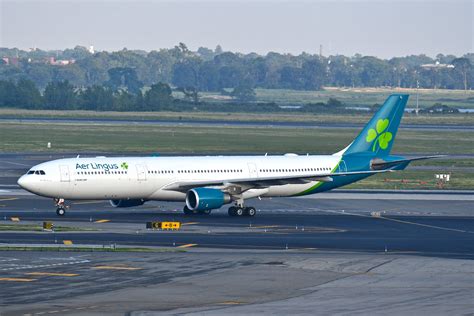
During the 1980s, Aer Lingus modernized its fleet, retired aging aircraft like the Boeing 707, and formed Aer Lingus Commuter to serve regional destinations. It expanded cargo operations, introduced new aircraft like the Fokker 50, and braced for a deregulated European market. By 1994, Aer Lingus had transitioned into widebody aircraft with the Airbus A330, becoming the first airline to operate the A330-300 on transatlantic ETOPS routes.
Strategic Shifts in the 2000s: A New Business Model
In the early 2000s, Aer Lingus consolidated operations by merging Aer Lingus Commuter into the mainline fleet. The post-9/11 climate demanded sweeping changes: staff cuts, destination reductions, and a strategic shift toward low-cost, no-frills European operations, even as it retained long-haul ambitions.
Between 2004 and 2011, Aer Lingus phased out its Boeing 737 fleet in favor of an all-Airbus configuration. A brief foray into Asian markets with Dubai was short-lived, but the airline renewed its transatlantic focus. In 2007, it announced orders for Airbus A350-900s and more A330-300s, aligning with global fleet trends.
Privatization and Ryanair’s Hostile Bids
A landmark event occurred on 2 October 2006, when the Irish government floated Aer Lingus on the stock market. Employees retained a 15% stake, and shares were offered at €2.20. The move signaled a transition from state ownership to market-driven governance, but it also opened the door to competition — notably from Ryanair.
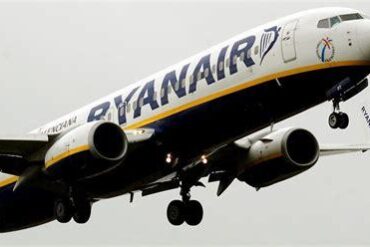
Ryanair, which initially acquired a 16% stake, launched a takeover bid at €2.80 per share. Aer Lingus rejected the offer, citing independence concerns. Despite this, Ryanair increased its stake to over 30%, prompting intervention from the European Commission, which blocked the takeover in 2007 due to monopoly risks — particularly on the Dublin–London route.
The IAG Takeover and a New Era of Integration
After years of shareholder battles and economic headwinds — including significant job cuts and cost-cutting plans following the 2008 financial crisis — Aer Lingus found itself at another strategic crossroads. On 10 July 2015, Ryanair sold its 30% stake to IAG, clearing the way for the group to assume control on 2 September 2015. The acquisition brought Aer Lingus into the same stable as British Airways, Iberia, and Vueling, offering a significant boost in transatlantic connectivity and alliance potential.
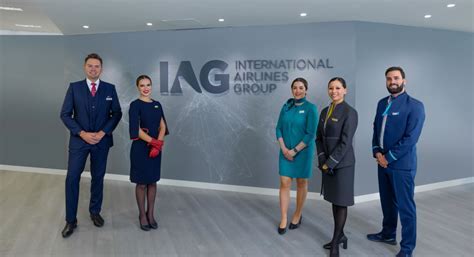
Post-acquisition, Aer Lingus adopted a hybrid carrier model: low-cost on short-haul European routes, but full-service — including Business Class — on transatlantic flights. This flexibility helped it compete both with ultra low-cost carriers and global network airlines.
Transatlantic Strategy and the Open Skies Agreement
The EU–US Open Skies Agreement of 2007 presented an opportunity for Aer Lingus to aggressively expand into North America. It launched routes to San Francisco, Washington D.C., and Orlando, alongside existing services to Boston, Chicago, and New York. Though some routes were paused or dropped during the recession, others like Los Angeles, Seattle, and Minneapolis–St. Paul were reintroduced or inaugurated between 2014 and 2019, affirming Aer Lingus’ transatlantic ambitions.
Resilience and Reinvention in a Volatile Market
Despite market volatility, including Brexit and COVID-19 challenges, Aer Lingus has demonstrated a capacity for adaptive reinvention. The airline continued expanding its long-haul fleet, signed agreements with JetBlue and United Airlines, and remained strategically aligned with its IAG peers. While it no longer belongs to the Oneworld alliance, Aer Lingus maintains codeshare agreements with members from all three global alliances, maximizing its international reach.
Conclusion: A National Carrier Evolving with the Times
Aer Lingus is far more than just an airline. It is a cultural and economic symbol of Ireland, embodying the country’s progress from a modest island nation to a global participant in aviation. Through wars, privatization, rivalries, and recessions, it has navigated the skies with tenacity and purpose.
From its inaugural six-seater flights to today’s widebody transatlantic operations, Aer Lingus continues to evolve while honoring its heritage. Now firmly embedded within IAG and fueled by modern fleet strategies and commercial agility, the airline stands poised to write the next chapter in a journey that began nearly nine decades ago.
FAQs
1. Is Aer Lingus a full-service airline or low-cost carrier?
Aer Lingus operates a hybrid model, offering low-cost services on European short-haul routes and full-service offerings (including Business Class) on transatlantic flights.
2. Is Aer Lingus part of any global airline alliance?
No. While it left Oneworld in 2007, Aer Lingus maintains codeshare agreements with airlines from Oneworld, Star Alliance, and SkyTeam, as well as partners like JetBlue and Etihad.
3. When did Aer Lingus become part of IAG?
Aer Lingus officially became a wholly owned subsidiary of IAG on 2 September 2015, following the sale of Ryanair’s 30% stake.