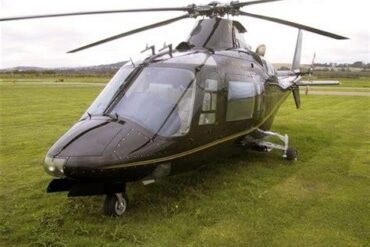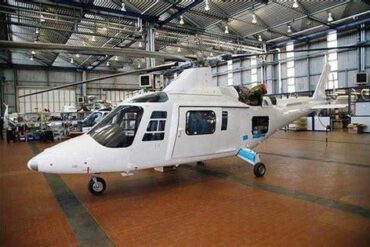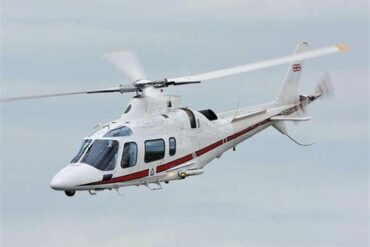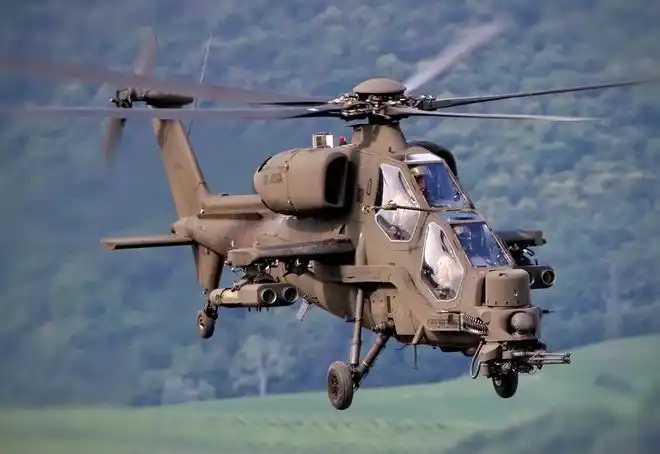
The Agusta A129 Mangusta holds a significant place in aviation history as Europe’s first purpose-designed attack helicopter, conceived and produced entirely within the continent. Developed by the Italian firm Agusta (now part of Leonardo S.p.A.), the A129 took to the skies for the first time on September 11, 1983, before formally entering service with the Italian Army in 1990. With only 60 production units and seven prototypes built, it remains a specialized, yet impactful player in the world of rotary-wing combat aircraft. This agile, two-seat attack helicopter emerged as a direct response to Italy’s need for a dedicated anti-armor and reconnaissance platform, marking a milestone in European military aviation.
Origins and Development
The origins of the A129 can be traced back to the early 1970s, when the Italian Army recognized the need for a light, maneuverable attack helicopter capable of countering the heavy armor of the Warsaw Pact. This requirement paralleled similar efforts in West Germany, leading to a brief, but ultimately unsuccessful joint venture with MBB (Messerschmitt-Bölkow-Blohm). Following the collapse of this early collaboration, Agusta independently pursued the project, formally launching the A129 program in 1978. By 1983, the first of five prototypes took flight, setting the stage for a limited production run of 60 units, a sharp reduction from the initial plan for 100 airframes due to budgetary constraints.
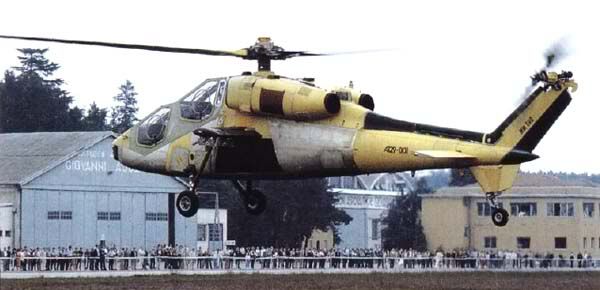
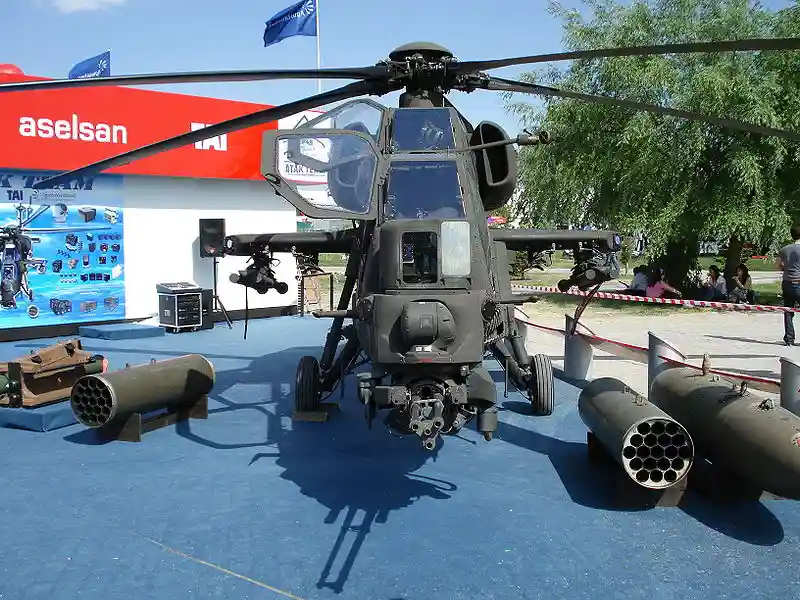
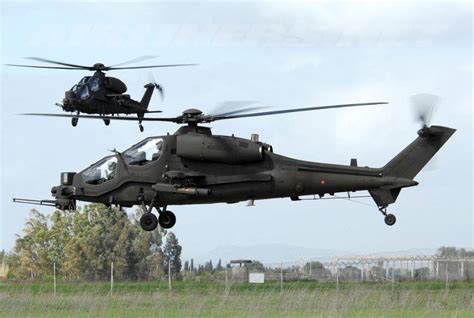
During its development, the A129 garnered attention for its innovative design, which included a composite airframe, advanced avionics, and cutting-edge mission management systems. It also introduced an angular, armored forward fuselage optimized for survivability, a notable departure from the sleek lines of the civilian A109, from which it borrowed its tail boom and transmission.
Technical Features and Capabilities
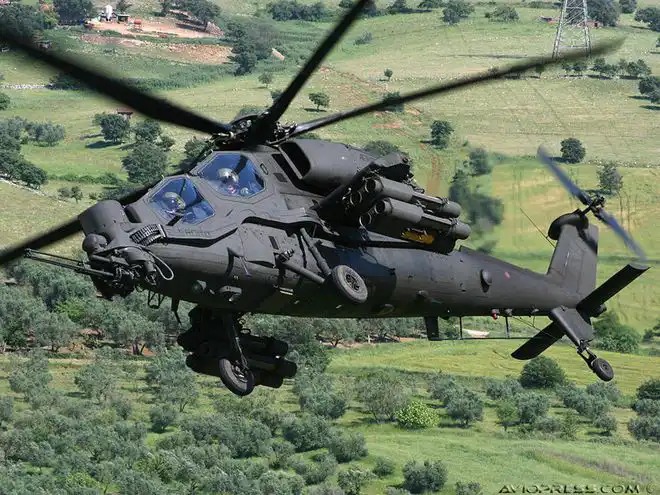
The A129 Mangusta stands out for its comprehensive set of offensive and defensive capabilities. At its core, the helicopter is powered by two Rolls-Royce Gem 2-1004D turboshaft engines, each delivering 890 horsepower, allowing the A129 to reach a maximum speed of 278 km/h and operate at altitudes up to 4,725 meters. The five-bladed main rotor, constructed from high-strength composites, offers exceptional resilience, capable of withstanding 23 mm projectile impacts, a crucial feature for a front-line combat helicopter.
Key Specifications:
- Length: 12.28 m
- Height: 3.35 m
- Empty Weight: 2,530 kg
- Maximum Takeoff Weight: 4,600 kg
- Rotor Diameter: 11.9 m
- Maximum Speed: 278 km/h
- Range: 510 km
- Service Ceiling: 4,725 m
- Climb Rate: 10.2 m/s
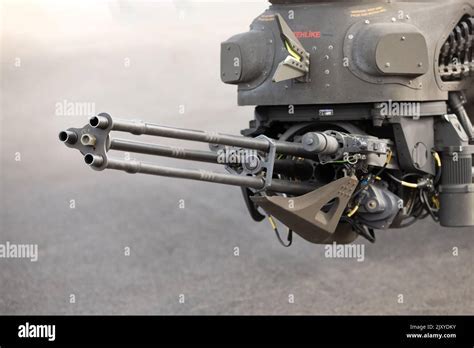
Armament options include up to eight Hellfire or Spike-ER anti-tank missiles, Mistral and Stinger air-to-air missiles, 70 mm rocket pods, and a 20 mm M197 three-barrel rotary cannon in the Oto Melara TM-197B turret, fitted on later models for enhanced firepower. Defensive systems include infrared suppression, electronic warfare suites, and SIAP (Integrated Self-Protection System), making it one of the most survivable light attack helicopters in its class.
Operational History and Combat Deployments
The Italian Army began receiving production A129s in 1990, gradually upgrading them to the CBT (Combat) standard by 2001. This included enhanced engines, transmission systems, and upgraded avionics for better survivability and mission flexibility. In subsequent years, a portion of the fleet was converted to the ARH-129D configuration, featuring multifunction cockpit displays, the Rafael Toplite III targeting system, and advanced Spike-ER missiles.
Throughout its operational life, the A129 has been deployed in numerous conflict zones, including UN peacekeeping missions in Macedonia, Somalia, and Angola, as well as direct combat roles in Iraq and Afghanistan. In 2016, the Italian Army sent four A129s to Iraqi Kurdistan for Combat Search and Rescue (CSAR) missions alongside NH90 transport helicopters, demonstrating its adaptability to diverse combat environments.
Variants and Evolution
Over the decades, the A129 has spawned multiple variants, including the A129 CBT, A129D (AW129D), and the export-oriented A129 International (AW129), each featuring progressively more powerful engines, enhanced electronics, and improved armament options.
Major Variants:
- A129 Mangusta – Original version with Gem 2-1004D engines.
- A129 International/AW129 – Export version with T800 engines, five-bladed rotor, and advanced EW suite.
- A129 CBT/A129C – Combat variant with upgraded transmission and auxiliary fuel tanks.
- A129D (AW129D) – Latest variant with Toplite III sighting system and Spike-ER missiles.
- T129 ATAK – Turkish variant with locally produced avionics and armament.
Conclusion
Despite its relatively modest production numbers, the Agusta A129 Mangusta remains a potent symbol of European aerospace innovation. Its battle-proven design and ongoing modernization efforts have ensured its continued relevance in the 21st century, setting a benchmark for future attack helicopter development. As the Italian Army looks forward to the AW249 replacement, the Mangusta’s legacy as Europe’s first dedicated attack helicopter is firmly secured.