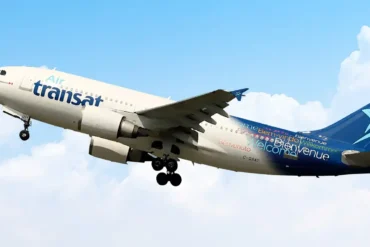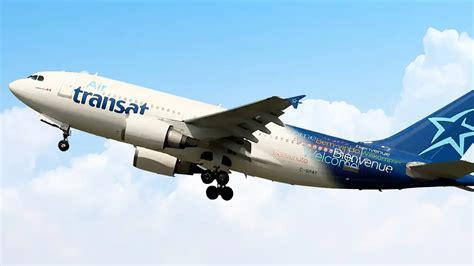
Air Transat has launched a bold new transcontinental flight connecting Toronto to Istanbul, ushering in a significant milestone for both the airline and Canadian aviation. On December 16, the carrier commenced its longest route to date—an 11-hour journey bridging two major global cities. This development not only marks a strategic route expansion but also rewrites Canadian air connectivity with Turkey, a market that has been underserved since Air Canada exited in 2017.
Reclaiming the Skies: Air Transat’s Strategic Return to Istanbul
This isn’t the first time Air Transat has landed in Istanbul. The Canadian leisure carrier had previously operated services to the Turkish capital between 2011 and 2014, initially routing through Montreal. However, this renewed direct link from Toronto marks a confident re-entry—and this time with a broader strategic intent.
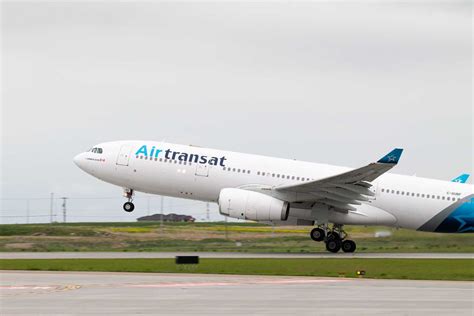
Flying twice weekly year-round, the service utilizes the Airbus A330-200, a widebody aircraft well-suited for long-haul leisure routes. The inaugural flight deployed C-GTSR, a 17.1-year-old aircraft equipped with 345 seats, signaling the airline’s readiness to serve high-volume demand even in colder months—a move considered bold in an industry that usually scales back leisure routes during winter.
Why Winter? A Calculated Gamble in the Off-Season
Launching a new intercontinental route in winter—especially to a city known for snow and rain like Istanbul—is unusual. But Air Transat’s decision isn’t just about filling seats; it’s about securing a foothold in a strategic partnership and capturing unmet demand in a lightly contested corridor. Despite reduced tourism in colder months, the Toronto-Istanbul market remains resilient due to a robust mix of diaspora travel, business, and year-round tourism.
Roughly 130,000 round-trip passengers traveled between Toronto and Istanbul in the 12 months leading to October 2025. A significant portion of these flyers had to connect via third countries, due to a lack of nonstop options—a gap now partially addressed by Air Transat.
The Power of Partnership: Turkish Airlines and the Codeshare Effect
This route exists largely because of Air Transat’s strategic partnership with Turkish Airlines. With Turkey’s national carrier limited by traffic rights in Canada, and unable to expand service as freely as it wishes, partnerships like these act as valuable capacity enhancers. Through this collaboration, Turkish Airlines extends its reach into the Canadian market using Air Transat’s operating rights.
Passengers flying from Toronto can now seamlessly connect to over 270 destinations via Istanbul, while inbound traffic benefits from Porter’s domestic Canadian network connecting to Transat’s Toronto hub. This synergy has been carefully timed to mirror Turkish Airlines’ own schedule:
- Toronto to Istanbul: Departs Tuesdays and Saturdays at 9:00 PM, arriving the next day at 2:45 PM.
- Istanbul to Toronto: Departs Wednesdays and Sundays at 4:40 PM, landing at 8:00 PM.
Plugging Capacity Gaps: A Page from the Middle East Playbook
Air Transat’s arrangement mirrors what major Middle Eastern carriers have already perfected. Qatar Airways, for instance, leases aircraft to Virgin Australia to operate routes it cannot fly directly. Emirates and Air Canada, United Airlines and Emirates, all utilize codeshare and wet lease tactics to expand reach within restrictive markets.
Similarly, Turkish Airlines has had to be creative. Despite serving Canada since 2009, it remains constrained. In Summer 2025, its presence includes:
- Toronto: 6x weekly (Boeing 777-300ER)
- Montreal: 3x weekly (Airbus A350-900)
- Vancouver: 3x weekly (Boeing 777-300ER)
By partnering with Air Transat, it effectively adds two more weekly flights out of Toronto, utilizing the Canadian portion of bilateral air rights, and expanding access to its Middle East, Africa, and Asian networks.
Diaspora and Demand: The Cultural and Commercial Backbone
The new route isn’t just a technical or strategic triumph; it’s also a sociocultural one. The Greater Toronto Area is home to significant populations from Turkey, Iran, Pakistan, India, Iraq, Lebanon, and Afghanistan, all of whom use Istanbul as a convenient gateway to their home countries. The nonstop access, now offered by both Air Transat and Turkish Airlines, simplifies travel for these communities.
According to booking data, the most popular onward destinations from Toronto via Istanbul are:
- Tehran
- Mumbai
- Delhi
- Karachi
- Ankara
- Erbil
- Kabul
- Beirut
- Lahore
- Moscow
Tehran tops the list, largely due to limited direct options and the complex geopolitical environment. Turkish Airlines has long served as a critical link to Iran, second only to Emirates in passenger volumes between Canada and Tehran.
Historical Context: Revisiting the Transatlantic Playbook
Air Transat’s move can also be interpreted as a broader pivot in leisure carrier strategy. Traditionally, Transat focused on sun destinations in the Caribbean and Europe. However, with Istanbul’s enormous transit hub potential, this route blurs the lines between leisure and full-service models.
The carrier had previously operated flights to Istanbul Atatürk Airport, but its phased withdrawal was attributed to shifting demand and operational focus. This time, however, the equation is different. Istanbul’s new airport is one of the busiest and best connected in the world, and Transat is better equipped—with partners and modern fleet operations—to leverage its power.
Looking Ahead: A New Frontier in Accra
While Istanbul now holds the crown as Transat’s longest route by time and distance, its reign will be short-lived. By 2026, Air Transat plans to begin flights to Accra, Ghana, opening an entirely new frontier in its network. This announcement signals the airline’s deeper ambition to tap into diaspora-rich, underserved markets, much like it has with Istanbul.
The decision to fly to Accra—a rare move for a Canadian leisure carrier—suggests a growing appetite for risk and innovation, and a recognition that multicultural Canada demands more than traditional beach vacations. It demands direct access to the world’s emerging economic and cultural powerhouses.
Conclusion: A Defining Move for Canadian Aviation
The launch of Air Transat’s 11-hour Toronto-Istanbul flight is far more than a seasonal service. It is a strategic milestone, reflecting a blend of aviation diplomacy, network expansion, and community-focused service. It demonstrates how a mid-sized leisure carrier can punch above its weight, using smart partnerships and responsive planning to meet real-world demand.
As Air Transat looks ahead to Accra and beyond, the Istanbul route may well be remembered as the first in a new chapter—one where Canadian skies connect more directly and dynamically to the world.