American Airlines is closing a long and unusual chapter in airline credit cards. After years of operating with two issuing banks, the carrier has confirmed that its remaining Barclays-issued AAdvantage credit cards will transition to Citi and then disappear as distinct products. The change, scheduled for April 2026, reshapes how millions of frequent flyers earn miles, manage perks, and plan future applications, while quietly signaling how valuable co-branded credit cards have become to airline economics.
The Final Timeline for Barclays AAdvantage Cards
Applications for American AAdvantage Barclays cards quietly closed in 2025, freezing the portfolio in place while cardholders continued using their accounts normally. That grace period now has a firm endpoint. On April 24, 2026, existing Barclays AAdvantage accounts will begin converting to Citi-issued equivalents, marking the official end of Barclays as an American Airlines card partner.
During the transition window, cardmembers will still be able to swipe their physical Barclays cards until replacement Citi cards arrive. American and Citi expect new cards to land in mailboxes within six to eight weeks after April 27, 2026. Each account will receive a new card number, but crucially, the credit line and anniversary date remain unchanged, preserving account age and avoiding unnecessary disruption to credit profiles.
For a brief period between April 24 and April 26, online and mobile access to both Barclays and Citi portals will pause. Access resumes April 27 under Citi’s systems, a short blackout designed to ensure a clean migration rather than a drawn-out, error-prone handoff.
How Each Barclays Card Converts Under Citi
The conversion is not one-size-fits-all. Instead, each Barclays product maps directly to an existing Citi AAdvantage card, sometimes with materially different annual fees and benefits.
The no-annual-fee AAdvantage Aviator World Elite Mastercard becomes the American Airlines AAdvantage MileUp Mastercard, keeping entry-level access to mileage earning. The Aviator Blue World Elite Mastercard, previously free, shifts to the Citi / AAdvantage Gold World Elite Mastercard, reintroducing a $50 annual fee for a product no longer open to new applicants.
Mid-tier cardholders see more familiar ground. The $99 Aviator Red World Elite Mastercard converts to the $99 Citi / AAdvantage Platinum Select World Elite Mastercard, maintaining a comparable fee structure and core travel perks. At the high end, the Aviator Silver World Elite Mastercard jumps sharply, transitioning into the Citi / AAdvantage Globe Mastercard with a $350 annual fee, reflecting Citi’s more premium positioning.
Business owners are not spared from changes. The Barclays AAdvantage Business World Elite Mastercard, previously $95 annually, converts into the $99 Citi / AAdvantage Business World Elite Mastercard, aligning pricing and benefits under Citi’s umbrella.
What Cardholders Will Actually Experience
Despite the structural shift, most cardholders will experience a surprisingly smooth transition. Spending continues uninterrupted, elite-qualifying activity already earned remains intact, and benefits in progress carry over. One unexpected upside is the chance to double dip on perks. Progress toward companion certificates, elite credits, or spending-based bonuses on Barclays cards continues to count, even as the new Citi card year effectively resets certain benefits.
Some cardmembers may also find themselves holding duplicate Citi AAdvantage products if they already applied directly with Citi in the past. While redundant on paper, this scenario can temporarily amplify benefits, at least until annual fees or overlapping perks prompt consolidation.
Why American Airlines Chose Exclusivity
This move is less about logistics and more about leverage. American’s dual-issuer setup was a historical artifact of the American–US Airways merger, where Citi and Barclays each retained legacy relationships. For years, American stood alone among major U.S. airlines in allowing two banks to issue nearly identical co-branded cards.
That uniqueness came at a cost. Competing banks diluted negotiating power, limited innovation, and left revenue on the table. The exclusive Citi agreement announced in late 2024 promised a richer, more integrated partnership, expected to deliver significantly higher long-term revenue to American Airlines. In an industry where loyalty programs often generate more profit than flying itself, consolidation was inevitable.

The Impact on Sign-Up Bonuses and Churning
For mileage collectors, the disappearance of Barclays cards closes a lucrative loophole. Barclays AAdvantage cards were famous for large welcome bonuses with minimal spending requirements, making them a favorite for efficiently stockpiling miles. With those products gone, opportunities narrow.
However, exclusivity brings its own advantages. Citi has expanded its ecosystem around AAdvantage, most notably by adding AAdvantage as a Citi ThankYou transfer partner, increasing flexibility for points strategists. Instead of juggling two banks for similar perks, travelers now navigate a single, deeper platform.
Eligibility rules remain a critical consideration. Most Citi AAdvantage cards fall under the 48-month rule, meaning a cardholder cannot earn a welcome bonus on the same product if they received one in the previous four years. Whether Citi revises these rules after fully absorbing the portfolio remains an open question, but for now, timing applications carefully matters more than ever.
Citi’s Core AAdvantage Cards in the Spotlight
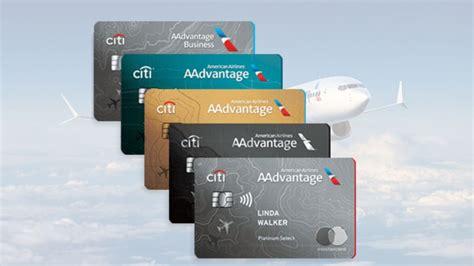
With Barclays exiting, Citi’s lineup becomes the definitive gateway to American Airlines loyalty. The Citi / AAdvantage Executive World Elite Mastercard anchors the portfolio with a $595 annual fee, offset by Admirals Club membership and premium travel benefits that appeal to frequent flyers. The Citi / AAdvantage Globe Mastercard, now absorbing former Aviator Silver members, balances a $350 fee with strong earning rates and mid-tier luxuries.
On the business side, the Citi / AAdvantage Business World Elite Mastercard remains one of the most compelling options for small businesses seeking both operational flexibility and mileage accumulation, especially with its first-year annual fee waiver.
A Strategic Shift With Long-Term Consequences
The transition of American AAdvantage Barclays cards to Citi is more than a product swap. It reflects how airlines increasingly view credit cards as financial engines rather than marketing accessories. For cardholders, the change reduces choice but increases clarity, streamlining benefits under a single issuer with deeper integration into American’s loyalty strategy.
As April 2026 approaches, existing Barclays cardmembers can expect continuity rather than chaos. Credit lines stay put, benefits largely persist, and Citi steps fully into its role as American Airlines’ exclusive financial partner. The era of dual issuers is ending, but the competition for traveler loyalty, powered by miles and plastic, is only getting sharper.