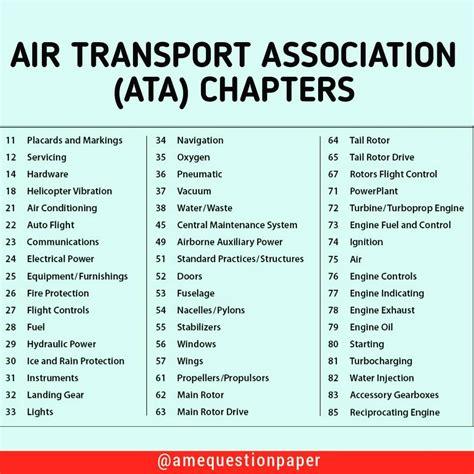
ATA classification is a numerical system that organizes all the systems and subsystems found on an aircraft. This system is widely recognized and used in aircraft engineering and maintenance. Originally developed by the Air Transport Association, now known as Airlines for America (A4A), this classification first emerged in 1956. Since then, it has been adopted across the industry for documentation related to aircraft engineering and maintenance.
The ATA classification is structured into 100 numbered categories, which are further divided into chapters, sections, and subsections. The initial version, referred to as ATA ‘spec 100,’ was last updated in 1999. In 2000, it merged with another specification, ATA ‘spec 2100,’ which focused on electronic technical data interchange. This collaboration resulted in the creation of the ATA ‘iSpec 2200,’ known as ‘Information Standards for Aviation Maintenance.’
The ‘iSpec 2200’ serves as a global standard for the content, structure, and electronic exchange of information related to aircraft engineering, maintenance, and flight operations. It includes various data specifications that cover maintenance requirements, procedures, aircraft configuration control, and flight operations. Overall, the ATA classification is crucial for ensuring the safety and reliability of aircraft.