Bilt has never been subtle about its ambition to redefine how housing payments intersect with rewards, but its latest announcement pushes that vision into far more controversial territory. With the unveiling of three new credit cards and a brand-new rewards currency called Bilt Cash, the company is asking consumers to rethink what’s possible when paying rent or even a mortgage. On paper, the proposition sounds almost implausible: earn traditional points, stack them with 4% back in Bilt Cash, and then use that currency for everything from rent to hotels to ride-sharing credits. The natural question isn’t whether it’s attractive—it’s whether it’s too good to be true.
At the center of this shift is a deliberate separation between Bilt points, which already have an established transfer ecosystem, and Bilt Cash, a new monetary-style credit designed to power the next phase of Bilt’s platform. Unlike points, Bilt Cash is positioned as a more flexible, dollar-linked asset, though one that exists entirely within Bilt’s controlled environment. This distinction matters, because it signals that Bilt is no longer just a rewards program—it is evolving into a closed-loop financial ecosystem.
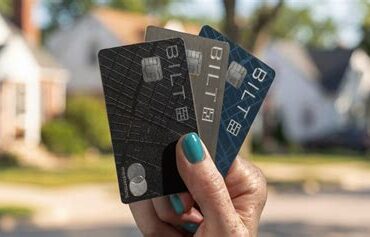
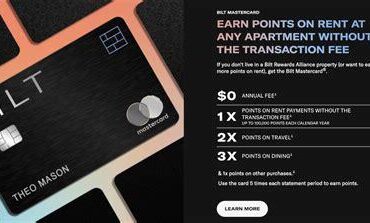
The newly announced card lineup makes that ambition clear. The no-annual-fee Bilt Blue Card, the mid-tier Bilt Obsidian Card at $95 per year, and the premium Bilt Palladium Card at $495 are all designed around a shared premise: every dollar spent earns not only points, but also 4% back in Bilt Cash. That kind of consistency across tiers is rare in the credit card world and immediately raises eyebrows among experienced rewards users who understand how razor-thin margins usually are.
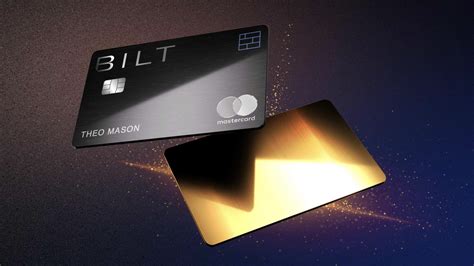
What makes Bilt Cash particularly intriguing is how it’s earned. Beyond card spending, members receive $50 in Bilt Cash for every 25,000 Bilt points earned, regardless of how those points were generated. This effectively layers a cash-equivalent rebate on top of an already competitive points-earning structure. For high spenders, the compounding effect is significant, creating a sense that value is being generated from multiple angles simultaneously.
However, the real gravity of Bilt Cash becomes apparent when examining its role in housing payments. Under Bilt’s new framework, every $30 in Bilt Cash unlocks up to 1,000 points on rent or mortgage payments, allowing cardholders to earn rewards on housing expenses without paying transaction fees. In practical terms, someone who spends $15,000 annually on a Bilt card would generate roughly $600 in Bilt Cash, enough to unlock $20,000 in fee-free rent or mortgage payments while earning points. That alone would be a game-changer in a category historically hostile to rewards.
The implications don’t stop there. Bilt has stated that Bilt Cash will eventually be redeemable at dollar-for-dollar value toward a wide array of lifestyle categories, including hotel credits, Lyft rides, dining, fitness memberships, home delivery services, and curated experiences within the Bilt Collection. Redemptions are expected to go live in February 2026, but even the promise of such flexibility is enough to spark intense debate.
This is where skepticism becomes not just reasonable, but necessary. If Bilt Cash can truly function as a near-cash equivalent across multiple partners, then using it to unlock points on rent suddenly looks like the least optimal use of the currency. The opportunity cost becomes glaring. Spending $100 in Bilt Cash on rent essentially converts that value into points at roughly three cents each—far above what most savvy travelers would ever pay. In contrast, applying that same $100 toward hotel or transportation credits would preserve its full dollar value.
From a sustainability perspective, this raises a fundamental question: how does Bilt pay for this? Credit card interchange fees alone are unlikely to support a system that returns 4% in Bilt Cash on all spending, on top of points, signup bonuses, and premium card benefits. Even with strong partner subsidies, the math begins to strain credibility if redemptions are truly uncapped and frictionless.
Bilt executives have offered subtle clues that reality will be more constrained than the marketing suggests. According to Richard Kerr, Bilt’s General Manager of Travel, monthly redemption limits are likely to play a central role. Certain redemption categories may offer dollar-for-dollar value only up to a predefined cap, after which users must either wait or choose alternative uses for their Bilt Cash. This approach would allow Bilt to advertise exceptional value while maintaining internal cost controls.
The structure could resemble targeted credits rather than unrestricted spending power. Imagine being able to redeem $50 in Bilt Cash each month toward a hotel booking, but only if the total stay exceeds a certain threshold. Or applying $10 toward a Lyft ride, provided the fare surpasses a minimum amount. These kinds of guardrails wouldn’t negate the value of Bilt Cash, but they would dramatically change how consumers calculate its worth.
Another critical detail is expiration. Bilt Cash is valid only through December 31 of the year in which it’s earned, with a maximum of $100 allowed to roll over into the next year. This creates a subtle pressure to redeem rather than hoard, benefiting Bilt by smoothing redemption demand and reducing long-term liability. For users, it adds a time-based decision layer that doesn’t exist with traditional points.
The premium Bilt Palladium Card underscores how central Bilt Cash has become to the brand’s strategy. With a $300 welcome bonus, an ongoing $200 annual Bilt Cash credit, and the same 4% earning rate as the other cards, it’s clearly designed to anchor high-spending users within the ecosystem. The card’s value proposition hinges less on points and more on ongoing cash-like benefits that encourage habitual engagement.
What makes this rollout especially fascinating is how it blurs the line between rewards and fintech. Bilt Cash isn’t just an incentive; it’s a behavioral lever. By tying housing rewards, partner discounts, and experiential perks into a single currency, Bilt gains unprecedented influence over how and where users spend. Every redemption reinforces the ecosystem, driving volume to partners who, in turn, help subsidize the rewards.
Yet, the unanswered questions remain substantial. Will dollar-for-dollar redemptions be meaningfully accessible, or merely symbolic? How restrictive will monthly caps become? Will premium cardholders receive preferential redemption limits? Until February 2026, these uncertainties hang over the program, tempering enthusiasm with caution.
From a strategic standpoint, Bilt Cash feels less like a giveaway and more like a calculated experiment. If executed with reasonable constraints, it could redefine expectations around rent and mortgage rewards without collapsing under its own generosity. If misjudged, it risks alienating the very audience it seeks to attract—experienced users who are quick to spot inflated promises.
Ultimately, Bilt Cash represents both innovation and risk. It challenges entrenched assumptions about what expenses can earn rewards and introduces a hybrid currency that sits somewhere between points and cash. Whether it becomes a lasting advantage or a short-lived headline will depend entirely on the fine print that has yet to be revealed. For now, it stands as one of the most provocative developments in the rewards landscape—compelling, controversial, and very much unfinished.