Between December 5 and December 11, 2025, IHG One Rewards launched a points purchase promotion that can deliver an effective price of 0.5 cents per point when members are targeted for a 100% bonus and buy the maximum eligible amount — a sale that has become one of the program’s recurring “best offer” windows.
We examine the numbers, the practical redemption strategies, the caveats that change the arithmetic, and the scenarios in which buying points at this rate can materially beat paying cash for equivalent stays. The goal is a clear, evidence-based recommendation so travel planners and loyalty investors can decide whether to buy, hold, or skip the offer.
What the Promotion Actually Offers and How the Math Works
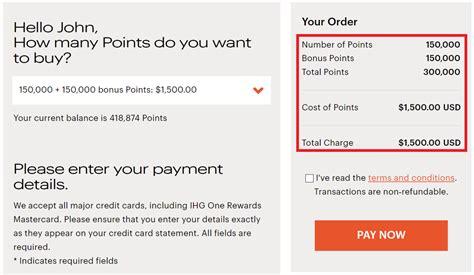
Under the December 2025 promotion, eligible members who purchase at least the program’s minimum threshold receive a 100% bonus on purchased points; during this sale the pre-bonus annual purchase cap was raised (for many accounts) to 300,000 points, meaning a maximum possible credited total of 600,000 points if the bonus is the full 100%. The program’s published window and promotional mechanics match industry reporting and IHG’s own buy-points landing pages.
Because IHG’s pricing ladder for point purchases is non-linear, the upshot most readers care about is the effective cents-per-point (cpp). If one pays $3,000 to buy 300,000 points and receives a 100% bonus (total 600,000 points), the effective cost becomes $3,000 / 600,000 = $0.005 per point = 0.5 cents/point. That is the figure widely quoted across travel press when the 100% bonus appears.
Who Can Hit the Best Rate — Eligibility, Minimums and Caps
Promotions for purchased points are often targeted; not every member sees identical minimum purchase tiers or maximum limits. In this sale the optimal 100% bonus reportedly requires at least an 11,000–26,000 point purchase depending on the account, and the program temporarily increased the usual pre-bonus calendar-year cap (typically 150,000 in many markets) to 300,000 for participating accounts. That increase is material: it allows a buyer to scale to a quantity that makes the headline 0.5¢/point math meaningful.
Because points are processed by a third party (points.com), purchasers should be aware that point buys do not count as hotel spend for credit card category bonuses or elite-qualifying spend with IHG. This changes how one should pick which card to pay with — use a card that you want to meet minimum spend on, or a flat-rewards card, rather than one that gives extra points for hotel purchases that won’t apply.

When Buying Points Makes Sense — Target Use Cases
Buying points at 0.5¢ can be a strong value in defined circumstances. The most persuasive scenarios are:
- Luxury or aspirational redemptions with outsized award pricing — Because IHG’s award pricing is dynamic, there are nights where the points rate produces a cash-equivalent that’s far higher than 0.5¢/pt. When a luxury InterContinental, Regent, Six Senses or high-demand Kimpton night would otherwise cost many hundreds of dollars, redeeming purchased points can reduce the total cost by 30–60% in the best cases. Multiple recent examples across markets are visible in deal roundups and award charts published during these promotions.
- Using the Fourth Night Free benefit on IHG co-branded cards — Cardholders of the IHG One Rewards Premier products receive a fourth night free on award redemptions (effectively 25% off when stays are booked in four-night blocks). Buying points to leverage this benefit multiplies value: four nights purchased with points but paid with the fourth night free reduces the per-night effective cost materially, improving the break-even compared with paying cash. If you have the card, this pairing is often the single-best justification to buy points on sale.
- Bridge to award availability — For travelers who need a specific set of nights at a property with limited revenue availability but standard award inventory, purchasing points can be faster and more reliable than waiting for revenue fares to drop or for transfer bonuses to line up. The lack of blackout dates (but presence of capacity controls) means points can often be used where revenue rates are high.
When to Avoid Buying Points
- If your target redemption values points below ~0.6¢–0.7¢ — We value IHG conservatively around 0.5¢/pt in baseline terms; if your typical redemptions yield less than the purchase price when accounting for taxes and fees, buying is a loss. If a midscale Holiday Inn night would cost 10,000 points worth roughly $50 in the market, that is not as good as simply paying cash unless inflated demand drives cash rates far above that.
- If you’re chasing elite credit or qualifying spend — Purchased points do not count toward IHG elite qualification or toward hotel spend categories on cards. If elite nights or spend thresholds are your priority, buy nights or meet thresholds with rate-qualified stays.
- If you cannot reasonably use the points before program rule changes — Points can be devalued; holding a very large stockpile exposes you to future devaluations. For speculative buyers, allocate only what you reasonably plan to use within a horizon where you can accept some devaluation risk.
Practical Tips for Executing (and Avoiding Avoidable Mistakes)
- Log in and confirm your targeted offer before committing. Offers vary by account and some members see lower bonus tiers or different minimums. Industry trackers show frequent targeting variance.
- Use a credit card where the transaction is useful — because the purchase posts via points.com, choose a card where you either need to reach a minimum spending threshold or you earn a flat-rate return; treat the buy like a large mapped purchase, not a hotel-stay bonus.
- Confirm post time and refund policy. Points purchases can take hours or up to a few days to post and purchases are generally non-refundable; plan redemptions accordingly.
- Calculate total effective cost per night with companions and taxes. When booking multiple rooms or multi-night stays, compute the full landed cost of buying-and-redeeming versus paying cash, including any card benefits like free nights or elite breakfast credits.
Verdict — Buy, Hold, or Skip?
For travelers who already know the hotel and exact dates they want (especially luxury properties or stays where cash rates spike), buying IHG points at an effective 0.5¢/point is often worth it. The strongest multiplier is the fourth-night-free card benefit — if that applies, the math frequently tips in favor of purchasing. For speculative buyers who do not yet have a redemption in mind, the risk-reward is lower: the purchase is defensible as portfolio insurance only if one limits exposure to quantities they will realistically deploy within a medium-term planning horizon.
Bottom line: this promotion is one of the better IHG buy-points windows we see each year. Use it to close specific high-value redemptions or to stock a modest, targeted balance for planned travel — avoid converting cash to points at this rate as a purely speculative hedge without a clear use-case.
Quick-reference Summary (Key Facts)
- Promotion window (reporting): December 5–11, 2025; terms and targeting vary by account.
- Headline effective price if targeted for 100% bonus and maxing: 0.5¢/point (i.e., $3,000 for 600,000 points total).
- Pre-bonus purchase cap during the promotion: often increased to 300,000 points, yielding up to 600,000 points post-bonus for qualifying accounts.
- Purchased points do not count toward elite qualification and are processed via points.com; choose payment card accordingly.
This offer is a useful tool in the travel-value toolbox when applied with discipline and a clear redemption plan. When guided by those constraints, the 100% bonus can convert into genuinely exceptional nightly rates at IHG’s premium and luxury properties; without a plan, the risk of future devaluation or misallocated capital grows. Buy intentionally, not impulsively.