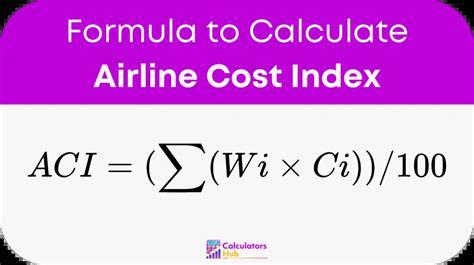
Cost Index (CI) is a key concept in aviation, representing the ratio of fuel costs to all other operational expenses. It’s not a new idea; many Flight Management Systems (FMS) have utilized some version of it for years. A lower CI indicates that the aircraft prioritizes fuel savings. In practical terms, this means slower climb speeds, reduced cruise speeds, higher cruising altitudes, delayed descents, and slower descent rates. Conversely, a higher CI leads to faster climb and cruise speeds, along with quicker descents.
When a specific CI is set, it correlates to a certain still air True Airspeed at altitude. However, FMS often adjusts the Mach number by 0.01 if wind conditions exceed a set threshold. For instance, with a tailwind, the aircraft may slow down, while with a headwind, it speeds up—both adjustments aim to reduce fuel consumption. Advanced flight planning tools can track these changes on a leg-by-leg basis and incorporate them into the ATC flight plan.
In oceanic flights, the assigned Mach number becomes crucial for maintaining time-based separation. Pilots must adhere strictly to this assigned speed, disabling any automatic adjustments. The use of CI can differ significantly among airlines and even between flights within the same airline. For example, one airline might typically operate an A320 at a CI of around 9, resulting in climb speeds of approximately 290 knots, cruise speeds of about 0.76 Mach, and descent speeds near 260 knots. However, if the flight is behind schedule, the crew might opt for a CI of 50 or more, which would increase speeds to 320 knots, 0.79 Mach, and 330 knots for those phases.
Due to these variations in CI usage, air traffic controllers cannot assume uniform performance from all aircraft of the same type during any flight phase. To ensure safe operations, they need to assign specific speeds when necessary.