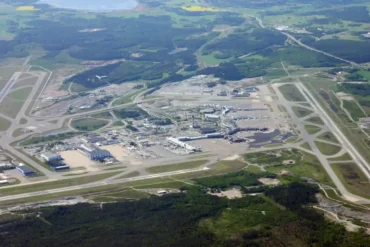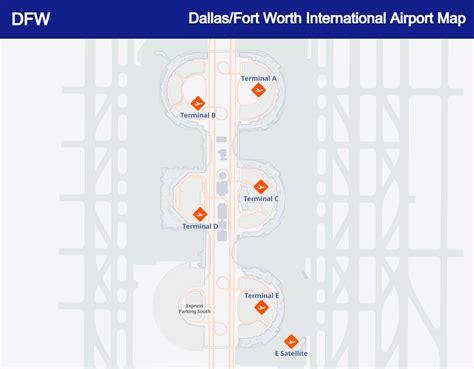
Dallas/Fort Worth International Airport has long stood as a monumental gateway between Texas and the world, anchoring North Texas as one of the most strategically important aviation markets on the planet. Ranked among the busiest airports globally, DFW is more than a domestic powerhouse. It is a dynamic international crossroads where long-haul widebodies and high-frequency narrowbodies converge to link the American heartland with Latin America, Europe, Asia, Canada, and the Middle East.
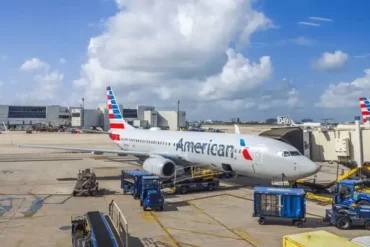
In March alone, DFW is scheduled to see 3,561 one-way departures to non-US destinations. While American Airlines dominates with over three-quarters of those flights, the presence of foreign carriers adds essential diversity, strategic depth, and competitive dynamism. These airlines do not simply operate routes; they shape trade flows, tourism corridors, alliance connectivity, and fleet deployment strategies across continents.
International capacity at DFW reflects both geography and economics. Texas sits in a privileged position—close to Mexico and Latin America, centrally located for transcontinental flows, and large enough economically to sustain ultra-long-haul service. The foreign airlines operating here reveal a carefully calibrated balance between regional demand and global ambition.
Latin American Leaders: Volaris And Air Canada Anchor Regional Connectivity
Mexico’s Volaris emerges as DFW’s busiest foreign airline by frequency, operating 98 departures in March. Its Airbus narrowbody fleet efficiently links Dallas/Fort Worth with Guadalajara and Mexico City on a daily basis, while Morelia and San Luis Potosí receive four weekly services. These routes reflect powerful cross-border ties—family connections, labor mobility, business travel, and tourism all fuel consistent demand.
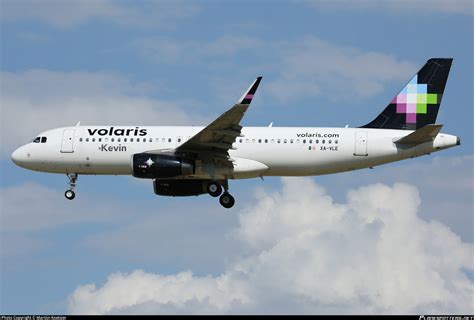
Volaris’ strategy is straightforward and effective: high-frequency, point-to-point service using cost-efficient aircraft. The Airbus A320 family allows the airline to maintain strong yields while serving cities with deep diaspora ties to Texas. The scale may not match American Airlines, but its role is structurally important to DFW’s international profile.
To the north, Air Canada holds second place among foreign carriers, scheduling 82 departures. Montréal receives daily service, while Toronto sees either one or two flights per day. Aircraft deployment is varied and telling—Airbus A220s, Bombardier CRJ900s, and Embraer E175s operate these routes. This fleet mix signals optimization rather than brute force capacity.
Air Canada’s presence at DFW is not merely about Texas–Canada demand. The airline positions itself as a connecting bridge to Europe and Asia through its Canadian hubs. Short elapsed travel times and streamlined connections give travelers an alternative to traditional US coastal gateways. It is a subtle but sophisticated competitive move in transatlantic and transpacific routing.
Qatar Airways And Avianca: Twice-Daily Global Connectors
Two foreign airlines operate exactly two daily flights from DFW, but their operational philosophies could not be more different.
Qatar Airways deploys substantial widebody capacity, offering 62 monthly departures to Doha Hamad International Airport. Of these, 34 flights use the Airbus A350-1000, while 28 operate with the Boeing 777-200LR. The scale is striking: nearly double the monthly seat capacity of Air Canada despite identical daily frequencies.
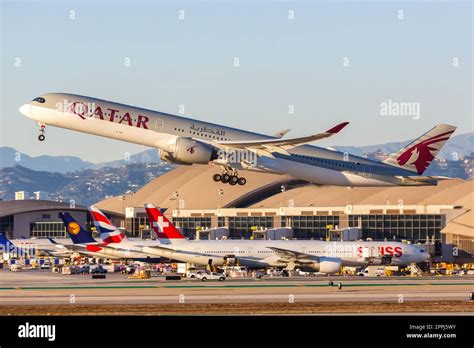
This reflects Qatar Airways’ long-haul hub model. Doha is not the destination; it is the connector. From DFW, passengers can access destinations across the Middle East, Africa, South Asia, and Southeast Asia on a single itinerary. The airline’s oneworld alliance partnership with American Airlines strengthens feed traffic from across the US interior, reinforcing DFW’s role as a strategic alliance hub.
In contrast, Avianca focuses on regional strength and diaspora traffic. Its 62 March departures are split between Airbus A320neo and older A320-200 aircraft. San Salvador receives at least one daily flight, while Bogotá and additional San Salvador frequencies round out the schedule. The mix of next-generation and legacy aircraft suggests gradual fleet modernization while maintaining capacity discipline.
Avianca’s operation highlights DFW’s role as a critical node between Texas and Central America. These routes support family reunification, trade links, and growing business ties. While less glamorous than ultra-long-haul flights, their economic impact is substantial.
Viva Aerobus Expands Mexico–Texas Corridor
Another Mexican carrier, Viva Aerobus, contributes 54 departures this month, primarily with Airbus A320 aircraft and limited A321 utilization. Monterrey dominates the schedule with 33 flights, followed by León and Querétaro.
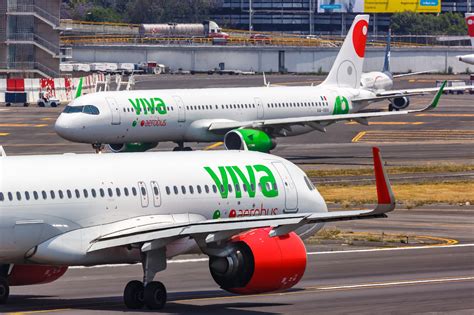
Monterrey’s prominence underscores industrial connectivity. As one of Mexico’s leading manufacturing hubs, Monterrey maintains deep commercial ties with Texas companies. The route is less about tourism and more about supply chains, executives, engineers, and cross-border enterprise.
Viva Aerobus operates with a low-cost structure, yet its network decisions are highly strategic. It targets markets with consistent bilateral demand and avoids speculative long-haul exposure. The result is stable frequency and predictable load factors.
Qantas And Turkish Airlines: Long-Haul Prestige And Strategic Reach
At the intercontinental end of the spectrum, Qantas maintains a significant footprint at DFW with 47 March departures—30 to Sydney and 17 to Melbourne. Aircraft choice alternates between the Boeing 787-9 and the Airbus A380, reflecting seasonal and demand-based adjustments.
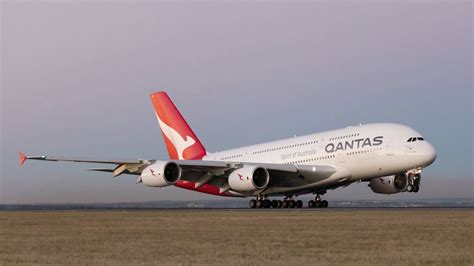
The A380’s presence at DFW is a statement. Few airports globally see regular A380 service today, making this route symbolically and operationally significant. Australia–Texas connectivity may appear niche, but it supports business travel, tourism, and alliance connectivity through American Airlines’ domestic network.
Meanwhile, Turkish Airlines operates 44 flights to Istanbul Airport, deploying the Boeing 787-9 and 777-300ER. Istanbul’s geographic position makes it one of the world’s most powerful connecting hubs, bridging Europe, Africa, Central Asia, and the Middle East. For passengers originating in Texas, this provides access to destinations that might otherwise require multiple connections.
Turkish Airlines’ growth reflects broader global aviation trends: the rise of non-traditional hubs challenging legacy Western gateways. Istanbul and Doha both demonstrate how geography, fleet strategy, and alliance positioning can reshape global travel flows.
DFW Airport’s Foreign Airline Landscape: Diversity With Strategic Precision
While foreign airlines represent a minority share of DFW’s total international departures, their influence far outweighs their numerical proportion. Each carrier serves a distinct strategic function:
- Mexican airlines anchor cross-border mobility and industrial trade.
- Air Canada provides alternative transatlantic and transpacific routing.
- Qatar Airways and Turkish Airlines extend Texas into global super-connector networks.
- Qantas delivers ultra-long-haul prestige and alliance depth.
- Avianca reinforces Central American connectivity.
The aircraft deployed—from narrowbody A320neos to flagship A380 superjumbos—illustrate the spectrum of demand profiles at DFW. Few airports balance such regional intensity with intercontinental reach so effectively.
Dallas/Fort Worth International Airport is not merely a domestic mega-hub with occasional international departures. It is a carefully layered global platform where fleet economics, alliance strategy, and geographic advantage intersect. From Texas, the world is not distant—it is directly accessible, daily, and increasingly diversified through a select but powerful roster of foreign airlines.